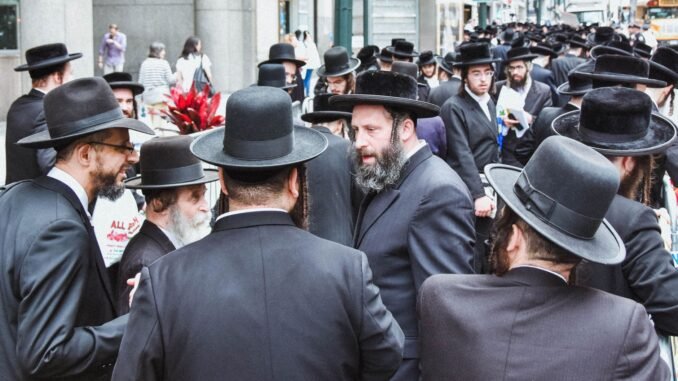
Jewish institutions across New York are spending more on security as Rosh Hashanah and Yom Kippur approach, the New York Times reported on September 11, 2026. Jewish leaders told the paper they’ve spent millions of dollars on additional protective measures in recent years amid a rise in antisemitic incidents.
The High Holy Days draw larger crowds to synagogues than any other point in the Jewish calendar, which makes them a period of heightened concern for congregations already dealing with a longer-term increase in threats and harassment directed at Jewish communities.
Millions spent on protective measures as antisemitic incidents rise
The spending described by Jewish leaders has been building for years, not responding to a single event. Congregations, day schools and community centers across the New York region have collectively put millions of dollars toward security upgrades, according to the Times, as antisemitic incidents have climbed.
That spending isn’t limited to major holidays. Leaders describe it as an ongoing effort to protect institutions that serve as gathering points for prayer, education and community life throughout the year.
What the increased security spending covers
The investments cover physical infrastructure, personnel and planning: hardened entry points, monitoring systems and trained security personnel. For many congregations, the High Holy Days test these systems because attendance surges well beyond a typical Shabbat service. Security plans built for smaller weekly gatherings have to scale up for the crowds that fill sanctuaries on Rosh Hashanah and Yom Kippur, the two most heavily attended services of the Jewish year.
Timeline: how the High Holy Days became a focal point for security planning
The High Holy Days have long mattered for synagogue security planning simply because of attendance volume. The current wave of spending described to the Times reflects something more recent, though: a sustained rise in antisemitic incidents that has pushed institutions to treat security as a year-round budget line rather than an occasional expense.
That shift happened gradually, with congregations and Jewish organizations building out security infrastructure over successive years rather than reacting to any single incident. By this September, according to the Times, Jewish institutions across New York had already spent millions of dollars on protective measures heading into the 2026 holiday season.
The rise in antisemitic incidents driving the response
Jewish leaders describe the security spending as a direct response to a rise in antisemitic incidents. The Times report doesn’t detail specific incidents, but it frames the increased spending as a reaction to this broader trend affecting Jewish communities in New York.
That framing places the current round of investment within a longer pattern in which American Jewish institutions have increasingly treated security as a core operating cost. According to the Times, Jewish leaders view the current environment as serious enough to justify continued, and in some cases expanded, financial commitment to protective measures ahead of the High Holy Days.
How synagogues and Jewish organizations are adapting day-to-day operations
Congregations are adjusting daily routines to fit security measures alongside religious practice. That balancing act gets harder during the High Holy Days, when synagogues have to manage larger crowds while keeping up the security protocols they’ve built in recent years. Day-to-day operations now routinely include the security infrastructure that has become standard at many Jewish institutions across the region.
Balancing open worship with visible security
Synagogues face a tension between remaining open, welcoming spaces and visibly signaling that they’ve hardened their defenses. That tension is especially sharp during Rosh Hashanah and Yom Kippur, when congregations want to draw in members and guests for worship even as security measures become more apparent.
Jewish leaders quoted in the Times report describe this as a defining challenge of the moment: keeping the openness central to communal worship while accepting that visible security has become a necessary feature of synagogue life.
Coordination between Jewish institutions, law enforcement and security consultants
Jewish institutions aren’t managing security on their own. The scale of spending described by Jewish leaders points to sustained coordination with outside partners as congregations plan for the High Holy Days and other high-attendance events throughout the year. That coordination has become a routine part of how synagogues and Jewish organizations across New York prepare for large gatherings.
What community leaders say about the financial and emotional toll
Jewish leaders describe the spending as both a financial burden and a reflection of the emotional weight communities carry heading into the High Holy Days. The millions of dollars directed toward security in recent years represent resources that might otherwise go toward religious education, community programming or other core functions of synagogue life, according to the Times.
The toll isn’t only measured in dollars. Leaders describe an environment in which congregations have to reconcile the joy and reflection central to Rosh Hashanah and Yom Kippur with the reality that security has become a permanent fixture of communal worship. Based on the pattern the Times documented, Jewish institutions in New York expect this level of investment, and the concerns driving it, to continue well beyond this year’s holiday season.
Be the first to comment