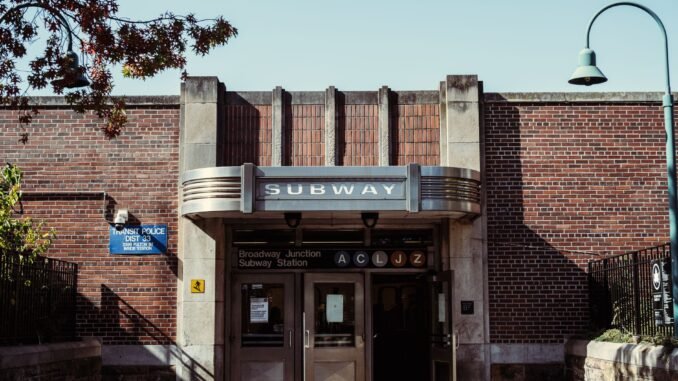
Hochul’s subway police funding vanishes, leaving Mamdani stuck with Adams’ overtime bill
State funding for subway police surge dries up by July, leaving Mamdani to cover the gap
State money that Gov. Kathy Hochul touted in December as the financial backbone of a surge in uniformed police officers across the New York City subway system had already run out by July, according to the New York Post. That leaves incoming Mayor Zohran Mamdani to honor an overtime commitment struck under the Adams administration, without the state cash that was supposed to help pay for it.
The gap between what Hochul promised and what the state actually delivered means City Hall, not Albany, is now on the hook for continuing the officer surge that has patrolled platforms and train cars since last year. Mamdani inherits a police union deal he did not negotiate, funded by a state infusion that did not last the year.
Hochul’s December pledge: how the cash infusion was supposed to work
Hochul announced the funding push in December, framing it as a way to keep additional uniformed officers stationed in the subway system amid ongoing concerns about rider safety. The pledge was part of the governor’s broader public safety messaging, positioning the state as a financial partner in policing the transit system rather than leaving the cost entirely to the city or the MTA.
What the state funding was meant to cover
The state-funded infusion was meant to sustain the surge of uniformed officers deployed to stations and trains, a deployment that had already been running under the Adams administration. According to the New York Post, the cash was tied specifically to keeping that elevated police presence in place, not to funding a new or expanded initiative. The money was meant to maintain the status quo of heavier policing, not build on it.
Timeline from announcement to zero balance
Hochul made the funding announcement in December. By July, the account was at zero, according to the New York Post’s reporting. That’s roughly seven months from pledge to depletion, a short run for a funding stream that was billed as a solution to an ongoing staffing and safety commitment rather than a one-time expense.
Why the money ran out faster than planned
The available reporting doesn’t detail a specific line-item breakdown for why the funds were exhausted ahead of schedule, but the basic arithmetic is simple: overtime-driven police deployments are expensive to sustain over many months, and a fixed cash infusion announced at one point in time doesn’t stretch indefinitely against continuing personnel costs. The subway officer surge relies heavily on overtime shifts rather than new hires, which tends to burn through allocated funds faster than adding permanent headcount would, since overtime pay compounds with every extra shift worked rather than settling into a fixed payroll cost.
The result is a funding stream that matched the December announcement’s short-term political timing more than the multi-month operational reality of keeping officers in stations and on trains through the summer and into the fall.
Mamdani inherits an Adams-era overtime commitment
The overtime arrangement behind the subway surge didn’t originate with Hochul’s state funding at all. It traces back to a deal the Adams administration struck with police unions, one that committed the city to paying officers overtime rates to maintain the expanded subway presence. Hochul’s December cash infusion was layered on top of that existing commitment, intended to offset costs the city would otherwise have to absorb on its own.
The original Adams administration deal with police unions
Under Mayor Eric Adams, the city entered into an overtime agreement with police unions to keep additional officers on subway duty. That commitment predates the state’s funding announcement and exists independently of it, meaning the obligation to pay officers for the extra hours doesn’t disappear simply because Hochul’s earmarked funds have run dry. The city is bound to the union agreement regardless of what happens with state assistance.
What “honoring” the deal now requires from the city budget
With the state funding exhausted, honoring the Adams-era deal means the city itself must now cover the overtime costs that Hochul’s infusion was previously absorbing. That shifts a recurring expense back onto the city budget just as Mamdani is beginning his tenure as mayor, according to the New York Post’s account. The obligation isn’t new, but the funding source that had been covering part of it is gone, leaving city coffers to fill the difference.
Financial and staffing stakes for subway policing going forward
The practical stakes are straightforward: officers who have been working overtime shifts in subway stations and on trains need to keep getting paid, and now that payment falls more squarely on the city rather than the state. That’s a direct budgetary consequence of the state funding running out months earlier than the surge itself is expected to continue.
Who pays now that state funds are exhausted
With Hochul’s cash infusion zeroed out by July, the financial responsibility for continuing the overtime-funded surge falls back on New York City. The Adams-era union agreement obligates the city to pay for the extra police presence regardless of whether state money is available to offset it, and that’s what’s forcing Mamdani’s hand on this issue.
Risk to the uniformed officer surge in stations and trains
The exhaustion of state funds raises the question of how long the city can sustain the current level of uniformed presence in subway stations and on trains without either new funding or budget adjustments elsewhere. Overtime-driven deployments are more exposed to funding gaps than permanent staffing increases, since they depend on continuous authorization and payment rather than a fixed headcount already built into the base budget.
Political dynamics between Albany and City Hall
Hochul’s December announcement was part of her public positioning on subway safety, presenting the state as an active financial partner in transit policing. That positioning is harder to maintain now that the funding behind it has run out well ahead of schedule, leaving the city to manage the shortfall.
Hochul’s role and public positioning on subway safety
The governor framed the funding as a commitment to keeping uniformed officers in the subway system, a message aimed at reassuring riders and, implicitly, at claiming credit for maintaining the police surge. The gap between that framing and the funding’s actual seven-month lifespan is now part of the public record, according to the New York Post’s reporting.
Mamdani’s options and constraints as incoming mayor
Mamdani takes office facing a financial obligation he didn’t create: an Adams-era overtime deal that requires city payment now that the state’s contribution has ended. His options are constrained by the existing union agreement, which doesn’t appear to allow the city to simply walk away from the overtime commitment. Whatever budgetary moves follow will need to reconcile the union deal’s terms with the fact that the state funding cushion Hochul promised is no longer there.
Broader context: subway crime, ridership, and public safety funding fights
The depleted funding lands amid continuing public attention to subway safety, ridership patterns, and the recurring argument over who should pay for transit policing: the city, the state, or the MTA. This episode adds a concrete data point to that argument: a state pledge that lasted seven months against a police deployment expected to continue indefinitely.
How this fits into ongoing MTA and NYPD budget tensions
Funding fights between the city, the state, and the MTA over policing costs aren’t new, and this shortfall fits that pattern. The Adams-era overtime deal was itself a product of earlier negotiations over how to staff the subway system, and Hochul’s December infusion was one more attempt to address the same underlying cost question. Its early exhaustion suggests the question of who ultimately bears the cost of subway policing remains unresolved.
What happens next: unresolved questions on funding and oversight
The immediate question is whether Albany will step in with additional funding now that the original infusion has run dry, or whether the city will be left to absorb the overtime costs indefinitely under the terms of the Adams-era deal. Mamdani’s administration will need to decide how to budget for a police union commitment it inherited but didn’t negotiate, while also navigating a funding relationship with the state that has already fallen short of its own December promise. How Albany and City Hall resolve that gap, and whether Hochul’s office offers any further state assistance, remains to be seen.
Be the first to comment