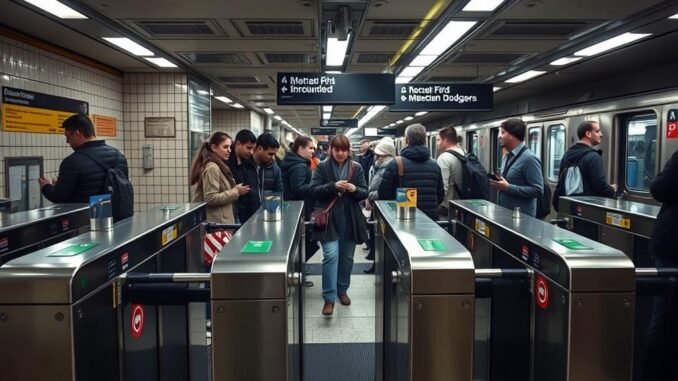

In 2024, one in ten subway rides were free, costing the MTA a lot. To stop this, they put up metal shields on turnstiles. These shields are about four inches high and are at Brooklyn Bridge–City Hall/Chambers Street.
The MTA tested these shields at 59 St–Lexington Ave. This test showed mixed results. Now, they have a new design that looks like a crescent. It’s meant to stop people from skipping fares without being too hard to get around.
Some people are jumping over or crawling under the shields. Others are paying and moving on. Riders have different opinions on the shields. Some think they’re easy to get around, while others see them as a good thing.
MTA Chair and CEO Janno Lieber and Governor Kathy Hochul say the shields are part of a bigger plan. They want to make the subway safer and more reliable. They also plan to add more lights, staff, and modern gates.
There was a 26% drop in fare evasion from June to December 2024. This shows the plan might work. But, there are challenges at the first site. The NYC subway now has a new look at the turnstiles, showing a clear message to pay. It’s a test of fairness in the busiest public transit news cycle.
Overview: Why the MTA added metal shields on turnstiles
The Metropolitan Transportation Authority is testing crescent-shaped metal shields to stop fare evasion. They want to make subway entry harder to jump. The pilot is a test to see how it works before expanding.
Where the metal shields appeared first: Brooklyn Bridge–City Hall/Chambers Street
The first shields were put in at Brooklyn Bridge–City Hall/Chambers Street. This spot is busy and fare evasion is common. It’s a key place to see if the shields work.
How the crescent-shaped add-ons work and why they were selected
The add-ons are about four inches high to stop easy jumping. Their curved shape makes it harder to jump over. They were chosen because they can be added easily without a big change.
This way, the MTA can test them without big disruptions. It’s a smart way to see how they work and make changes if needed.
Initial rider reactions and on-the-ground observations
People had mixed feelings when they saw the shields. Some thought they wouldn’t work, while others were hopeful. Reporters saw some jump over and others crawl under, showing mixed reactions.
A station guard said one jumper almost fell trying to jump over. The MTA is watching closely before deciding what to do next.
Context: Fare evasion’s impact on the MTA budget and NYC transit system
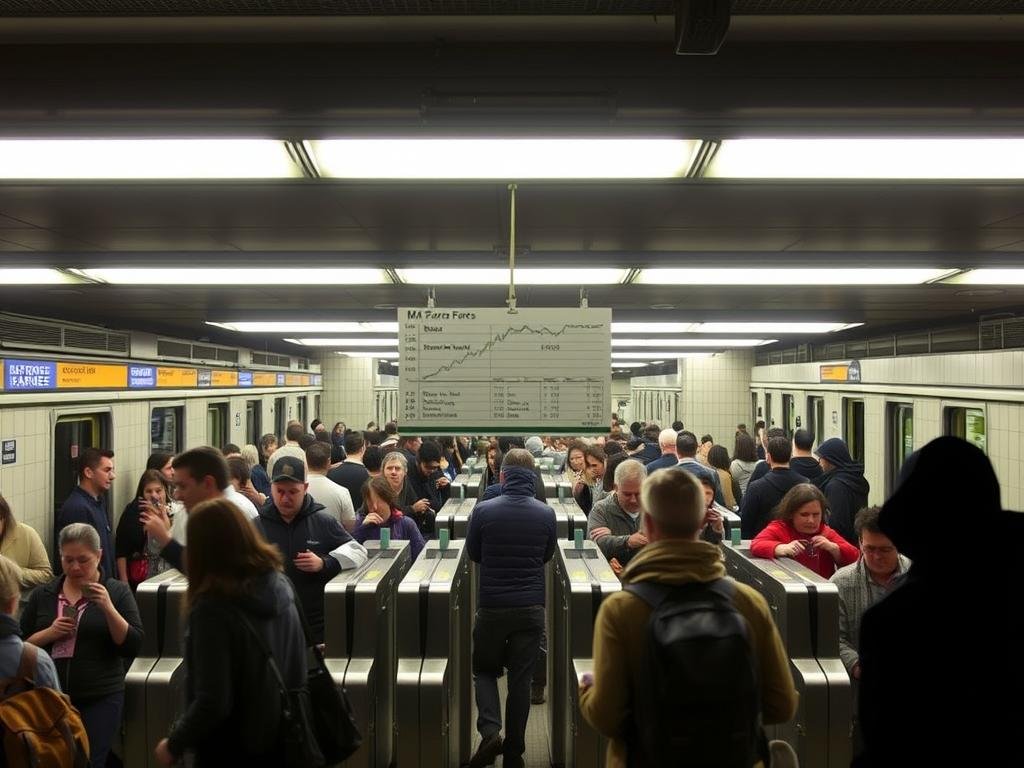
New York’s transit leaders say fare integrity is key to daily reliability. When gates work well, riders feel the system is trustworthy. But when fare evasion rises, it affects the MTA budget and safety perceptions.
Annual losses: $500 million to nearly $700 million cited across recent years
The Metropolitan Transportation Authority has seen big gaps from unpaid fares and tolls. These losses range from $500 million to nearly $700 million in 2022. Such shortfalls hurt public transportation and slow down upgrades that riders expect.
Chair and CEO Janno Lieber has warned that these losses impact the MTA budget. Less money means fewer choices for maintenance, repairs, and modern fare gates.
Why entrance-area disorder affects rider perception and safety
Disorder at entrances shows that rules don’t matter. Riders see crowded gates, beeping alarms, or open doors. This scene makes them feel less safe before they even reach the platform.
Reducing chaos tackles more than just costs. It also restores trust in public transportation. It helps solve urban transportation issues like confusion, crowding, and stress near turnstiles.
The link between fare revenue, service quality, and capital plans
Gov. Kathy Hochul and MTA leaders link anti-evasion steps to stable funding. Reliable fares support better service, cleaner stations, and targeted investments.
The current five-year capital plan, at $68.4 billion, needs predictable income. When fare evasion spikes, it hinders progress and complicates plans.
| Factor | What’s at Stake | Impact on Riders | Strategy Link |
|---|---|---|---|
| Fare Revenue Stability | Funds daily operations and maintenance | Fewer delays and cleaner stations | Anti-evasion and enforcement |
| Capital Plan (Five Years) | Stations, gates, and signal upgrades | More reliable trips and better access | Modern barriers and lighting |
| Entrance Conditions | Perception of safety and order | Calmer, clearer entry flows | Design changes and staffing |
| Urban Transportation Issues | Network equity and trust | Confidence in public transportation | Consistent rules and communication |
How the new metal shields compare to recent turnstile experiments
New York riders have seen many tests at the mta turnstile in recent months. Each test aims to keep the line moving without slowing down. The goal is to find a balance between efficiency and cost.
From “subway spikes” at 59 St–Lexington Ave to the crescent shields
In January, the “subway spikes” at 59 St–Lexington Ave tried to stop riders who used handrails for a boost. The spikes made it harder to get through, but people found ways around them. The crescent-shaped shields aim to guide riders without making it too hard.
The crescent shields are lower and blend in better with the gate. They reduce snag points. This design change shows the MTA’s effort to keep the system familiar for riders.
Modernized gates and the TikTok “hand swipe” hack lesson
Modernized gates were introduced in 2023, aiming for better control. But a TikTok video showed a simple hand swipe could open the doors. This video highlighted a weakness in the system.
The new shields address this weakness by making it harder to use the top bar. They also work with software updates to sensors. This combination aims to close both physical and digital gaps in the system.
Cost, complexity, and speed of deployment across stations
The crescent shields seem like an easy fix that can be installed quickly. The exact cost is not shared, but they appear to be less expensive than replacing entire gates. This is important for the MTA, which needs to update many stations.
Installing these shields is simpler, which helps speed up the process. But they must be durable and easy to maintain. At busy stations, they need to withstand a lot of use while keeping the lines moving.
Rider feedback and fare-beating workarounds at turnstile nyc locations
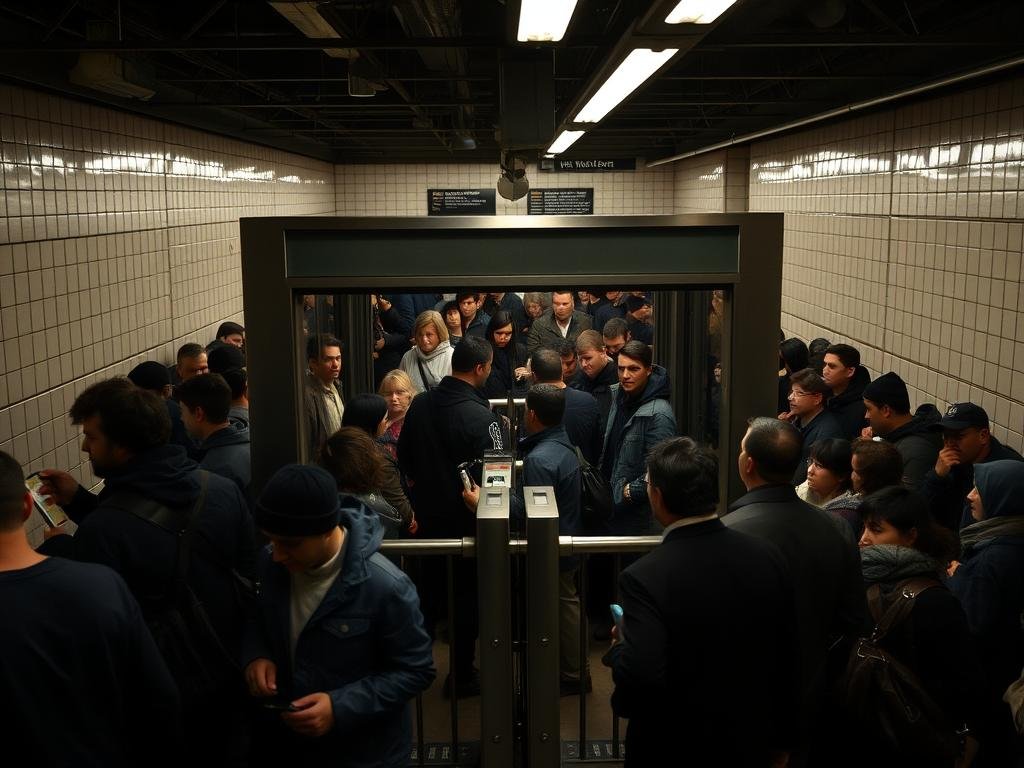
Riders at busy spots say the new features changed the look of the gates. But, they didn’t change the behavior at every entrance. In the nyc transit system, people judge by what they see during rush hours. This view shapes their opinion on subway station security and the fare evasion crackdown.
Reports of jumping over and crawling under despite new barriers
At Brooklyn Bridge–City Hall/Chambers Street, people jumped over the crescent shields. Others slid under the bars. Local TV and street clips showed quick vaults and crouches that bypassed the gates.
Coverage of the earlier “spike” experiment at 59 St–Lexington Ave noted similar moves. A recent on-the-ground report showed repeated attempts in a short time. This shows how fare beaters test every gap.
Perception of effectiveness versus deterrence value
Some riders think the shields are just a minor bump. They say a small height increase won’t stop athletic jumpers. Others believe the visual cue matters, and a tougher gate can influence choices. Both views impact trust in subway station security across the nyc transit system.
During peak hours, a few people bypassing the gate sends a signal. When flows are orderly, the upgrade feels like progress. This supports the city’s fare evasion crackdown.
Station-level security presence and enforcement realities
Riders say outcomes change by time and place. A staffed booth, a patrolling NYPD team, or a visible MTA agent can make a difference. Without them, repeat evaders look for soft spots and under-bar space.
A layered approach works best: sturdier gates, clear sightlines, and targeted patrols. When these elements align, people feel the system is fairer and safer. This boosts confidence in the nyc transit system and its ongoing fare evasion crackdown.
| Observed Tactic | Common Conditions | Deterrence Factors | Rider Sentiment |
|---|---|---|---|
| Jumping over | Crowded entries; brief gaps in attention | Higher barriers; camera coverage; officer nearby | “Fast and bold, but risky when watched.” |
| Crawling under | Low bars; clutter around gates; off-peak hours | Reduced under-bar clearance; staff presence | “Easy if no one is looking.” |
| Side slip/handhold | Narrow posts; loose panels; hurried lines | Tighter seams; sturdier housings; alerts | “Works until hardware gets tightened.” |
| Tailgating | Surges at exits; inattentive crowd | Anti-passback logic; gate timing; staff cues | “Common in rush, less so when observed.” |
Policy moves: Fare evasion crackdown and station security upgrades
New York leaders are focusing on fare integrity and safety. They want to rebuild trust in public transport. They’re using a mix of new infrastructure and policing to boost subway station security.
Riders will soon see new turnstiles, brighter platforms, and more staff. This will make commutes safer and more efficient.
Governor Hochul’s plan: more barriers at 100 stations, LED lighting
Gov. Kathy Hochul has a plan to add barriers at 100 more stations. This is to stop people from jumping the gates and to guide them through the right entrances. The goal is to make the subway safer.
LED lighting will also be added to all stations by the end of the year. This will help improve visibility at night and make the stations brighter. It will also help in monitoring the platforms better.
These steps are part of a larger effort to make the subway safer. New turnstiles and other upgrades are being installed. Brighter stations will help in preventing small violations and keeping the subway running smoothly.
More NYPD presence on trains and platforms
There will be more NYPD officers on trains and platforms. They will be visible to riders, helping to keep the subway safe. This will also help station agents and cleaners do their jobs better.
The NYPD will be near fare arrays and busy transfer points. This will help in preventing fare evasion. It will also make it clear that the rules are enforced everywhere.
Modernized gates rollout at 20 stations this year, 20 more in 2026
The MTA plans to install modernized gates at 20 stations this year. Another 20 will be added in 2026. These gates will prevent people from jumping the turnstiles and will work with OMNY.
These upgrades will make the subway safer and easier to manage. As more stations get these new gates, the old ones will be replaced. This will help in keeping the subway safe for everyone.
By the numbers: Measuring progress on fare evasion and ridership
When budgets and service are at stake, progress matters. The Metropolitan Transportation Authority board recently shared important figures. These numbers show how enforcement efforts are linked to subway ridership and revenue trends.
MTA reports a 26% drop in fare evasion from June to December 2024
MTA officials say subway fare evasion dropped by 26% from June to December 2024. This change happened during a time of barrier pilots, brighter stations, and more patrols. Bus fare evasion also fell, about 9%, in the same period. This shows progress in both subway and bus fare evasion.
Summons and enforcement statistics: 143,000 theft-of-service cases
Police data shows over 143,000 theft-of-service summonses in 2024. Leaders like Janno Lieber see this as a mix of deterrence and enforcement. They aim to stabilize the MTA budget and keep stations orderly for riders.
Interpreting the data alongside subway ridership trends
These numbers are part of a bigger picture. Subway ridership patterns are changing, with shifts in weekday and weekend demand. Analysts believe physical barriers, gate upgrades, and messaging can help. But, the full story comes when looking at evasion, revenue, and usage together.
| Metric | June–December 2024 | System Context |
|---|---|---|
| Subway fare evasion change | Down 26% | Coincides with shields, lighting, and patrols amid shifting subway ridership |
| Bus fare evasion change | Down ~9% | Progress varies by mode and route, tracked in public transit news |
| Theft-of-service summonses | 143,000 (2024) | Enforcement intended to protect mta budget while curbing nyc subway fare evasion spikes |
Note: Results reflect combined measures across stations and modes during the second half of 2024.
Implications for public transportation and urban transportation issues
The NYC transit system is testing how design can change behavior at station doors. They’ve tried spikes, crescent shields, and modernized gates. Each change shows how mta turnstiles must evolve as riders adapt. This is where public transportation meets everyday life: entrances, lines, and the feel of safety.
Physical fixes matter, but so do light and visibility. LED upgrades, better sightlines, and a steadier enforcement presence work together to reduce chaos at entries. These choices touch core urban transportation issues, from fair payment to dignity in the rush of a commute.
Money drives the pace of upgrades. When fare revenue leaks, service and capital work slow down. The pilots now in place will shape what the NYC transit system buys next, and how fast it can roll out a standard design. For context on scale and norms, see this fare evasion analysis.
Other cities are watching. Results from New York will inform gate design, staffing around entry points, and messaging about paying the fare. If the mix is right, mta turnstiles can be both quick and secure without turning stations into bottlenecks.
| Entry Design Focus | Goal in the NYC Transit System | Observed Risk | Policy Response | Impact on Public Transportation |
|---|---|---|---|---|
| Crescent Shields on MTA Turnstiles | Reduce leap-overs and emergency-door misuse | Crawling under and team tailgating | Targeted barriers and station staffing | Faster lines with fewer unpaid entries |
| Modernized Gates | Close gaps exposed by hand-swipe hacks | New evasion tactics via social media | Iterative hardware updates and audits | More reliable validation, less friction |
| LED Lighting at Entrances | Boost visibility and perceived safety | Shadowed corners near doors | Systemwide lighting upgrades | Cleaner flow and calmer queues |
| Enforcement Presence | Deter organized fare-beating | Displacement to unstaffed portals | Flexible patrol patterns | Higher payment rates without slowdowns |
Conclusion
The MTA has introduced metal shields at Brooklyn Bridge–City Hall/Chambers Street. This move comes after spikes in fare evasion at 59 St–Lexington Ave. The shields are designed to prevent riders from jumping over or crawling under the turnstiles.
Early results show they are effective, but they are not a complete solution. The NYC subway continues to explore ways to improve. This includes tracking what works best at each station.
State leaders are taking a multi-faceted approach. They are adding brighter LED lights, increasing NYPD presence, and introducing new gates. This year, 20 stations will get new gates, and 20 more will in 2026.
This strategy aims to protect revenue and reduce chaos at entrances. It also emphasizes the importance of consistent design, maintenance, and staffing. Every turnstile should feel fair and consistent.
Fare evasion costs the MTA around $500 million to $700 million annually. Despite this, there was a 26% drop in evasion in the second half of 2024. There were also 143,000 theft-of-service summonses issued.
These numbers show progress, but the fight against fare evasion is ongoing. The MTA plans to test, measure, and deploy solutions quickly. They also aim to make long-term improvements.
If the MTA focuses on user behavior, reliable gates, and visible enforcement, trust and service can be rebuilt. This would be a lasting victory for the NYC subway and its users.
Be the first to comment