

Over 10,100 flights have been canceled nationwide because of federal limits. The next wave starts at 6 a.m. Friday in the busiest air corridor. The Federal Aviation Administration has ordered phased cuts at four New York area airports.
This is due to a government shutdown and controller shortages. The order affects John F. Kennedy International, LaGuardia, Newark Liberty, and Teterboro. Flights will be reduced by 6% until staffing improves.
Travelers should expect tighter schedules at these airports. Airlines will adjust their operations according to the FAA’s directive. This means fewer flights at these New York City airports.
Initially, a 10% reduction was planned for next week. But officials decided to cap it at 6% to ensure safety. This move aims to ease the strain on towers and centers.
It also helps keep essential connections open. These airports are vital for both domestic and international flights. Whether you’re flying long-haul or short, you’ll find out what’s changing.
Readers will learn why these changes are happening. They’ll also understand how they affect flights to New York. You’ll get clear guidance on schedules, rebooking, and how these limits impact airline operations.
What’s Changing at New York City Area Airports and Why
Travelers will notice changes at new york city area airports. Carriers are cutting back on flights to match the number of controllers. This is to keep air traffic flowing smoothly, avoiding jams at busy times.
FAA emergency order and capacity cuts tied to the government shutdown
The FAA has ordered airlines to reduce flights at busy airports, including those in New York. This is to ease the pressure on facilities during the shutdown. Airlines are making targeted cuts where demand and staffing issues are most severe.
Timeline: phased reductions starting Friday at 6 a.m. local time
Reductions start on Friday at 6 a.m. and continue through the day. Airlines will adjust flight frequencies and then review again. This approach helps airports manage gates, crews, and flow rates better.
Safety-first rationale: easing pressure on air traffic controllers
Officials say safety is the main reason for these changes. They want to protect everyone involved in managing air traffic. By reducing flights, they aim to prevent delays and keep things running smoothly.
Four New York–Area Airports Affected

Capacity limits now affect the region’s busiest airports. This changes how airlines plan flights and how travelers pick their airport. News about john f. kennedy international airport and others helps travelers know what to expect.
John F. Kennedy International Airport (JFK): international gateway impact
At new york jfk, long-haul flights now have tighter spacing. This affects connections and aircraft turns. Airlines might adjust late-night flights to keep things running smoothly.
Travelers should check nyc jfk for changes in transatlantic flights. Airlines at airport john f kennedy will keep important routes but adjust peak times.
LaGuardia Airport (LGA): short-haul and business travel disruptions
La guardia airport is open but with some cuts during rush hours. Shuttle flights and business trips might see fewer flights, not a complete stop.
Airlines will spread out turns at ny laguardia airport. This makes it easier for controllers. Travelers might see small changes in flight times that keep connections working.
Newark Liberty International Airport (EWR): transcontinental and international schedules
Newark plays a big role in coast-to-coast and transatlantic flights. Banks might consolidate to meet new limits. Peak-hour flights could be reduced while mid-blocks take more traffic.
Those looking for backup options should check EWR. It has rebanked departures that keep long-haul flights strong while cutting duplicates.
Teterboro (TEB): private and general aviation adjustments
Teterboro’s business aviation will see tighter slotting and sequencing. Operators might adjust their preferred times to fit within limits.
Corporate flight departments should plan ahead for slot requests. They’ll need to work closely with neighbors at ny kennedy airport and la guardia airport.
| Airport | Primary Role | Where Reductions Hit | Likely Airline/Operator Response | Traveler/Operator Tip |
|---|---|---|---|---|
| JFK | Global gateway | Overnight and evening banks | Rebalance long-haul banks; protect flagship routes | Monitor nyc jfk retimes tied to john f. kennedy international airport news |
| LGA | Short-haul/business | Morning and late-day peaks | Trim shuttle-style frequencies; stagger turns | Check la guardia airport peak flights and ny laguardia airport minute shifts |
| EWR | Transcon/transatlantic | Peak-hour departures | Consolidate banks; move some flights off-peak | Compare which new york airport offers best backup via Newark |
| TEB | Business/general aviation | Preferred launch windows | Tighten slotting and sequencing | Plan earlier slot requests across New Jersey New York airports |
National Scope: 40 High-Volume Airports Under Capacity Limits
New York is part of a big plan for 40 busy airports across the country. This plan goes beyond New York’s airports to major hubs nationwide. Travelers will see changes in flight schedules at airports across the country.
Where New York fits among hubs like ATL, LAX, ORD, and DFW
New York’s airports are like key nodes with Atlanta (ATL), Los Angeles (LAX), Chicago O’Hare (ORD), and Dallas–Fort Worth (DFW). Changes at these hubs affect flights to and from New York. This means changes in arrival and departure times at airports in New York.
Carriers are adjusting their schedules to keep flights on time. This helps keep flights running smoothly at New York airports. It also reduces congestion at gates and runways.
Cargo-heavy airports in the mix: MEM, SDF, ANC, ONT
Memphis (MEM), Louisville (SDF), Anchorage (ANC), and Ontario (ONT) are key for cargo. They handle overnight and long-haul cargo, setting the stage for next-day delivery. These changes affect runway slots and tower staffing in New York early in the morning.
Adjustments in cargo handling impact feeder flights to New York. This keeps cargo lanes open while balancing cargo on passenger flights to New York.
How cuts are coordinated across states and airline networks
Changes are made in phases, following local time. This helps airlines adjust their networks without disrupting key connections. The goal is to match traffic with available crews and towers, ensuring airports in New York stay in sync with the system.
Schedules are aligned across states to smooth handoffs between hubs and spokes. This keeps core frequencies at New York airports while spreading out peak loads to safer times.
| Airport Group | Representative Airports | Primary Role | Impact on New York Flows |
|---|---|---|---|
| Coast-to-Coast Hubs | ATL, LAX, ORD, DFW, DEN | High-volume connections and banked schedules | Alters feeder timing into airports in nyc area and ny airports |
| Gateway and Tech Hubs | SEA, SFO, BOS, IAH, PHX | Transpacific, transcontinental, and energy corridors | Shifts long-haul waves that link to airports in new york state |
| Cargo-Centric Nodes | MEM, SDF, ANC, ONT | Overnight integrator and freight banks | Resets early-morning slot use affecting airport to new york arrivals |
| New York Area | JFK, LGA, EWR, TEB | International, domestic shuttle, and business aviation | Coordinated trims aligned with national limits across airports around new york |
How Deep Are the Cuts and How Long Might They Last
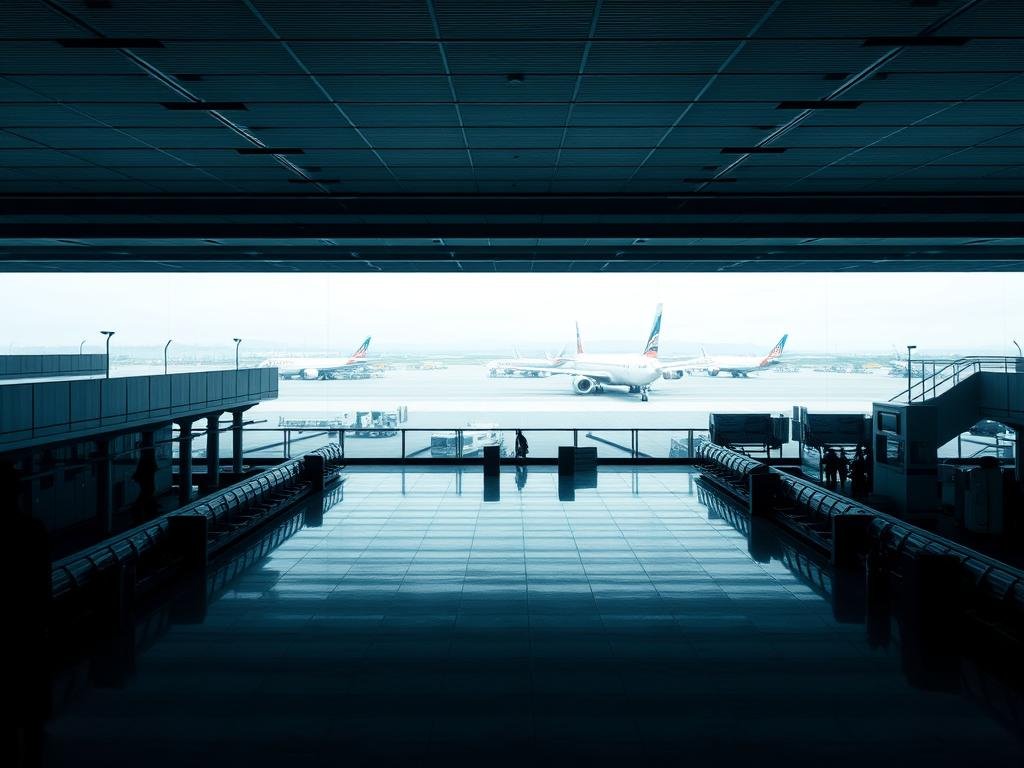
The cutbacks aim to keep flights running smoothly. They avoid a mess of delays across each york airport. New york will adjust its flights daily, focusing on the new york new jersey airport corridor.
From planned 10% reductions to a 6% cap amid improving staffing
First, there was a plan to cut flights by 10%. But with more staff, the limit dropped to 6%. This change helps manage busy times without big changes at york airports.
Indicators the FAA is watching to restore normal operations
- Controller staffing stability and lower sick-call rates
- Fewer proximity events and runway incursions
- Improved response quality during rush periods
- Consistent on-time push rates at each new york new jersey airport
When these signs are steady, the limits might relax. But if they falter, the 6% cap stays to avoid uneven flow at new york aiports.
What airlines say about returning to full capacity
Airlines are adjusting their schedules to fit the cap. Delta is ready to grow if things get better. Airlines for America expects a slow but steady increase before big holidays. They don’t think new york airports will close; instead, they plan to keep flights running well.
| Measure | Current Status | Operational Effect at New York/New Jersey | Airline Response |
|---|---|---|---|
| Capacity Cap | 6% reduction | Smoother banks at the new york new jersey airport system | Maintain core banks; add slack in turns |
| Staffing Trend | Improving stability | Fewer ground holds at each york airport | Gradual frequency restores |
| Safety Indicators | Monitoring incursions and proximity | Conservative spacing at new york aiports | Upgauge aircraft to preserve seats |
| Timeline Signal | No firm end date | Flexible caps instead of new york airports closed | Day-by-day capacity ramps |
flights to new york: What Travelers Need to Know Now
Travelers should check flight status often and stay flexible with plans. Even with fewer cuts than feared, schedules can change. It’s wise to compare JFK, LaGuardia, Newark, and nearby airports for better options.
Checking for NYC flights, rebooking rules, and alternate airports
Check every flight segment in the airline app before and at the gate. Most airlines, like Delta, American, United, and JetBlue, offer free rebooking during caps at new.york.airports.
If a nonstop is not available, consider Boston, Philadelphia, or Washington National. Compare arrival times and transit options to Manhattan. Choose the best airport for your itinerary and travel.
Understanding NYC cuts versus airline-driven cancellations
Airport caps reduce departures and arrivals. This is different from a carrier canceling due to swaps or crew timing. Even with open runways, a confirmed seat might be moved to a later bank.
Flights to new york are prioritized by schedule banks. A retime can affect connections. If a change breaks a same-day link, call the airline or use the app chat to secure a protected route. Keep an eye on flight new york options from nearby hubs in case an earlier seat opens.
Weather, crew positioning, and ripple effects on itineraries
Thunderstorms and low ceilings can cause delays across the Northeast. Crews may time out, and airlines will reshuffle rotations. Even with a 6% cap, these factors can push rolling adjustments across the day.
Build buffer time into meetings and connections. For late-night arrivals, verify last trains and buses from JFK, LGA, and EWR. If airports to nyc are constrained, overnighting at a hub may be wiser than risking a misconnect. A quick check of which new york airport has the earliest recovery flight can save a day.
| Option | When to Choose | Pros | Trade-offs |
|---|---|---|---|
| Stay Nonstop into JFK | Long-haul or premium routes with limited banks | Fewer connections; strong ground links via AirTrain + LIRR | International banks can slip; immigration queues may vary |
| Switch to LGA | Short-haul day trips and business schedules | Closer to Midtown; frequent shuttles | Tight slots; higher risk of retimes during peak |
| Route via EWR | Transcontinental or alliance connectivity | Robust domestic and international mix | AirTrain or rideshare time can run long at rush hour |
| Connect Through Secondary Hubs | No nonstop available to new.york.airports | More seats open during caps; flexible rebooking | Added legs; higher exposure to rolling delays |
Tip: Keep alerts on for flights to new york across multiple airports, and compare which new york airport restores capacity first after weather or crew delays.
Real-Time Impacts at JFK, LGA, EWR, and TEB
New York’s airports are adjusting schedules as they increase capacity by mid-November. Travelers should expect tighter windows and fewer flight options. Gate changes are also common across the New York international airport system.
FAA flight reductions started on Friday and will increase from 4% to 10%. This change is causing more delays at peak hours.
JFK cancelled flights and long-haul connection planning
John F. Kennedy Airport is seeing more cancelled flights, mainly for long-haul flights. When these flights don’t align, it can cause delays. Rebooking is harder because slots are limited at other airports under the same cap.
Passengers connecting from Asia, Europe, or South America should plan extra time. If a flight is missed, they might be booked on later nyc flights. Airlines prioritize main routes first.
LaGuardia airport shut down rumors vs. partial capacity reductions
LaGuardia Airport is open. Rumors of it being shut down are false. The real issue is a partial capacity cut, which means fewer flights, not a full closure.
Expect tight schedules in the morning and evening. But operations continue. If you see posts about LaGuardia being closed, it’s actually running on a reduced schedule, focusing on key routes.
Newark operational adjustments and transatlantic banks
Newark Liberty is combining transatlantic and transcontinental flights. Airlines are reducing the number of flights but keeping peak-demand ones. This might shift some flights to midday or late-night times.
Travelers through EWR should watch seat maps and equipment changes. Crews and planes might be moved, affecting nyc flights times.
Teterboro slot management for business aviation
Teterboro is managing slots more tightly for private and general aviation. Operators should plan ahead, expect delays, and have backup plans. Ground times may get longer due to the cap and flow control.
Corporate flyers can reach Manhattan quickly, but last-minute changes are common. It’s important to work with handlers when nearby airports take extra flights.
| Airport | Primary Impact | What Travelers See | Suggested Move |
|---|---|---|---|
| JFK | Long-haul bank disruptions and jfk cancelled flights | Missed connections, later rebookings | Choose longer layovers; monitor partner carriers |
| LGA | Partial reductions, not a laguardia airport shut down | Fewer peak flights; crowded shuttles | Shift to off-peak; confirm if claims like laguardia airport shut down today are true before heading out |
| EWR | Consolidated transatlantic and transcon banks | Frequency cuts; equipment swaps | Lock seats early; enable alerts for time changes |
| TEB | Tighter slot control for business aviation | Longer ground times; holds | Pre-file slots; stage fuel and crews in advance |
Traveler Playbook: Strategies to Navigate New York Airports Today
Book your flights in the morning and choose direct routes. Early flights are less likely to be delayed. If you need a layover, add extra time to avoid missing your next flight.
Airlines can change their schedules anytime. Check airline apps for updates on flights and changes. For the latest on travel restrictions, see this FAA reductions update.
Flights through ATL, ORD, LAX, or DFW might be delayed. Try to avoid these airports and choose a big one instead. This makes it easier to recover from delays.
Delays can last even after the initial problem is fixed. If your flight is delayed, ask for a new one. Look for flights at nearby airports like Newark Liberty, LaGuardia, or JFK. New flights are added all the time.
Pro tip: Keep an eye on gate changes and standby lists in your app. Only go to the desk when you can rebook. This helps you stay flexible and avoid long lines.
| Move | Why It Works | When to Use | NYC Example |
|---|---|---|---|
| Book first-wave departures | Lower congestion and fewer knock-on delays | Any day with capacity caps | 6–8 a.m. JFK flight instead of midday new flights |
| Choose nonstop or single-hub | Cuts misconnect risk during retimes | When flying airport to new york with tight plans | LAX–JFK nonstop over LAX–DFW–JFK |
| Add 90–150 minutes for connections | Buffers schedule slips at large hubs | Through ATL, ORD, LAX, or DFW | ORD–EWR with extra layover before the new york airport leg |
| Monitor app for rolling changes | Captures opened seats from retimed banks | Day before and day of travel | Switch LGA to EWR as airports around new york shift gates |
| Use nearby field swap | Leverages network flexibility | When delays stack at one airport | Move EWR to JFK during evening peaks along the new york newa corridor |
SEO Guide to Keywords and News Sources for New York Air Travel
Travelers can track schedule changes at New York City airports by using specific terms and reliable sources. Clear language helps distinguish real updates from rumors. Searches should focus on major airports and the current status of flights.
Using terms like new york jfk, nyc flights, and new york city airports
Queries like new york jfk and nyc flights bring up important airport advisories and airline alerts. Phrases like new york new jersey airport and new york airports help find updates for JFK, LaGuardia, Newark, and Teterboro. This method ensures results are about operational notices and schedule advisories.
Distinguishing reductions from closures: new york airports closed myths
Interest in new york airports closed often rises during disruptions. This term can be misleading without context. It’s important to understand that capacity reductions are not the same as closures. Travelers should always read the alert details before making any changes.
Following verified updates: FAA, DOT, airlines, and trusted outlets
For accurate policy and flight status, check FAA notices and U.S. Department of Transportation statements. Also, airline apps from Delta, United, American, and JetBlue are reliable. National wires and Fox News New York City offer citywide updates. Local news aggregators track terminal impacts across New York airports. Checking these sources helps keep a clear view as conditions change.
Conclusion
Four New York–area airports are adjusting to new limits. JFK, LaGuardia, Newark Liberty, and Teterboro face FAA restrictions starting Friday at 6 a.m. These changes affect 40 busy airports nationwide. The nyc cuts are now capped at 6% instead of 10% due to better staffing.
Airlines are cutting back on flights and alerting customers to these changes. The DOT and FAA focus on safety. They will use data to increase flights when it’s safe.
Travelers looking for flights to new york should know the airports in nyc area are open. But, seat maps and departure times might change.
For those checking new york airports today, use airline apps for updates. Confirm gate information and plan for extra time at security. Weather and crew issues can affect flights more than the FAA cap.
Carriers and the FAA will adjust flight schedules as needed. Expect flights to return gradually, based on data. For now, stay updated and flexible when flying into or through new york airports today.
Be the first to comment