
Twitch quickly shut down a livestream linked to the Buffalo supermarket shooting. This happened even as investigators worked to understand the events before and after the attack at Tops Friendly Market.
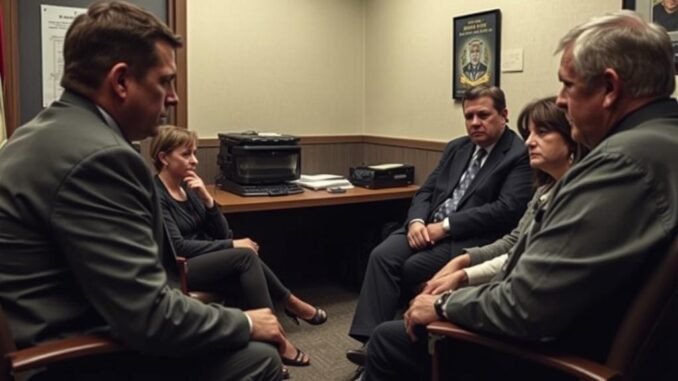
Agents started interviewing payton gendron’s parents as they served search warrants. The talks were calm and focused on timelines, devices, and any warnings beforehand. Officials say paul and pamela gendron are cooperating fully.
The investigation looks into the family’s home life, online activities, and trips to Buffalo. They aim to verify a 180-page manifesto that names the suspect and shows racist motives. They want to know why this store, city, and time were chosen.
The community is mourning, and the focus is on how the shooting happened. They want to know what the interviews reveal and if the search warrants could have caught something sooner.
This first chapter is just the beginning. Investigators hope to learn more and how these findings will lead to accountability.
Overview of the federal interviews and search warrants
After the Tops Friendly Market case, a federal investigation started in New York. Agents worked to keep records safe, secure devices, and track travel from Conklin. They aimed to clear up timelines and check digital claims about the attack.
What federal agents sought to learn from the parents
Agents interviewed payton gendron’s parents to learn about planning and weapon access. They asked about online activities, warning signs, and travel plans. The parents were asked about their routines, storage, and recent behavior.
Agents looked for devices, notes, or accounts that could back up or contradict statements. They wanted to know how information was shared between the household and social media before the Buffalo trip.
Search warrants served and cooperation reported by officials
Authorities in Buffalo served search warrants to get phones, computers, and records. They focused on locations related to communication and transport. The family cooperated with the collection and documentation process.
This effort supported FBI interviews and data preservation. The goal was to match physical evidence, digital artifacts, and media with known movements in the Tops Friendly Market case.
Why authorities moved quickly after the Buffalo supermarket attack
Speed was key due to the mass-casualty scene, livestream, and quick online sharing of a document. Quick actions helped freeze accounts, capture server logs, and secure sites. This ensured the preservation of evidence and verification of timelines.
By acting fast, the federal investigation aimed to confirm identities and keep leads alive. This urgency guided the FBI interviews and search warrants in Buffalo related to the Tops Friendly Market case.
Key facts about the Buffalo supermarket incident
https://www.youtube.com/watch?v=npE1L4gFFO0
The Buffalo supermarket shooting happened at Tops Friendly Market on a Saturday afternoon. It caught the nation’s attention. Authorities and local leaders shared a timeline of events, including a livestream on Twitch. Buffalo Mayor Byron Brown spoke about what happened that day.
Timeline: Arrival in Buffalo and reconnaissance described by police
The suspect arrived in Buffalo a day before for reconnaissance, police said. Buffalo Police Commissioner Joseph Gramaglia explained the planning behind the attack. The shooting started outside and then moved inside the market, affecting a predominantly Black neighborhood.
Officers said the shooting began in the parking lot and then spread through the aisles. The timeline includes quick calls for help, a fast response, and an arrest at the scene.
Livestream details and swift platform response
Investigators found a livestream on Twitch that showed the start of the assault. The platform removed the stream in under two minutes. But, copies spread quickly online.
Images from the livestream showed a racial slur and the number 14 on the rifle. This suggests a motive that investigators are looking into. The speed of the livestream’s removal is also under scrutiny.
Victims and the community impact shared by local leaders
Police said 11 Black and two white victims were shot. Among the killed were retired officer Aaron Salter, who confronted the gunman, and Ruth Whitfield, 86. Katherine Massey, a community advocate, was also among the victims.
Buffalo Mayor Byron Brown talked about Garnell Whitfield’s search for his mother. Vigils were held near the Tops Friendly Market. The community is coming together, with support from churches, schools, and neighborhood groups.
Investigators assess the manifesto and online activity
Federal and state teams work non-stop to review digital clues. They focus on manifesto verification and how online extremism influenced the attack. They aim to match the manifesto with the livestream events.
Verification efforts surrounding a 180-page document
Experts use digital forensics on a 180-page document. It names Payton Gendron and outlines the plan. They compare metadata with server logs and device histories.
They also check chat archives and archived posts. This helps confirm the document’s origin and authenticity.
Research links to Christchurch and Norway attacks
Teams find connections to Christchurch attack research and the Norway 2011 attack. They note similarities in gear lists and travel notes. This shows a pattern in methods and language.
This research helps understand online extremism communities. It shows how they share ideas and tactics.
Use of racial slurs, symbols, and extremist slogans
Screenshots reveal a racial slur and the number 14, linked to white supremacist slogans. Forensic teams analyze frames and EXIF data. They match fonts and markings to devices through digital forensics.
Analysts track memes and symbols across posts. This helps trace networks and verify the timeline for manifesto verification.
Demographic targeting and location choice in Buffalo

Police say the attack was planned to target a specific area. They used maps and census data to pick a Black neighborhood on Buffalo’s East Side. This choice matches what the suspect wrote online and what local leaders said.
Research into neighborhoods with high Black populations
Police looked at census data and where people shop. They found areas with mostly Black households and easy access to stores. This made it easier for the attacker to find many people at once.
They also checked the best times to strike and planned their route. Using public records and maps helped them plan quickly and accurately.
Why the Tops Friendly Market became a target
Tops Friendly Market is in a Black neighborhood. It’s close to churches, clinics, and schools. This makes it a busy place, with lots of people around, which might have made it an easier target.
The attacker studied the store’s layout before the attack. They looked at entrances, aisles, and where people would be. This was based on their online writings about important places in everyday life.
Travel from Conklin, New York, and pre-attack scouting
The attacker drove about 200 miles from Conklin to Buffalo. They made a few stops along the way. The car was in the city at least a day before the attack.
Police Commissioner Joseph Gramaglia said the attacker did some scouting before the attack. They timed their visits, noticed security patterns, and watched for busy times. This matches what police found in the attacker’s online writings.
Community, law enforcement, and state responses
The city came together in grief, with officials acting quickly and carefully. The community reaction was seen in vigils, press briefings, and outreach efforts. People wondered how to keep safe without losing trust.
Statements from Buffalo’s mayor and New York’s attorney general
The Byron Brown remarks focused on the victims and their families, echoing the pain of Garnell Whitfield. The Letitia James statement called the attack domestic terrorism. She pushed for accountability that respects victims and survivors.
Leaders linked these messages to a broader community reaction. They called for institutions to work together, share data, and support counseling and trauma services.
Recognition of heroism: security guard Aaron Salter
People and officers called him the Aaron Salter hero. He was a retired Buffalo police officer who faced the gunman to protect shoppers. Tributes highlighted his duty and courage in danger.
His bravery inspired calls for better store security and support for frontline workers.
The broader climate of hate crimes and gun violence
Officials linked the tragedy to a wider hate crimes context and ongoing gun violence in the U.S.. They mentioned recent mass shootings and investigations that shook cities from New York to Colorado.
The Letitia James statement and Byron Brown remarks urged vigilance and data-driven prevention. They called for resources for affected neighborhoods.
| Theme | Key Voices | Focus | Community Impact |
|---|---|---|---|
| Leadership Messages | Letitia James; Byron Brown | Domestic terrorism framing; human toll | Clarity on justice; unified community reaction |
| Heroism | Aaron Salter | Aaron Salter hero recognized for confronting shooter | Public tributes; calls for better protection |
| Public Safety | Local and state agencies | Hate crimes context; gun violence in the U.S. | Expanded outreach; trauma services |
| Community Response | Residents and advocates | Vigils; resource drives; counseling | Resilience; sustained engagement |
Profiles and background: payton gendron family and upbringing
The public record gives us a limited view, thanks to law enforcement and court documents. We look to a brief payton gendron biography for verified facts. This section combines the payton gendron background with what authorities confirmed after the Buffalo supermarket attack.
payton gendron age and early background
He was 18 when he attacked, a fact widely reported. His home was in Conklin, New York, and he traveled to Buffalo before the shooting. Summaries like a payton gendron wiki focus on these details.
Early on, he showed interest in extremist content online. For a factual biography, we look at his digital trail, not family stories. Investigators say he planned, scouted, and used technology for his actions.
payton gendron upbringing and childhood influences
His upbringing was marked by heavy online activity, according to public documents. He was into white supremacist and conspiracy forums. This shaped his childhood, away from community clubs or sports.
He researched attacks in Christchurch and Norway, as investigators found. This shows his background was influenced by the internet. A payton gendron wiki summary explains his ideological journey.
payton gendron personal life as reported in public sources
Details about his personal life are scarce, based on what officials confirm. Reports focus on his online activity, travel, and writings. A responsible biography sticks to documented facts.
Journalistic summaries avoid guessing about his private life. They rely on affidavits and police briefings. This way, we see his background, upbringing, and childhood through verified information.
Clarifying public interest in paul and pamela gendron
After the Buffalo case, paul and pamela gendron have been in the spotlight. The news talks about federal actions and how the family worked with investigators. The names of payton gendron’s parents keep popping up, showing how fast the news moves.
payton gendron parents names and reported cooperation
Reports say the parents’ names are paul and pamela gendron. They have helped with federal interviews, helping find clues. The updates are brief, without sharing personal details.
payton gendron mother and payton gendron father references in reports
There are mentions of payton gendron’s parents in updates on interviews and evidence. These talks are about the steps taken, not their personal lives. It’s based on what officials have shared publicly.
Context on payton gendron parents occupation, background, profession
People often wonder about the parents’ jobs, backgrounds, and professions. But, the latest reports don’t give out any confirmed info. The focus is on the timeline, interviews, and legal steps.
| Topic | What Reports Emphasize | What Remains Unspecified |
|---|---|---|
| payton gendron parents names | Identified as paul and pamela gendron in multiple reports | Additional personal identifiers beyond names |
| Cooperation with investigators | Parents reported to have cooperated with federal interviews | Exact content of interviews and any statements |
| payton gendron mother and payton gendron father | Mentioned in relation to search warrants and evidence review | Private details unrelated to the investigation |
| payton gendron parents occupation | No confirmed employment information in current coverage | Specific roles, employers, or career history |
| payton gendron parents background | Focused on their role during post-incident inquiries | Biographical narrative or personal profile |
| payton gendron parents profession | Not detailed by officials or major outlets so far | Verified professional credentials or records |
The role of social media platforms and tech accountability

After the Buffalo attack, social media platforms were tested for tech accountability. They had to quickly remove content while keeping evidence for investigators. Their actions now guide how they handle online radicalization in real time.
Detailed court filings show how the video spread across sites. This raises big questions about social media moderation and how different platforms respond.
Platform moderation actions and livestream cutoff
Twitch cut off the livestream less than two minutes into the violence. They also asked other services to remove the content. They use automated tools and human checks to follow platform policies.
Moderators also worked to flag similar content. They made sure to keep digital evidence for the police. This shows a push for faster social media moderation in crisis situations.
Calls from state leaders for stronger oversight
New York Gov. Kathy Hochul asked companies to watch for threats and report them fast. She sees tech accountability as key to stopping hate content from spreading.
Public officials want companies to share how they handle these situations. They want to see how platform policies are enforced under pressure.
How online ecosystems can incubate extremist ideologies
Investigators found the suspect was involved with conspiracy forums. This is a common pattern in online radicalization. Content paths can lead users from normal videos to violent content.
Experts say using age checks, making it harder to share, and adding context labels can help. Stronger design can help social media moderation without losing important evidence.
| Issue | Observed Risk | Current Response | Improvement Aligned with Tech Accountability |
|---|---|---|---|
| Rapid video replication | Mirrors appear within minutes across sites | Hash-matching and emergency takedowns | Shared industry hash banks and real-time alerts honoring platform policies |
| Evidence preservation | Loss of data needed by investigators | Limited retention windows | Warrant-ready logs and secure chains of custody |
| Algorithmic amplification | Paths that intensify online radicalization | Keyword blocks and de-ranking | Independent audits and user-facing controls on recommendations |
| Live incident detection | Short window before mass distribution | Triage teams for livestreams | Cross-platform crisis protocols triggered by Twitch livestream cutoff |
| Public oversight | Limited visibility into enforcement | Quarterly transparency reports | State briefings with New York Gov. Kathy Hochul and standardized metrics |
Legal proceedings and what comes next
Courts and investigators are moving in parallel. Early charging decisions and ongoing investigative interviews shape the next steps. They also review digital records and consider more legal avenues.
Arraignment on murder charges and custody status
After the arrest, an arraignment on a murder charge happened quickly. The defendant is currently held without bail. This shows the case’s seriousness and the strong evidence against him.
Prosecutors say state charges can move forward while federal ones are considered. The defense will watch for any changes that affect the case.
Potential federal charges tied to hate crimes and domestic terrorism
Authorities are looking at federal hate-crime charges and domestic terrorism connections. These depend on motive, target, and interstate factors. They also look at digital evidence and purchases linked to the attack.
Civil lawsuits against tech platforms and suppliers are also underway. This is noted in a lawsuit update. These cases will run alongside the criminal investigation.
How parental interviews inform the ongoing investigation
Agents have talked to payton gendron parents to learn more. They want to know about the timeline, how things were bought, and online activities. This helps confirm plans and actions.
Search warrants and interviews guide charging decisions. This includes federal hate-crime charges and domestic terrorism claims. It also affects the custody status and upcoming court dates after the arraignment.
Conclusion
The Buffalo Tops shooting took ten lives and left a community in deep sorrow. Investigators quickly started their work, talking to payton gendron’s parents and getting search warrants. They looked into planning, travel, and scouting, as Police Commissioner Joseph Gramaglia explained.
This shows how law enforcement, families, and courts work together against violence driven by hate. It’s a big job, but they’re all in it together.
Officials worked hard to check a long manifesto and look at online actions. Twitch stopped the livestream fast. Gov. Kathy Hochul wants tech to be more responsible, and Attorney General Letitia James sees it as domestic terrorism.
The names of Aaron Salter, Ruth Whitfield, and Katherine Massey remind us of the loss. The hate-crime context makes it clear we need to act fast.
The case is moving forward, with an arraignment and ongoing evidence review. Interviews with payton gendron’s parents give us more insight into his motives. The community is coming together, holding vigils and calling for change.
They want to stop online radicalization and close the gaps that let hate spread. It’s a big challenge, but they’re determined to face it.
This investigation is about more than just charges. It’s about keeping public safety, tech responsibility, and civic duty in balance. The goal is clear: honor the victims, support those affected, and learn to prevent future tragedies.
Be the first to comment