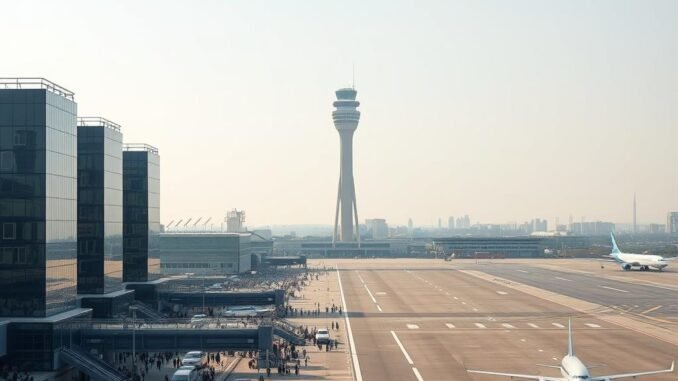

One in every five U.S. flights goes through New York airspace. Yet, there’s a shortage of 2,000 air traffic controllers. This shortage has led to a ground delay at Newark Liberty International Airport.
On the first day of FAA cuts, a traveler from EWR paid $899 for a short United flight. They watched the app refresh constantly and faced long TSA PreCheck lines. This experience shows the FAA’s plan to slow traffic when staffing is low.
The ground delay causes fuller planes and slower baggage drop. It also means earlier arrivals are better, connections are riskier, and airline apps update faster than gate screens. As EWR adjusts to FAA’s pace, this snapshot prepares us for what’s to come and how to navigate Newark Airport smoothly.
What happened at Newark Liberty International and why ground delays were issued
Travelers at Newark airport today saw the FAA slow down arrivals to keep things safe. The airport controlled traffic flow due to staffing gaps in air traffic control. This led to delays in check-in and baggage drop, but runways remained open.
How staffing shortages in air traffic control triggered FAA slowdowns
The FAA slows arrivals when there aren’t enough controllers. This is what caused delays at Newark. With fewer controllers, the tower couldn’t handle many planes at once.
To prevent overload, the FAA used a ground delay program. This spaced out flights from their origin airports. It kept planes and passengers safe despite the staffing issue.
Ground delay vs. ground stop: what it means for flights at Newark airport today
A ground delay means flights leave later and arrive on time. This is why Newark delays often show revised takeoff times. A ground stop, on the other hand, would stop all flights to Newark.
For today, the FAA used metering, not a full stop. Airlines like United and JetBlue held flights at their origin airports. This smoothed out the delays and reduced airborne holding.
Newark airport news context within broader National Airspace System constraints
The current slowdown is part of a nationwide issue with controller shortages. The FAA at Newark is following systemwide measures to trim schedules and meter arrivals. This is why Newark delays are similar to those at other busy airports during staffing crunches.
When weather or runway work reduces capacity, delays can pile up faster. Today’s Newark delays are part of a bigger picture in the National Airspace System, not just a local issue.
FAA’s phased flight reductions and how they affect New York airports
Travelers at new york airports are noticing fewer flights. The FAA is cutting schedules to ease congestion. This helps keep traffic flowing during busy times.
Expect leaner timetables at the airport closest to nyc. Airlines are flying less often, using bigger planes, and adjusting crew sizes. These changes affect all major airports in new york city.
Planned cuts escalating from 4% to 10% at 40 high‑traffic airports
The FAA started with a 4% cut on November 7. Then, it went to 6% by November 11, 8% by November 13, and 10% by November 14. This gradual reduction helps airlines adjust their plans at 40 busy airports, including new york’s.
At newyark airport, the 10% cut means fewer flights during peak hours. This can lead to longer waits and fuller planes. Airlines are trying to manage demand better.
Which airports are included: EWR, JFK, LGA and other major hubs
Newark Liberty International (EWR), John F. Kennedy International (JFK), and LaGuardia (LGA) are on the list. These airports are getting help to manage their busy schedules. This is to ease the strain on staff and keep important routes open.
Other major airports in the country are also seeing these reductions. This allows for better planning of arrivals and departures. The impact at each airport will depend on the time of day and the types of planes flying.
Why international flights face fewer mandated reductions
Long-distance flights usually keep their slots. This is because they rely on specific aircraft, agreements, and crew rules. Airlines protect these profitable routes while cutting back on shorter flights.
So, many wide-body flights continue at new york airports. But, regional and shuttle flights are more affected. This balance helps keep global schedules stable while airports adjust to the reductions.
Latest numbers on delays and cancellations impacting Newark Liberty International Airport
Early looks at newark airport delays today show long lines and crowded areas. At Terminal C, boarding was staggered and gate turns were tight. This shows ewr traffic is being managed more closely. Travelers should get ready for uneven traffic flows as the day goes on.
FlightAware snapshot: cancellations and delays trends during the shutdown period
Industry trackers show a big increase in cancellations. By Tuesday, over 9,000 flights were cancelled nationwide. At EWR, delays were most common during mid-day and evening, with controllers spacing out flights.
During the same time, on-time arrivals in the New York area dropped below September levels. This kept delays at ewr high, even when the weather was clear. It shows that capacity limits, not weather, were the main cause of delays.
Flight delays at Newark airport compared to national averages
Between October 28 and November 3, only about two-thirds of flights into New York’s airports were on time. Newark saw longer delays than airports in the Midwest and Southeast. This shows a decline in on-time arrivals.
FAA guidance directs travelers to its status boards for the latest information. When delays and programs stack up, Newark’s delays are even more noticeable during the afternoon rush.
Flights cancelled Newark vs. flights delayed Newark: what travelers should expect
As cuts increased from 4% to 10%, airlines sometimes cut more flights to keep connections. This led to more cancellations during peak times. Off-peak times saw longer taxi times and spacing between flights. This meant fewer same-day options and longer waits for passengers.
Expect changes: some airlines cut frequencies early, while others hold slots for later. For newark airport delays today, expect early notice of cancellations and manageable delays at the gate.
| Metric | Newark (EWR) | NYC Area Average (EWR/JFK/LGA) | Recent National Average | Traveler Takeaway |
|---|---|---|---|---|
| On‑time arrivals (Oct 28–Nov 3) | Under 65% | Under 65% | 81% (September) | Regional performance lagged national norms amid controller shortfalls |
| Primary cause of delay | ATC spacing and programs | ATC and volume | Weather and volume | Capacity limits at EWR drove sustained holds |
| Peak disruption windows | Late morning and evening banks | Similar peaks across NYC | Varies by region | Plan buffers around bank times to navigate ewr traffic |
| Balance of impacts | Higher share of delays vs. cancels on off‑peak; cancels rise in peaks | Comparable mix | More delays than cancels | Monitor flights delayed newark in real time; rebook early if peaks loom |
Note: For operational status, the FAA’s dashboard remains the authoritative source for delay programs and ground actions.
Air traffic control staffing shortages and the FAA response
Travelers are facing ewr atc delays due to fewer crews and tighter schedules. New York’s busy area gets slower when newark air traffic control spots are empty. The FAA focuses on safety, adjusting schedules to fit available controllers and ease congestion.
For the latest, passengers check newark airport travel advisories from airlines and the FAA.
FAA statement: slowing traffic to ensure safety amid controller gaps
The FAA says it will slow arrivals in busy skies when there aren’t enough controllers. This means fewer flights per hour at busy times, causing delays. At newark air traffic control, managers adjust runway use to keep flights moving and reduce unnecessary holds.
These steps help manage airport congestion by spacing out departures and arrivals. It’s a careful balance to keep operations safe and follow travel advisories during busy times.
Secretary Sean Duffy’s updates on back pay and staffing shortfalls
Transportation Secretary Sean Duffy said retirements jumped from 4 a day to 15–20 during the shutdown. The agency is short about 2,000 certified controllers. This shortage leads to ewr atc delays when schedules meet limited staffing at newark air traffic control.
Duffy mentioned back pay talks helped stabilize some staffing as the shutdown ended. But, operations will remain tight during the holiday rush. This message guides the FAA’s planning and travel advisories to ease congestion when demand is high.
How many controllers the FAA aims to hire and the path to recovery
The FAA plans to hire about 2,000 controllers this year to rebuild. Training is slow, so operations are cautious to manage congestion and delays. This careful approach keeps delays predictable and ensures safety during busy times.
Along with hiring, the FAA is using flexible slots and schedules to ease peak times. Passengers should watch for travel advisories as the FAA introduces new staff and streamlines training.
| Issue | Current FAA Action | Impact at EWR | Traveler Takeaway |
|---|---|---|---|
| Controller Shortage | Hiring ~2,000 trainees and reallocating coverage | ewr atc delays rise at peak periods | Build extra time and monitor newark airport travel advisory |
| Retirement Surge | Accelerated recruitment and overtime management | Reduced throughput at newark air traffic control | Expect spaced arrivals to limit airport congestion |
| Safety Metering | Traffic management initiatives and flow control | Measured taxi‑out times and holds | Track faa newark updates via airline alerts |
| Holiday Demand | Slot flexibility and prioritized sequencing | More predictable, but longer, queues | Adjust connections; watch for ewr atc delays in bank waves |
How airlines are adjusting schedules during FAA‑ordered reductions
Airlines are cutting back on flights and using bigger planes to keep more seats available. This change is to meet the FAA’s new rules at the ewr airport. Travelers now see fewer flights but more seats on each one.
There’s a plan to work together across newark airports and the whole airport new york city system. This is to help when flights delayed newark start to pile up.
Airline discretion on which flights to cancel or delay
Airlines choose which flights to cancel or delay. They often keep busy business flights and key routes. They start by cutting short flights and then keep nonstop flights to reduce misconnects at airport new york city hubs.
When flights delayed newark cause problems, agents at ewr airport might suggest using QR codes. Call centers can quickly rebook on available seats.
Examples from carriers coordinating with the FAA to minimize disruptions
At Newark Liberty, United and partners have merged off-peak shuttles and used bigger planes. This is possible because of slot flexibility in New York. They aim for fewer, fuller flights to move more people.
Ground teams work to keep planes moving by aligning pushback times with flow-control windows. This way, fewer flights sit idle across newark airports.
Impacts on connecting itineraries through airport New York City hubs
Thinner schedules mean more chance of missed connections when flights delayed newark tighten layovers. Many travelers choose nonstops or longer connects to avoid rebooking issues at ewr airport.
If a newark flight cancels late, priority goes to onward seats at nearby airport new york city gateways. This helps keep itineraries on track, even with network cuts.
Ripple effects across the New York air ports and Northeast corridor
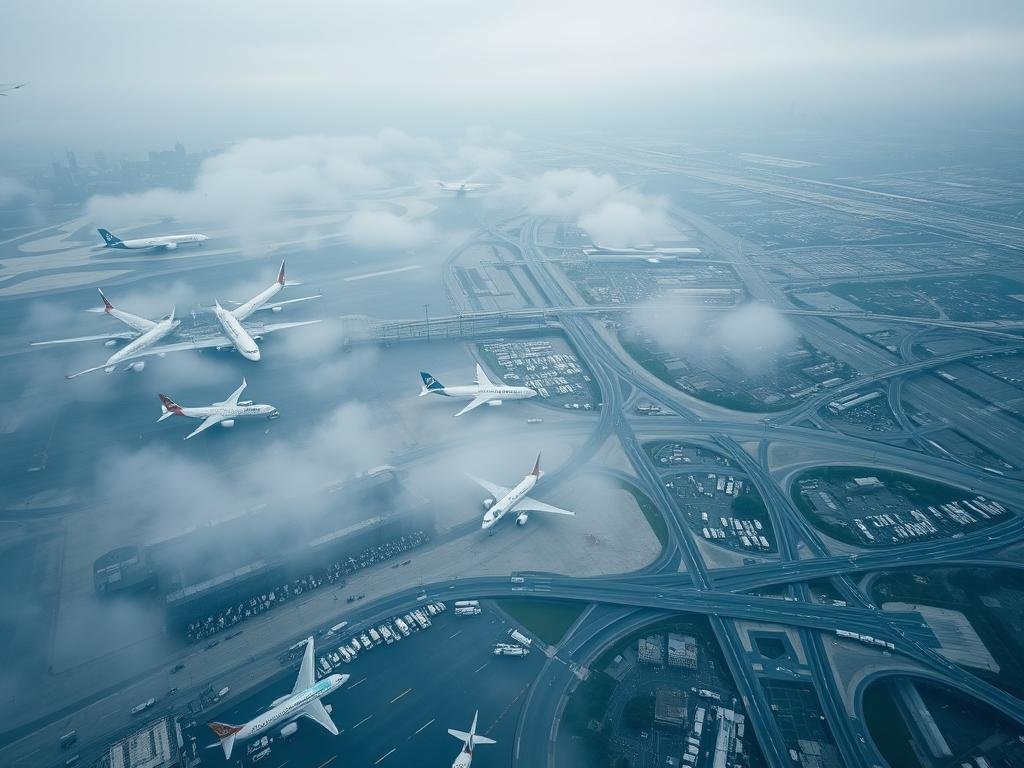
When things get tight at ewr, more people head to other new york air ports. This means longer lines and fuller planes. It also affects airport nyc operations, including gates, crews, and slots at the airport closest to nyc.
Spillover congestion between EWR, JFK, LGA and nearby airports
Changes at Newark can send more people to LaGuardia or John F. Kennedy International. Some flights even go to Philadelphia or Stewart. This movement across new york air ports can make flights late.
These changes put a strain on the airport’s resources and security lines. When ewr gets too busy, other airports feel the impact. This can cause delays on shuttle routes and regional flights.
JFK ground delay interplay and slot usage flexibility in NYC
Programs like jfk ground delay help manage peaks by spacing out arrivals. But, there’s only so much room for this. Slot flexibility at Kennedy and LaGuardia lets airlines adjust schedules without losing access.
This flexibility helps avoid last-minute cancellations. It also allows for changes between airport nyc stations when demand changes. This keeps things running smoothly across new york air ports while ewr adjusts.
Airport congestion factors: staffing, weather, and infrastructure limits
How many controllers are on duty limits how many flights can happen each hour. Weather and airport constraints can reduce this number. This affects how delays spread across the system.
When bad weather hits, flights get delayed and buffers disappear. This leads to more holds and swaps at the airport closest to nyc for each route. It affects ewr and other new york air ports as crews and aircraft move around.
| Node | Primary Pressure Point | Typical Spillover | Operational Levers |
|---|---|---|---|
| EWR | Gate saturation and arrival metering | LGA shuttles, PHL diversions, bus-bridges | Re-time banks, swap aircraft, hold outbound connections |
| JFK | Arrival spacing and ramp throughput | LGA frequency adds, international retimes | Use slot flexibility, initiate jfk ground delay programs |
| LGA | Short-haul waves and gate turns | Shift to EWR or JFK, upgauge select flights | Peak smoothing, crew reassignments, stand usage |
| Secondary Airports | Pop-up demand from rebooks | ISP, SWF, and PHL takeovers | Add frequencies, charter lifts, adjust ground handling |
Traveler guidance for navigating Newark delays
With newark airport delays today affecting schedules, travelers can stay ahead by using a few simple habits. Check updates often, plan extra time, and keep options open under the current newark airport travel advisory.
Checking real‑time status at fly.faa.gov and airline apps
Start with the FAA’s dashboard at fly.faa.gov for a live picture of runway flow, ground programs, and weather impacts. Pair that with the airline app, which can push gate changes and boarding alerts faster than overhead announcements at newark airport today.
Refresh the app often. Travelers report seeing new boarding times up to 10 minutes before agents call them. For deeper context on staffing limits and waivers, see this guide to Newark flight trouble.
Rebooking strategies when delays at EWR cascade
Book the earliest flight you can; morning departures are less prone to rolling delays. If flights cancelled newark create a domino effect, call the airline directly while you stand in line and keep the app open. Phone agents can often secure seats faster than in‑app chat.
Avoid tight connections through busy hubs. If a same‑day option appears in the app, move quickly. During surges, some travelers even hold a back‑up reservation, an approach that can help when newark airport delays today intensify.
Timing tips for security lines amid TSA staffing constraints
Arrive earlier than usual at EWR, even with a newark airport travel advisory. TSA staffing has been steadier than air traffic control, but lines swell when schedules bunch.
Target a curb‑to‑gate buffer of at least two hours for domestic and three for international during peak periods at newark airport today. Early flights, lighter bags, and Clear or TSA PreCheck can shave precious minutes when airport newark is under strain.
Economic and operational impacts of prolonged reductions
Extended schedule cuts change how the airport operates daily. With fewer flights, airlines use bigger jets and adjust their turnaround times. This shift moves the stress from runways to gates and ramps, affecting the international airport in New Jersey.
Operators face fuller planes, longer lines, and tighter service times even with fewer flights. This leads to more congestion at the airport, from check-in to baggage claim.
Jet fuel demand and pricing pressure during capacity cuts
Reduced flights mean less fuel used in the short term. But, using bigger planes and concentrated flights can increase fuel needs. This can push up fuel prices and make planning harder at the airport.
Changes in long-haul flights also happen. The international airport in New Jersey might see more consistent transatlantic flights. But, plans for fuel and storage must adapt to avoid mismatches during busy times.
Ground crew and gate utilization when schedules shrink
Fewer flights don’t mean less work. Bigger planes need more help, including more time for loading and catering. If turns take longer, gates can get backed up, causing more congestion.
To keep things running smoothly, planners use split shifts and cross-trained teams. When flights bunch up, the airport needs more staff to handle the traffic.
Implications for international airport in New Jersey operations
With less space at Newark Airport, how flights come and go changes. Domestic flights need to match long-haul schedules to avoid missed connections. This affects how stands are used and when crews work.
Vendors and airlines adjust their staffing levels, from wheelchair help to deicing teams. As schedules get tighter, the airport balances runway slots with gate time to manage traffic and congestion.
Key timelines: from shutdown escalation to expected stabilization
The first morning of cuts showed changes were fast. Travelers felt it at gates and security. This pattern will shape how newark delays unfold over the next weeks.
Even as funding talks advance, the system needs time to reset, which is why flight delays in newark may appear uneven day to day.
Schedule of FAA cuts: 4%, 6%, 8%, up to 10%
Reductions started at 4% on November 7. They went up to 6% on November 11, then to 8% on November 13. The biggest cut was 10% on November 14.
Each increase adds to gate pressure and queue times. This makes newark airport delays today worse. It also raises the chance of an ewr delay in the afternoon push.
| Date | Planned Reduction | Primary Impact Window | Operational Notes |
|---|---|---|---|
| Nov 7 | 4% | Morning banks | Immediate terminal effects; early signs of flight delays in newark |
| Nov 11 | 6% | Midday peaks | Growing gate holds; rising risk of ewr delay on turnarounds |
| Nov 13 | 8% | Afternoon push | Longer taxi‑out times; rolling newark delays across banks |
| Nov 14 | 10% | All peaks | Highest congestion; airlines trim frequencies to steady flows |
Conditions that could ease or extend Newark airport delays today
More controllers can ease spacing rules. Clear skies help arrivals recover. Slot flexibility in New York lets carriers swap flights, softening ewr delays during peaks.
But, low ceilings, runway work, or crew timeouts can extend flight delays in newark. If staffing dips suddenly, delays will get worse again.
Why recovery can lag even after government reopens
Schedules don’t snap back overnight. Airlines must reposition aircraft and crews. They also need to reset maintenance and clear backlogs.
Controller training and hiring take time. Throughput rises in steps, not leaps. Until flows normalize, expect periodic newark airport delays today as the system balances safety with demand.
Related FAA safety and operations updates relevant to travelers
Travelers moving through the busy airport nyc system have seen swift updates from the agency and airlines. Those flying via the newark ariport report that refreshing airline apps can surface alerts faster than public feeds. This is true, even during staffing-related slowdowns tied to faa newark advisories.
General statement on ATC staffing and temporary slowdowns
The FAA’s Oct. 6 update linked controller shortages to traffic pacing. When crews run thin, managers meter departures and arrivals to keep spacing safe. This is why a day with clear skies can feel tight across airport new york city hubs.
During these periods, they issue programs that stretch taxi times and push takeoff slots later. For flyers, this can mean a rolling wait even when the aircraft is at the gate.
New York slot flexibility extended to reduce congestion
To ease choke points, the agency extended limited slot usage relief at JFK and LaGuardia through Summer 2026. Carriers can trim schedules by up to 10 percent without penalty. They can also shift to larger aircraft and smooth peaks.
This aims to blunt a jfk ground delay and keep critical connections intact across airport nyc operations. For those routing through newark ariport, the same policy encourages airlines to balance banks of flights. It also avoids harsh surges during the evening push.
How TMIs and infrastructure issues elsewhere can ripple to EWR
Traffic Management Initiatives—like miles-in-trail, ground delay programs, or reroutes—often begin far from New Jersey. A telecom outage at a TRACON or a constraint at a center can force wider spacing. These changes cascade through the National Airspace System to EWR.
When a regional center slows flows after an event or an outage, aircraft headed to airport new york city hubs compress into tighter windows. The result can stack into a new jfk ground delay or trigger faa newark pacing, even on calm weather days.
Because the networks interlock, a hiccup at a Florida or Texas facility can echo into the Northeast. Flyers should expect knock-on effects across airport new york city schedules. They should plan extra time when connections thread through the newark ariport and nearby hubs.
Conclusion
Newark airport news today shows a clear truth: staffing gaps in air traffic control have real, near-term effects. The FAA is slowing traffic to keep flights safe. This has led to phased cuts from 4% to 10%, tightening capacity at EWR and other busy fields.
This is why newark airport delays today feel sharper during peak hours. For travelers at ewr airport, early departures and nonstop bookings help. They also need extra time in the terminal when the schedule shifts.
The agency’s slot flexibility in New York through 2026 aims to ease congestion. Airlines are upgading and adjusting ground staffing. But, on-the-ground lines move slower when a 10% trim meets crowded checkpoints.
Flyers who monitor airline apps and fly.faa.gov, call carriers directly to rebook, and protect tight connections are better off. They are more prepared when new ark airport operations change late in the day.
Controller retirements and a hiring shortfall mean the system will stabilize in steps, not all at once. Delays at ewr airport are part of a national constraint. So, spillovers from LaGuardia and JFK can ripple into New Jersey.
The takeaway is practical: plan ahead, keep alerts on, and favor simple routings. With patient adjustments, the impact at newark airort can be managed. Safety remains the first priority.
Be the first to comment