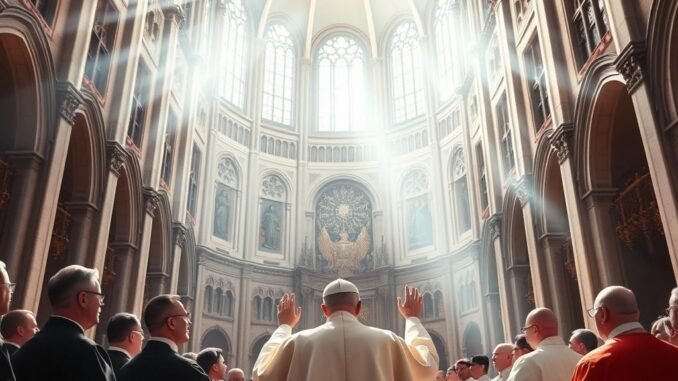

When a new pope is chosen, TV viewers worldwide can hit over 100 million. The phrase “Habemus Papam” means “We have a pope.” It marks a new era for the Catholic Church and turns Vatican City into a global spotlight.
The phrase is straightforward but the tradition is rich. From St. Peter’s Basilica balcony, a senior cardinal deacon announces the new pope. He shares the pope’s birth name and chosen papal name. Then, the pope gives his first blessing to the world.
This tradition has been in place for centuries. It was first used by Pope Martin V in 1417. Today, it’s instantly understood by millions.
In Latin, the phrase starts with “Annuntio vobis gaudium magnum; habemus papam.” The first name is in the accusative case. The surname is not changed. The regnal name can be accusative or genitive.
For more on this tradition, check out this entry on Habemus Papam. It shows how language, history, and ceremony come together in this brief announcement.
Crowds gather in St. Peter’s Square, waiting for white smoke. They listen for the voice that confirms the new pope. The announcement is formal, but its impact is deeply human. In a few words, the Catholic Church tells the world it has a new leader, starting a new chapter.
Overview of the Pope Announcement Tradition in Vatican City
Each pope announcement happens at the heart of Vatican City. It’s where tradition meets global attention. This moment is a celebration of faith and unity.
Why the papal announcement is made from St. Peter’s Basilica
The announcement comes from St. Peter’s Basilica’s central balcony. It looks over St. Peter’s Square. This spot lets the pope speak to a huge crowd and the world.
This place shows the connection to the past. The basilica’s façade is a symbol of the Catholic Church. It links the new pope to Rome’s apostolic tradition.
The role of the protodeacon of the College of Cardinals
The senior cardinal deacon, known as the protodeacon, usually makes the announcement. If he’s not there, the next senior cardinal deacon takes over. This keeps the tradition alive.
Over the years, different cardinals have made this historic announcement. Pericle Felici in 1978, Jean-Louis Tauran in 2013, and Dominique Mamberti in 2025. Each has shared the news of a new pope with the world.
Connection to the Urbi et Orbi blessing after the announcement
Right after the announcement, the new pope appears. He gives the Urbi et Orbi blessing. This is his first blessing to Rome and the world.
This sequence—proclamation, presentation, and blessing—links the Church to its followers. It makes the pope’s announcement a powerful act of unity.
The Phrase and Its Roots: Habemus papam meaning
For centuries, a few Latin words have marked a big change for the Catholic Church. The phrase heard from St. Peter’s Square balcony brings joy and clarity. It is short, serious, and precise.
Literal translation: “We have a pope”
The main part is habemus papam, which means “We have a pope.” The full announcement says, “Annuntio vobis gaudium magnum; habemus papam.” It shares great joy and confirms a new pope without giving names.
The word papam is the accusative form of “pope.” This makes the phrase formal and fixed.
We have a pope in Latin vs. translations and usage today
In English, it’s “We have a pope,” but many use the Latin for its impact. Media in Rome, London, and New York often start with Latin, then explain it in English. This is why people search for we have a pope in latin after each conclave.
German reports say “Habemus Papam,” sometimes with habemus papam übersetzung or habemus papam übersetzung deutsch. This explains “Wir haben einen Papst.” The Latin is brief and formal, making it easy to share.
Habemus meaning and variants such as “habemus papa”
At its heart, habemus means “we have,” from habere. The subject is shown by the ending, and the object comes next. So, it’s habemus papam, not “habemus papa.”
Online, you might see informal versions, but the official form is strict. Over time, it also helped standardize how the new pope’s names are used, keeping tradition alive.
| Element | Latin Form | Plain English | Notes |
|---|---|---|---|
| Opening joy | Annuntio vobis gaudium magnum | I announce to you a great joy | Scriptural echo sets the tone of celebration |
| Core phrase | Habemus papam | We have a pope | Standard formula; habemus papam meaning centers on confirmation of election |
| Verb focus | Habemus | We have | habemus meaning = first-person plural of “habere” |
| Object and case | papam (accusative) | pope (as direct object) | Distinguishes from the incorrect “habemus papa” |
| Modern usage | Latin kept; local glosses | English, German, and others | Media often cite Latin; see habemus papam übersetzung and habemus papam übersetzung deutsch in coverage |
How the Papal Conclave Works
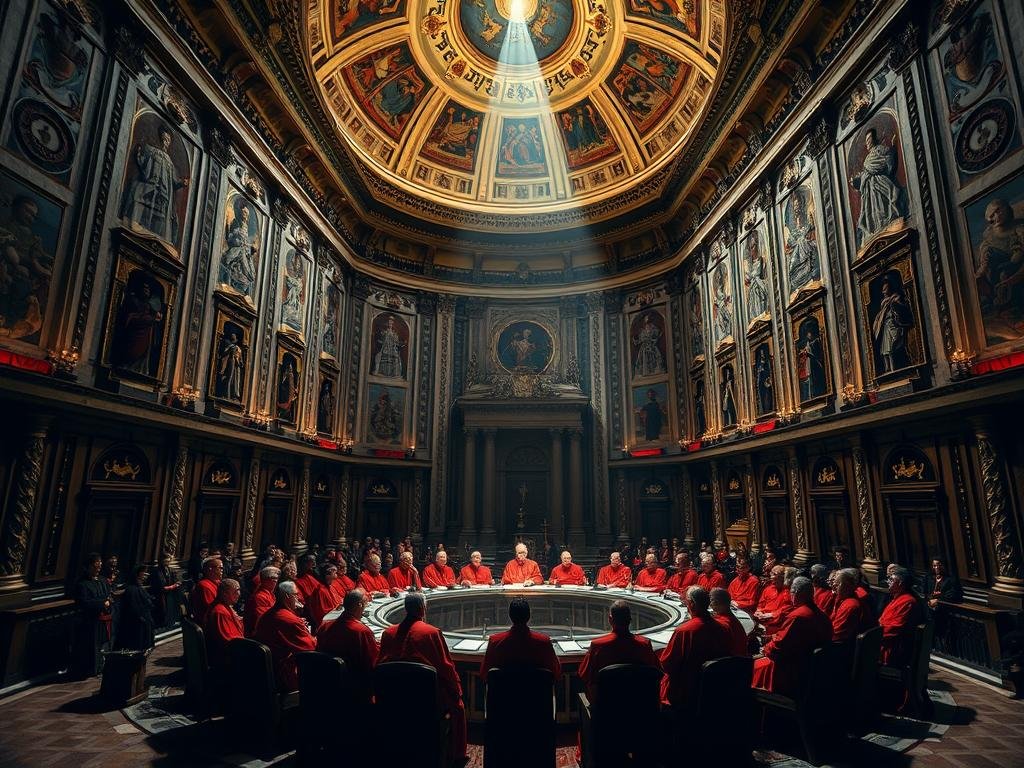
The papal conclave is the secret heart of choosing a new pope in Vatican City. It follows the Catholic Church’s rules, filled with rituals and secrecy. The goal is to find a new pope, known as we have a pope in latin—Habemus Papam.
What “conclave” means and why cardinals are sequestered
The word conclave comes from Latin, meaning “with a key.” It started in the 13th century. Back then, cardinals were locked in until they picked a pope. This kept things calm and honest.
Today, the Sistine Chapel is the safe place. Cardinals stay there, cut off from phones and media. This keeps the election fair and each vote private.
Timing after a pope’s death or resignation
After a pope passes away or steps down, the conclave starts within 20 days. This time lets for mourning and getting ready. Once voting begins, it usually goes fast.
The process is set: an oath, daily checks, and breaks for prayer. The Church mixes old traditions with a careful plan.
Cardinal electors and recent statistics about the College of Cardinals
As of May 2025, there are 252 cardinals worldwide. 135 are under 80 and can vote. But, only 133 voted in the 2025 conclave because two were sick.
Ballots are burned after each vote, a tradition from 1417. Black smoke means no choice yet; white smoke means a new pope is chosen.
| Aspect | Details | Relevance to Papal Election |
|---|---|---|
| Meaning of Conclave | From “cum clave,” locking cardinals in for deliberation | Ensures independence from external pressure in Vatican City |
| Sequestration | No phones, media, or outside contact in the Sistine Chapel | Protects secrecy and the conscience of electors in the Catholic Church |
| Timing | Begins within 20 days of death or resignation | Balances mourning, preparation, and a prompt decision |
| Electors (May 2025) | 135 eligible; 133 participated due to illness | Determines the voting body for the papal conclave |
| Two-Thirds Threshold | Required majority to elect a pope | Shapes ballot rounds and signals when white smoke appears |
| Ballot Burning | Documented at least from 1417 | Produces black or white smoke to inform the public |
White Smoke and Signals of a New Pope
In Vatican City, two signs tell us the papal conclave has made a decision. The first is the white smoke above the Sistine Chapel. The second is the formal pope announcement from the loggia, declaring a new pope.
Centuries of practice shape these signals so every pilgrim in St. Peter’s Square—and viewers at home—can follow the papal election in real time.
White smoke tradition from the Sistine Chapel chimney
The chimney on the Sistine Chapel became the stage for the world’s gaze. Ballots from the papal conclave were burned after each vote. Over time, the fire’s output turned into a message.
Historians note that clear use of white smoke to signal success took hold in the early 20th century. This gave a simple cue that the pontiff had been chosen and a pope announcement would soon follow.
Black smoke vs. white smoke: what each indicates
Black smoke means the cardinals have not reached the two-thirds threshold required in a papal election. When white smoke appears, it announces a new pope, chosen to serve as pontiff for Catholics worldwide. The crowd responds at once, knowing the next step is the proclamation from St. Peter’s Basilica.
From wet straw to chemical compounds: avoiding confusion
Earlier conclaves mixed wet straw with ballots to darken the burn for black smoke, while drier materials produced lighter plumes. This method sometimes led to guesswork in the square. To remove doubt, technicians now use dedicated combustion units with specific chemical compounds and a dual-tube system—one for black, one for white.
These refinements make the moment legible at a glance, bridging a centuries-old ritual with modern expectations for clarity during a papal election.
Format of the Announcement from the Loggia of St. Peter’s
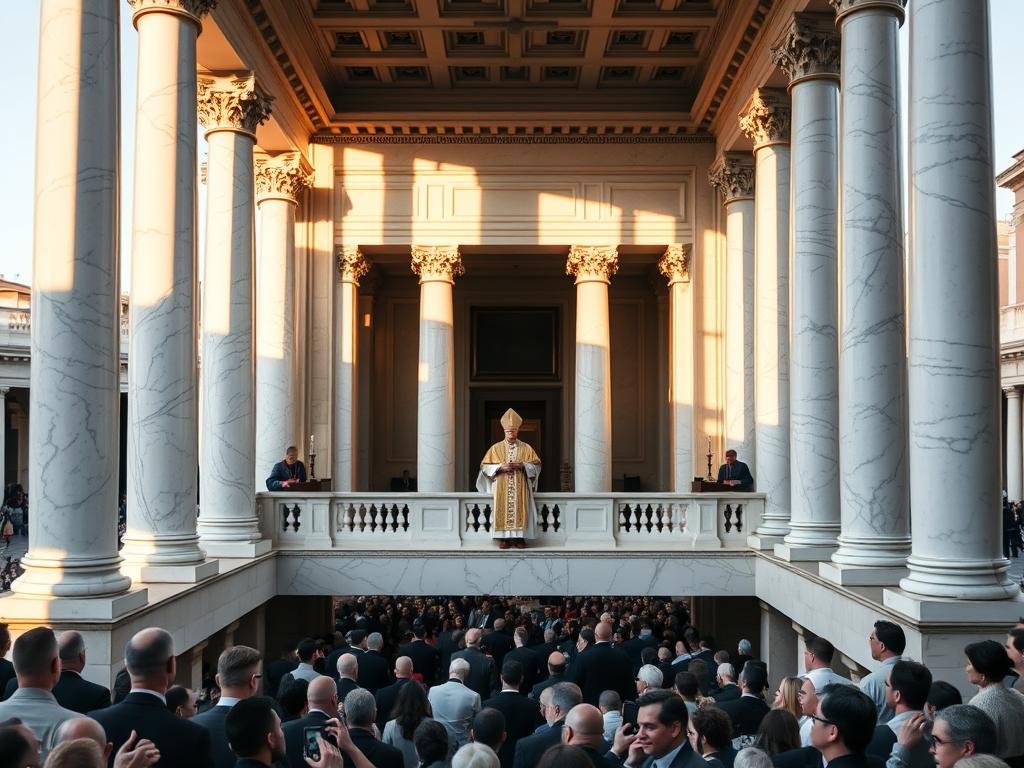
The ritual on the loggia is a mix of ceremony, language, and history. In vatican city, it marks unity for the Catholic Church. The crowd hears the classic words, including habemus, signaling we have a pope in Latin.
Original Latin formula used by the protodeacon
The protodeacon steps forward and says the standard Latin formula: Annuntio vobis gaudium magnum; habemus papam. He then names the elected cardinal and the new title. This tradition links vatican city to the global Catholic Church.
How the pope’s birth name and papal name are proclaimed
The protodeacon gives the birth name in Latin, followed by the family name. The new title comes last. This order focuses on identity and service, keeping the habemus moment clear.
Multilingual greetings noted in recent announcements
After Latin, greetings in several languages welcome the world. Italian and other major tongues are used. This way, the message from vatican city reaches everyone, keeping the core formula intact.
| Element | Latin Practice | Purpose | Notable Variations |
|---|---|---|---|
| Opening phrase | Annuntio vobis gaudium magnum; habemus papam | Signals we have a pope in Latin | Minor wording shifts such as “ac” vs. “et” in some years |
| Birth first name | Given in the accusative (e.g., Carolum, Iosephum) | Honors the elected cardinal’s identity | Case may vary by style guide or precedent |
| Surname | Undeclined, original form | Maintains accuracy for global audiences | Reflects native spelling conventions |
| Papal name | Accusative preferred; genitive also seen | States the regnal title for the Catholic Church | Numerals handled by history and immediate predecessor |
| Multilingual greetings | Italian, Spanish, French, German, English, and more | Extends the pope announcement beyond Latin | Adjusted to crowd and broadcast needs in vatican city |
Historical Background and Evolution of the Formula
The phrase “habemus papam” emerged from a time of crisis and healing. In 1417, the Council of Constance ended the Western Schism by electing Odo Colonna as Pope Martin V. This event led to the clear declaration, “we have a pope.” This statement has been used at every papal election ever after.
Before 1484, the wording varied, but the core message remained the same. The announcement for Innocent VIII shows early use of the phrase. Over the centuries, slight changes were made, but the essence remained the same. For more on this, see this history of the formula and white.
Grammar also evolved. Today, the Holy See uses both genitive and accusative forms for the papal name. In 2005, Cardinal Protodeacon Jorge Medina Estévez used the genitive. The use of numerals has also changed over time. For example, “Primi” was used for John Paul I in 1978, but not for Francis in 2013.
Despite these changes, the tradition remains strong. The protodeacon continues to announce the new pope from the Loggia of St. Peter’s. In 2025, Cardinal Dominique Mamberti announced Pope Leo XIV, showing how the Church keeps its traditions alive. Today, “habemus papam” is a powerful symbol of unity and hope, understood by people around the world.
Be the first to comment