

As of July 2024, New York City’s population hit 8,478,000. It added 87,000 people in just one year. This is more than any other U.S. city, the NYCEDC’s Economic Snapshot says, using U.S. Census Bureau data.
This growth comes after a 35,000-person increase the year before. It shows New York City is really growing fast.
All five boroughs saw growth in 2024. The city’s outflow of people fell to 91,000, the lowest in a decade. This is even better than 2019’s loss of 132,000.
Nearly 500,000 recent college graduates have moved to the city. They bring new energy and talent. This helps New York City grow and thrive.
The numbers show New York City’s population is on the rise again. It’s the largest in the nation. For those wondering how many people live in New York City, the answer is clear: it’s growing fast.
LinkedIn noted New York City’s top spot in population growth. This shows New York City’s vitality in big cities.
This growth is not just a short-term trend. With more jobs and better migration trends, New York City’s growth is back in the news and in our lives.
New York City population 2024: the latest count and why it matters
New data shows New York City’s population is growing steadily. This growth affects jobs, transportation, housing, and services. It gives a clear number for planning, showing recent gains and recovery from the pandemic.
What is the population of New York City in 2024?
The latest numbers from NYCEDC show 8,478,000 people live in New York City in 2024. This is an increase of 87,000 from last year. A recent NYC population update also highlights the city’s growth from just 7,681 residents in 1698 to millions today.
How many people live in NYC compared with 2023 and 2025 projections
New York City added 87,000 residents from 2023 to 2024, reaching 8,478,000. Analysts predict stable growth into 2025, with hiring and migration improving. While no 2025 forecast is official, this baseline helps track future growth.
| Year | Population | Change vs. Prior Year | Context |
|---|---|---|---|
| 2020 | 8,740,647 | — | Pre-pandemic benchmark |
| 2023 | 8,391,000 | +35,000 | Early recovery phase |
| 2024 | 8,478,000 | +87,000 | Rebound accelerates |
| 2040 (proj.) | 9,000,000 | — | Long-run planning anchor |
Is NYC the biggest city in the US by population?
Yes, New York City is the largest city in the US. With a population of 8,478,000 in 2024, it leads in population growth. This size highlights the need for infrastructure to support its growing labor market.
New York City added 87,000 residents: where the growth came from
New data shows New York City’s population is on the rise. The city welcomed 87,000 new residents in 2024. This boost is a sign of recovery and renewed interest in the city.
NYCEDC and recent Census updates reveal growth across the board. This pattern suggests a stronger sense of belonging. It also answers the question of whether the city’s population is growing again.
All five boroughs added residents in 2024
All five boroughs saw an increase in population in 2024. Brooklyn and Queens experienced neighborhood rebounds. The Bronx and Staten Island saw family-driven growth. Manhattan welcomed people back for schools, culture, and work.
This balanced growth supports a strong foundation for the city’s population. It also helps keep services and small businesses stable.
Net domestic migration improved to the lowest outflow in a decade
The city’s net domestic outflow hit a ten-year low. This improvement shows better retention. People stayed for jobs, transit, and cultural experiences.
Lower exits help stabilize schools and housing demand. As domestic shifts ease, the city’s population growth can build on local connections.
International migration and young talent inflows bolster growth
International arrivals offset remaining outflows and brought new skills. Nearly half a million recent college graduates moved to the city. They boost tech, media, health care, and design.
These inflows, combined with better domestic retention, shape the city’s population dynamics. For those asking if NYC’s population is growing, the talent pipeline and global draw are key indicators.
| Driver | 2024 Direction | Why It Matters | Signal for NYC |
|---|---|---|---|
| Borough-wide gains | Broad increases | Distributes growth across services and small firms | Stronger neighborhood resilience |
| Net domestic migration | Lowest outflow in a decade | Fewer exits stabilize demand and schools | Improves base for nyc population growth |
| International migration | High inflows | Adds diversity, skills, and consumer spending | Supports population new york city momentum |
| Young graduate movers | Nearly 500,000 in 2021 | Feeds high-skill sectors and startups | Answers is nyc population growing with talent-led gains |
Migration trends: is NYC population growing again?
Recent Census figures show a big change. New York City gained 35,000 residents last year and 87,000 this year. Every borough saw an increase in people.
For those wondering, is nyc population growing, the answer is yes. The numbers show a steady increase, not a decrease.
Net domestic migration has seen its lowest outflow in a decade. International arrivals have also bounced back. Plus, nearly 500,000 recent college graduates have moved to the city.
This mix of migration trends shows the city is attracting young talent and newcomers. It’s rebuilding its base with fresh faces.
The job market in early 2025 is strong. This supports household formation and longer stays. The connection between labor demand and population growth is clear.
National data by Karim Kamkar shows urban rebounds across regions from 2023 to 2024. New York led in absolute growth. This data reinforces the city’s appeal.
These changes don’t answer every question about the future. But they set a clear baseline. For those tracking is nyc population growing and what is new york’s population likely to reflect next, the latest gains form a measurable trend.
As nyc.population edges higher, the new york.population story ties back to mobility, work, and education pipelines. These feed the five boroughs.
Jobs and the economy powering New York’s growth
Strong hiring is boosting the city’s momentum. Employers are growing, wages are increasing, and people are moving for jobs. This job market explains the steady new york city population and broader new york population 2024 trends across the boroughs.
Record private sector and total jobs in early 2025
The New York City Economic Development Corporation reports new highs in early 2025. The city added 7,000 private jobs in January, on top of 114,500 in 2024. Private employment is now 149,800 jobs above pre-pandemic levels.
This growth is key for the new york city population. It attracts newcomers and keeps graduates in the city. It also shapes the population in new york during 2024–2025, as job stability anchors households and boosts confidence.
NYC metro area led the nation in jobs added year over year
The New York metro added 27,900 jobs in January and 188,100 over the year, the largest gain among U.S. metros. With a 2.8% annual growth rate, it trailed only Orlando among the 25 biggest regions. This growth supports population new york dynamics and helps answer what is the population in new york by showing why people stay and arrive.
As hiring spreads across counties and industries, it underpins in-migration and new leases. This reinforces the nyc popularion base that fuels local demand.
High-wage and middle-wage sectors that fully recovered
Re-benchmarked data show full recovery in key middle- and high-wage fields. Education, with a median wage near $93,000, and administrative and support, near $73,000, are back above pre-pandemic levels. Healthcare and social assistance rose 8.5% year over year, while professional and business services and finance and insurance also expanded.
This mix supports family-sustaining jobs and career ladders. As sectors diversify, the new york population 2024 picture looks more resilient. This keeps the new york city population stable while drawing talent that lifts population new york over time.
- Healthcare and social assistance: +8.5% y/y, strong recapture of roles
- Professional and business services: steady expansion with high-skill demand
- Finance and insurance: continued hiring and wage strength
When job quality rises alongside job counts, it supports renting, home-seeking, and household formation. These factors are visible in nyc popularion shifts tied to work opportunity.
How many people live in the state of New York vs. New York City
New York City leads the state in numbers. As of July 2024, it has 8,478,000 people, up by 87,000 from last year. This shows the city’s big role in jobs, housing, and transportation.
NY population 2024 talks often begin with the city. It’s where most jobs are, and where many people move to. The city’s growth shows what New York’s population looks like in real life.
NY population 2024 context for statewide trends
The population of New York 2024 is influenced by the city’s growth. With more jobs and people moving here, the city is stable. Knowing the city’s population helps understand the state’s labor, transit, and business needs.
When looking at New York’s population, the city’s size is key. It helps compare local and statewide trends in housing and commuting.
What’s the population of New York City relative to the state?
New York City’s 8.478 million people make it a big player in the state. It’s where a lot of the state’s spending, education, and services happen.
By comparing NYC’s population to other areas, the population of New York 2024 story becomes clearer. For those wondering about the state’s population, starting with the city helps understand the big picture.
Neighborhood life and transit: indicators of a busy city
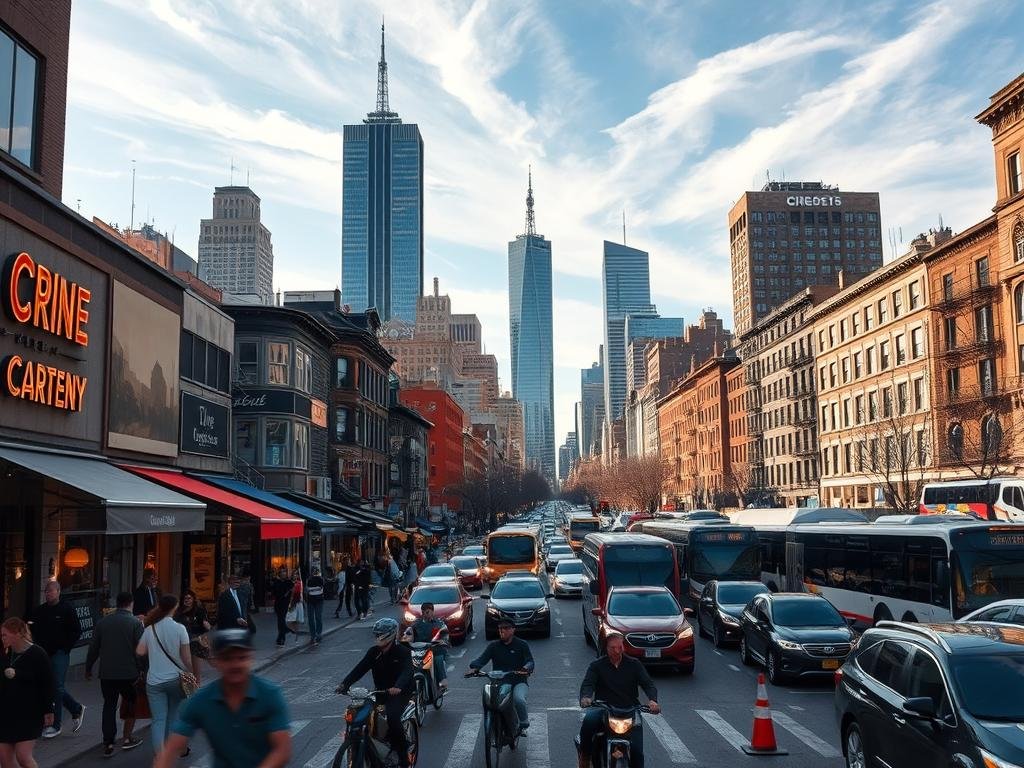
Street life shows New York City’s population is growing. Busy places and crowded trains show the city is always full. This shows the city’s population is more than just the 2023 numbers.
The pulse on the ground aligns with a city that draws residents and visitors alike, shaping how many people live in New York and reinforcing neighborhood vitality from Midtown to Jackson Heights.
Broadway attendance above pre-pandemic levels
Broadway is back to its old self, with more people than before. Hundreds of thousands of people go to shows every week. This shows the city’s energy and how it compares to its residents.
Hotel occupancy back to 100% of 2019 levels
Hotels are now as busy as they were in 2019. This is true all over Manhattan, Brooklyn, and Queens. Full hotels help local businesses and show the city’s appeal to visitors.
Subway and bus ridership momentum
More people are using the subway and buses. This is good for local businesses and shows the city’s vibrancy. It gives a real-time look at the city’s population, beyond just numbers.
| Indicator | Current Level | Change vs. 2019 | Year-over-Year Change | Neighborhood Impact |
|---|---|---|---|---|
| Broadway Attendance | 103.8% of pre-pandemic | +3.8% | +22% | More evening foot traffic and dining demand |
| Hotel Occupancy | 100.1% of 2019 benchmark | +0.1% | Recovered | Steady visitor spend across boroughs |
| Subway Ridership | 73.4% of Jan 2019 | -26.6% | +7.9% | Weekday and weekend service stabilization |
| Bus Ridership | 64.8% of Jan 2019 | -35.2% | +11.1% | Improved access for outer-borough corridors |
These signs paint a picture of New York City’s population in action. They show the city’s life beyond just numbers. They give a real feel of the city’s energy, from shows to morning commutes.
Housing and affordability amid population gains
Rising demand is changing rents and vacancies as the city grows. The number of people in NYC affects lease terms, competition, and prices. With more jobs and neighborhood life coming back, rentals are in high demand and prices keep going up.
Market gauges signal tight conditions. The StreetEasy Rent Index hit 122.2 in February 2025, up 21.8 points from 2020. Residential rents have gone up 4.2% in the last year. The StreetEasy Inventory Index fell to 71.9, down 22.9 points from 2019, showing a drop in rental stock.
Mortgage costs near 7% have slowed home sales nationally, the Wall Street Journal reports. Yet, big builders keep selling homes with deals. In NYC, the limited rental supply meets the steady flow of new residents, including young workers.
Developers, landlords, and city agencies must balance construction with cost control. The NYC population story is central to zoning debates, project plans, and incentives. More homes near transit can ease pressure, offer more choices, and support neighborhoods coming back to life.
| Indicator | Latest Reading | Change vs. Pre-2020 | Year-over-Year | What It Signals |
|---|---|---|---|---|
| StreetEasy Rent Index | 122.2 (Feb 2025) | +21.8 points vs. Feb 2020 | +4.2% | Steady rent growth aligned with demand from the population of nyc 2024 |
| StreetEasy Inventory Index | 71.9 (Feb 2025) | -22.9 points vs. 2019 | -8.2% | Tight supply as more residents ask how many people are in nyc and seek rentals |
| Resident Growth | +87,000 (latest year) | Above recent trend | Positive | Added demand across boroughs, shaping the new york.population housing mix |
| Mortgage Rate Context | ~7% (national) | Higher vs. 2020 lows | Elevated | Constrains buying power, keeping renters in market and affecting how much people live in new york rental stock |
As leasing seasons start, renters look for new units near transit. NYC’s diverse population means a wide range of housing options is needed. Clear rules and predictable timelines help turn demand into reality.
For households comparing NYC’s 2024 population with today, the main point is clear: there’s not enough housing. Listings that price right and offer a bit of flexibility are the first to go, near subways and buses.
Business formation, investment, and confidence in NYC
New firms, venture capital, and office use show the mood in NYC. These trends also reflect broader fundamentals tied to the population of New York City. People often look to business health to predict future momentum.
Net new businesses and startup dynamism
NYCEDC data show about 23,100 businesses started over the past year. This is roughly one in eight active firms. In 2024 Q2, 5,960 launches outpaced 5,340 closures, yielding net formation of +620.
This churn reflects steady startup energy across retail, food service, tech, and logistics. Founders track demand clusters by borough and corridor. They use foot traffic and hiring to test product-market fit.
Venture capital funding resilience in 2024
Venture investment held firm. Q4 2024 reached $5.499 billion, up 3.7% from Q3 and 14.1% year over year. Full-year VC totaled $23.633 billion, the fourth-best year on record for New York City.
Late-stage rounds stabilized while seed activity broadened into AI, fintech, life sciences, and climate tech. Investors cite market depth, talent pipelines, and consumer density. These factors are often linked to the population of New York City.
Office visitation and Class A performance
Work patterns remain mixed. REBNY reported 66% office visitation in January 2025, down from 72% in December. Class A+ visitation reached 80% of pre-pandemic levels, highlighting a flight to quality.
Kastle’s NYC metro occupancy averaged 53.5% in early March 2025, up 4.7 points year over year. Leasing tours concentrate in newer towers with strong amenities and transit access. These shifts intersect with the population of New York City landscape.
| Indicator | Latest Reading | Period | Change vs. Prior | Year-over-Year | Why It Matters |
|---|---|---|---|---|---|
| New Business Starts | 5,960 | 2024 Q2 | +620 net after 5,340 closures | Positive churn | Signals startup dynamism tied to demand and the nyc popularion base |
| VC Funding | $5.499B | Q4 2024 | +3.7% vs. Q3 | +14.1% | Resilient capital for scaling in a dense market asking what’s the population of new york city |
| VC, Full Year | $23.633B | 2024 | Fourth-best year | Below 2021, near 2019/2022 | Depth across AI, fintech, life sciences, climate tech |
| Office Visitation (REBNY) | 66% | Jan 2025 | -6 pts vs. Dec | Seasonal dip | Activity concentrated in Class A+ as firms plan around how many people live in nyc 2024 |
| Class A+ Visitation | 80% of pre-2019 | Jan 2025 | Outperforms market | Improving | Flight to quality supports prime corridors |
| Kastle Office Occupancy | 53.5% | Early Mar 2025 | +4.7 pts YoY | Higher | Gradual return shapes leasing and services tied to the population new york city |
Note: Business and capital indicators often move with hiring, consumer activity, and the scale implied by what is the population of new york city?. These factors anchor long-term plans for founders and investors.
How many people are in NYC? answering top search questions
Readers often ask how many people are in NYC. They want a reliable answer. The city’s population changes due to migration, jobs, and housing. So, the latest numbers are important.
New York City is the biggest city in the US. It attracts people for work, culture, and schools. These factors affect the city’s population and why it keeps growing.
What is the current population of New York City?
As of July 2024, New York City has about 8,478,000 residents. This number is the latest count used by experts. It answers the question of what is the current population of New York City.
This figure helps businesses understand demand. It also shows how many people are in New York now compared to recent years.
What is New York’s population trend in 2024–2025?
New York City is gaining residents again. From 2023 to 2024, the population increased by about 87,000. This growth is due to more international arrivals and better domestic moves.
A tight labor market also attracts workers. These trends suggest stability as 2025 starts. They keep interest high in the city’s population and its impact on daily life.
How many people live in NYC 2024 compared with 2023?
New York added about 87,000 people from 2023 to 2024. This brings the total to around 8,478,000. This increase follows a smaller rise the year before, showing momentum.
For those asking how many people are in New York versus last year, the answer is clear. The city grew at the fastest numeric pace in the nation during that span.
| Measure | 2020 | 2023 | 2024 | Change 2023→2024 |
|---|---|---|---|---|
| NYC Population (City) | 8,804,190 | ≈8,391,000 | ≈8,478,000 | +87,000 |
| Urban Area Population | — | 19,426,449 | 19,426,449 | Stable |
| Metro Statistical Area | — | 20.1 million+ | 20.1 million+ | Stable |
Key takeaway for searchers: what is the population of New York City and how many people are in NYC are linked questions. The 2024 estimate of about 8.48 million helps residents, visitors, and businesses plan with confidence.
What it means for 2025: outlook for New York City population

New York City’s population is on the rise after two years of growth. As of July 2024, it has 8,478,000 residents. The city’s recovery is influenced by migration, job opportunities, and housing.
New York City population 2025 expectations
Experts predict a modest increase in the city’s population. The population rose by 35,000 and then 87,000 in the last two years. This shows a growing confidence in the city.
The focus for 2025 is whether the city can welcome more people without making housing unaffordable. The economic growth in 2024 played a big role in this. Job opportunities and housing availability will be key in 2025.
Migration, jobs, and housing signals to watch
Migration trends are improving, with fewer people leaving and more coming in. The influx of recent graduates adds to the city’s energy. These factors contributed to the population growth in 2024 and will likely continue in 2025.
Jobs are also important. In 2024, private employers created 114,500 jobs, leading the nation. Tourism is also strong, with Broadway and hotels back to pre-pandemic levels.
Housing, on the other hand, is a challenge. Rents have gone up 4.2% and there are fewer rental homes. This tight supply affects the city’s population growth.
Is NYC population growth sustainable?
Sustainability depends on keeping people from leaving, building more homes, and creating jobs. If these conditions are met, the population can grow steadily. This would help maintain a stable population in 2025 and reduce turnover.
Watching office visits, like in Class A spaces, provides insight into work patterns. Strong public transit and visitor numbers enhance daily life. These factors support the city’s population in practical ways.
Conclusion
The latest Census shows New York City’s population in 2024 is 8,478,000. This is a 87,000 increase from last year. All five boroughs saw growth, showing a shift in migration.
Net domestic outmigration dropped to its lowest in a decade. International arrivals and over 500,000 new college graduates also boosted the population.
The city’s economy is strong. Employers added 114,500 private jobs in 2024. The NYC metro led the nation in job gains.
Urban life indicators are positive. Broadway attendance is back to 103.8% of pre-pandemic levels. Hotels are at 100.1%, and transit ridership is improving.
Business formation stayed positive, and venture capital reached $23.6 billion in 2024. This shows confidence in New York’s population.
Housing is a challenge. Rents went up 4.2% year over year. Rental inventory fell 8.2%, showing a tight supply.
More homes are needed to keep affordability and attract talent. The national scene is also important. Many cities grew in 2023–2024, with New York leading the nation.
In short, New York City’s population is 8.478 million and growing. Job strength, cultural life, and improving migration make it resilient. Now, the city must balance housing supply with demand to keep growth going.
Be the first to comment