Up to 40% of food in the United States is wasted each year. A big part of this waste starts with mold. So, what happens if you accidentally eat mold? This post offers quick, practical advice.
Experts like Josephine Wee, Ph.D. of Penn State, and Randy Worobo, Ph.D. of Cornell, agree on mold. It’s a natural fungus found everywhere. While safe in foods like brie, it’s a sign of spoilage in bread or leftovers.
For most people, eating a little mold is not a big deal. Stomach acid helps break it down. But, some molds produce toxins that can’t be killed by heat. That’s why food safety experts advise caution.
This article tells you what to do if you eat moldy food. It explains when to wait and when to act. It also talks about how much mold is too much and who’s at higher risk. Plus, it gives tips to prevent mold at home.
Quick Take: If You Ate Mold, What To Do Right Now
First, breathe. Food safety experts say most healthy people can eat a little mold without harm. They ask, what happens if you eat mold, and what should you watch for next?
Most cases are mild. Experts like Lillian Craggs-Dino and Randy Worobo say stomach acid usually breaks down mold. But, the effects of eating mold can vary, so watching the next few hours is key.
Stay calm and observe for symptoms
Rinse your mouth, drink water, and avoid more moldy food. Then, watch for symptoms like nausea, vomiting, diarrhea, belly cramps, fever, or a scratchy throat.
Also, look for breathing changes, hives, or swelling. These could be signs of mold poisoning, not just irritation. Keep track of when and how bad these symptoms are to share with a doctor if needed.
When to call a doctor or seek urgent care
Call a doctor right away if you have trouble breathing, keep vomiting, have a high fever, or diarrhea gets worse. These signs can mean more serious health issues from eating moldy food.
If symptoms last more than a day or get worse, get medical advice. Tell the doctor what you ate, how much, and when to understand the mold’s effects.
Who is at higher risk from mold ingestion
Some people need more care. Those with weakened immune systems face bigger risks from moldy food, including fungal infections.
People with mold allergies may react quickly or slowly. They might sneeze, have a runny nose, or an itchy throat. Those allergic to penicillin should also be careful, as rare but severe reactions can happen after eating moldy foods, as noted by Benjamin Chapman.
What Mold Is and Why It Shows Up On Food
Mold is a tiny fungus that lives with yeast and mushrooms. Food scientists like Josephine Wee explain how it spreads through invisible spores in the air. This is why mold on food is a big deal, from cutting boards to the fridge.
Mold as a microscopic fungus and omnipresent spores
There are tens of thousands of mold species. They release spores that land on bread, fruit, and leftovers. These spores are everywhere, on hands, in the air, and on packaging.
Outdoors, mold breaks down leaves and wood. Indoors, it feeds on damp foods. This is when the dangers of eating moldy food become real, as it can cause off-flavors and health risks.
Moisture, oxygen, temperature, and time: conditions that fuel growth
Mold needs water, air, warmth, and time to grow. Foods high in moisture, like berries and soft bread, invite mold to grow quickly. Once opened, oxygen lets mold spores spread, causing musty smells and fuzzy patches.
Warm kitchens speed up mold growth. If food sits out, spores can spread fast. This is when people often wonder what happens if they eat moldy food or bread.
Why refrigeration and low moisture slow mold
Chilling food to 40°F or below slows mold growth. Dry surfaces also stop spores from germinating. This reduces the risks from mold on food stored correctly.
Keeping lids tight, wiping condensation, and sealing cut surfaces limit oxygen and moisture. These steps help prevent mold growth and reduce the chance of eating moldy food during a busy week.
Good Mold vs. Bad Mold vs. Toxic Mold
Not all molds are dangerous. If you’re wondering about eating mold or moldy food, it’s important to know. Some molds are used on purpose in food, while others mean the food has gone bad. This affects taste, safety, and the risk of mold poisoning.
Safe, intentional molds in foods like brie and blue cheese
Cheesemakers add special molds to make flavors and textures. For example, Penicillium roqueforti makes the blue veins in Roquefort and Gorgonzola. Penicillium camemberti creates the white rind on Brie and Camembert. These molds are safe to eat in these foods.
When you eat mold in these foods, it’s different from eating moldy food at home. These molds are chosen and watched over. This makes it less likely to get sick from eating them.
Spoilage molds on bread, fruit, and leftovers
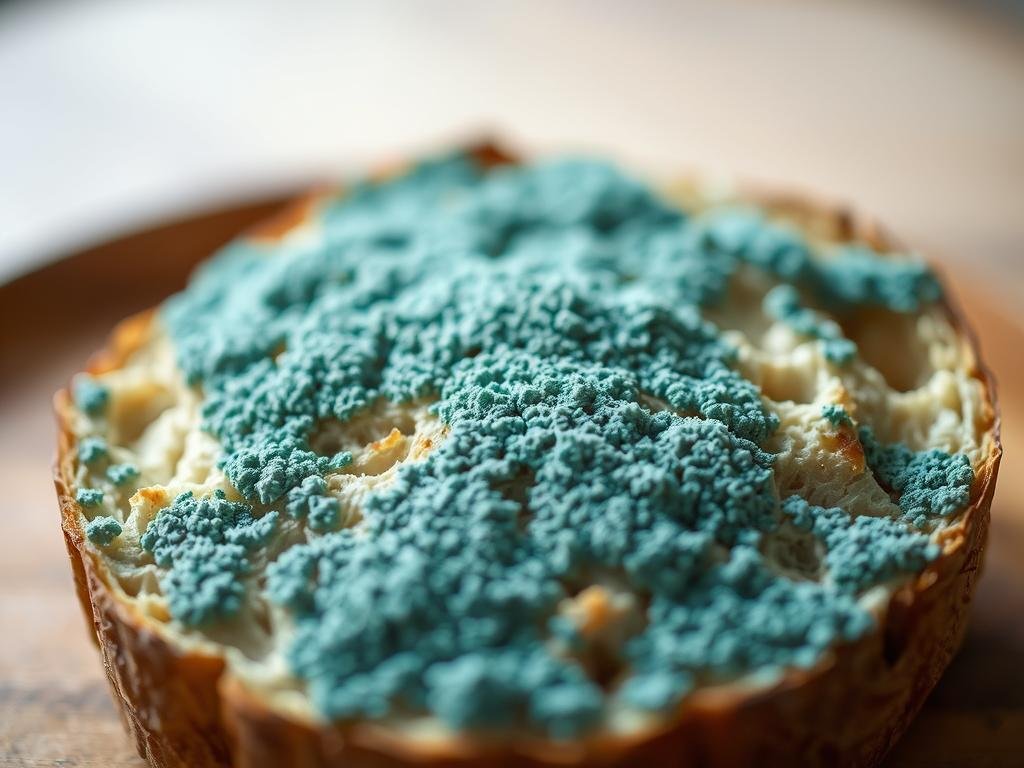
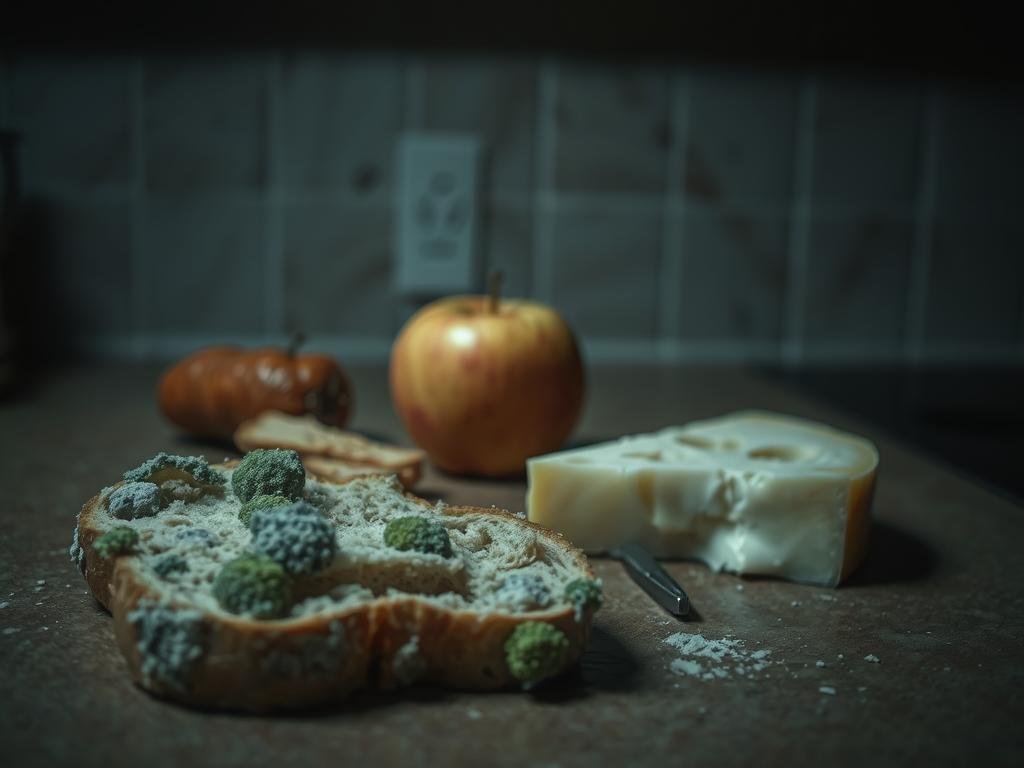
Spoilage molds show up as blue or black dots on bread and green patches on citrus. They also appear as gray fuzz on berries or jam. As they age, the colors can change to red, pink, or orange.
Once you see these molds, it’s not just the surface that’s affected. Roots can spread deeper than you can see. Eating moldy food can lead to off flavors and a quick reaction to spit it out. Yet, swallowing a bit can expose you to mold toxins.
Mycotoxin-producing molds and why you can’t tell by sight
Some molds can make mycotoxins, like aflatoxins, under the right conditions. You can’t tell by looking if these toxins are present. Two molds can look the same, but one might be toxic and the other not.
This uncertainty is why it’s important to be careful with soft, wet, or porous foods. If you eat moldy food with hidden roots, it’s hard to know without a lab test. It could lead to mold-related illnesses.
Typical outcomes for healthy people
Most healthy adults are okay after a small accidental bite. Their stomach’s acidity and enzymes help reduce the risk. Some might feel a bit nauseous or have an upset stomach. But, taste and smell usually stop people from eating more.
It’s wise to watch for any changes if you’re unsure about eating mold. If symptoms last or get worse, it could be more serious. It might be a sign of mold poisoning or other mold-related illnesses.
How Much Mold Can You Eat Before It’s a Problem?
Many wonder how much mold is safe to eat. Experts say it depends on several factors. These include the amount eaten, one’s health, and the type of mold.
Small accidental exposures vs. larger amounts
Small amounts of mold on food rarely harm healthy adults. But eating more can lead to nausea and vomiting. It’s important to know when to worry.
Eating a lot of mold, like on corn or wheat, is riskier. This is because harmful toxins can build up. Such cases can cause serious stomach problems and even liver damage.
Why taste and smell usually limit intake
Mold tastes bad and smells musty, so most stop eating it. This limits how much mold is eaten. The body naturally rejects food that tastes or smells off.
This instinct helps avoid eating moldy food. If food tastes or smells strange, it’s best to throw it away. This reduces the risk of mold-related problems.
Special cases: allergies, immunocompromised individuals
Those with mold allergies can react badly to even small amounts. It can cause skin issues, breathing problems, or throat tightness. People allergic to penicillin also need to be careful, as some molds can cause serious reactions.
People with weakened immune systems, like those on chemotherapy, are at higher risk. They should avoid moldy foods and choose fresh options. For those who speak other languages, the same caution applies. It’s best to avoid moldy foods altogether.
The safest choice is to throw away any food that looks or smells moldy. If unsure, it’s better to be safe than sorry. The effects of mold can vary greatly, so it’s always better to err on the side of caution.
Can You Cut Around Moldy Food or Should You Toss It?
They spot a fuzzy patch and wonder what happens if you eat moldy food or how much mold can you eat without getting sick. The answer depends on the food’s moisture and density. Mold forms roots, stalks, and spores, so cutting or tossing affects the mold spores ingestion impact and health risks.
When cutting around is acceptable (hard cheeses, firm produce)
Hard cheeses like cheddar, Swiss, or parmesan, and firm produce like cabbage, bell peppers, or carrots can be trimmed. Experts say dense, low-moisture foods slow mold’s spread. This makes it safer to eat some moldy foods.
When to discard entirely (soft produce, deli meats, yogurt, jams, leftovers)
Soft, high-moisture foods let mold dig deep, so trimming fails. Toss cucumbers, tomatoes, peaches, deli and lunch meats, yogurt, jams and jellies, peanut butter, and restaurant leftovers at the first sign. These items may also harbor bacteria like Listeria, which raises the health risks of eating moldy food. If one item in a container is moldy, nearby items are likely affected.
Hidden roots, spores, and bacteria you can’t see
Mold’s root-like filaments spread below the surface and slicing can scatter spores. That’s why sniffing is a bad idea—it can increase the mold spores ingestion impact. For more on what happens if you eat moldy food and practical next steps, see this expert guidance from a trusted medical source.
Safe trimming technique: at least one inch around the spot
When salvage is allowed, cut at least one inch around and below the moldy area. Keep the knife out of contact with the mold itself, remove a generous margin, and use the food right away. This approach manages the health risks of eating moldy food by limiting spread while respecting the reality of what happens if you eat moldy food, even in small amounts.
In kitchens where people are unsure how much mold can you eat, these steps offer a clear path. They balance waste reduction with safety, keeping focus on the true mold spores ingestion impact.
Foods Most Likely to Grow Mold and How to Spot It
Kitchens with warm, humid air are perfect for mold growth. Foods with lots of moisture and air exposure are at risk. Knowing how to spot mold is key to avoiding health issues.
Bread, berries, citrus, jams, and high-moisture foods
Sliced bread, even in vented bags, can mold quickly. This is why eating moldy bread is a common kitchen concern.
Strawberries, raspberries, and other berries spoil fast because of their thin skins. Citrus fruits, jams, soft cheeses, yogurt, sauces, deli meats, and leftovers are also at risk.
Color and texture clues: fuzz, dots, velvety patches
Bread may show blue or black dots that spread in threads. Citrus fruits can grow velvety green patches with a musty smell. Berries and jams often develop cotton-like gray fuzz.
Some mold colonies turn red, pink, or orange as they grow. These signs warn of health risks and mold exposure symptoms like nausea or stomach upset.
Why one moldy strawberry means the whole clamshell goes
In packed fruit, spores spread quickly between berries. Finding one moldy strawberry means the whole container is likely affected, even if others look good.
Moisture and bruises create hiding spots for bacteria and mold. Discard the whole clamshell to avoid mold exposure symptoms and health issues. This is important, as moldy crumbs can mix with soft fruit in a lunch bag.
Health Risks of Eating Moldy Food
Most people who eat a small bit of moldy food are okay, or they might feel a little stomach upset. The effects of eating mold depend on the type of mold, the food, and the person’s health. Some molds can make compounds that survive cooking and storage, so it’s best to be careful.
Visible fuzz can also signal other hazards on the same item, including harmful bacteria on deli meats and soft cheeses. This is why experts say to watch closely after any exposure.
Effects of consuming mold and mold ingestion consequences
The gut might react within hours. Mild nausea, cramping, or loose stools are common short-term effects. People with asthma or seasonal allergies might notice nasal stuffiness or coughing.
In rare cases, mold toxicity from eating it involves mycotoxins that can stress the liver and cause more serious symptoms. These effects depend on the dose, the specific toxin, and the person’s health.
Mold poisoning signs vs. typical foodborne illness
Mold poisoning signs often look like standard food poisoning: nausea, vomiting, diarrhea, and fever. Timing and context help figure out what’s happening. A meal with visible mold increases the chances that both molds and bacteria are involved.
Allergic responses can appear fast or the next day, ranging from itchy eyes and sneezing to wheezing. Tracking when symptoms start and how long they last helps doctors tell one pattern from another.
Mold-related illnesses from consuming food with mycotoxins
Some molds can produce stable toxins, like aflatoxins found in certain nuts and grains when storage goes wrong. These may raise the risk of liver damage over time. That’s why guidance is conservative around contamination.
People with weakened immunity face different stakes. They can be vulnerable to colonization in the gut or airways, making mold-related illnesses from consuming more serious. Getting medical advice quickly is important when symptoms get worse.
When to See a Doctor After Mold Ingestion
After eating something with mold, you might wonder what to do next. Most adults get a little stomach upset, but some symptoms need quick attention. The risk depends on how much mold you ate, your health, and if it has toxins.
Red-flag symptoms: shortness of breath, persistent vomiting, fever, diarrhea
If you have trouble breathing, keep vomiting, have a high fever, or diarrhea, see a doctor fast. These signs can mean you’re dehydrated, have an irritated airway, or a serious reaction. Babies, older people, pregnant women, and those with chronic illnesses should get help sooner.
Managing mild symptoms at home
If you feel nauseous or have mild cramps, rest and drink water or an oral rehydration solution. Eat small, bland meals like bananas, rice, applesauce, and toast. Watch how long your symptoms last; if they don’t go away in a day or get worse, call a doctor.
Considerations for penicillin or mold allergies
If you’re allergic to mold or penicillin, be extra careful. Watch for signs like nasal itching, throat tightness, hives, or wheezing. People with penicillin allergies should be cautious because some molds are similar. If you’re immunocompromised and notice any mold poisoning signs, call your doctor right away.
Knowing what happens if you eat mold helps you know what to do next. Watch for red flags, act fast, and get advice if symptoms don’t go away.
Scenario
Typical Symptoms
First Steps
When to Seek Care
Small accidental bite
Mild nausea, brief stomach upset
Hydrate, rest, bland foods
Symptoms last >24 hours or intensify
Large ingestion
Vomiting, diarrhea, abdominal pain
Oral rehydration, avoid irritants
Persistent vomiting, severe cramps, signs of dehydration
Allergy risk (mold or penicillin)
Hives, wheeze, throat tightness
Stop eating, monitor breathing
Immediate care for breathing issues or swelling
Immunocompromised
Any GI or respiratory symptom
Notify care team
Prompt evaluation after exposure or symptom onset
Prevention: Keep Your Kitchen and Groceries Mold-Free
They can lower the health risks of eating moldy food by stopping spores at the door. A few habits at the store and at home help them avoid what happens if you eat moldy food. This reduces the mold spores ingestion impact that can lead to mold-related illnesses from consuming contaminated items.
Smart shopping and storage to reduce moisture and exposure
They inspect clamshells, bread bags, and produce stems before buying. No fuzz, no soft spots, no off smells. At home, berries and leafy greens go in breathable or airtight containers as directed, with paper towels to wick moisture.
Firm produce stays dry; washed items get dried well before storage. Crispers are set for higher humidity to slow wilting while avoiding surface condensation that can feed mold. This cuts the health risks of eating moldy food from the start.
Refrigeration best practices: temps, timing, and covering foods
They keep the fridge at 40°F (4°C) or lower and the freezer at 0°F. Doors stay shut as much as possible to hold steady temps. Cooked foods go into the fridge within two hours, in shallow containers for quick cooling.
Everything gets covered. Lids, wraps, or sealed containers block drifting spores, trimming the mold spores ingestion impact if a stray item spoils. These steps also curb what happens if you eat moldy food by limiting cross-contact.
Fridge hygiene: cleaning solutions and schedules
Shelves and gaskets get a routine wipe every few months using 1 tablespoon of baking soda per quart of water, then a rinse and dry. If they see visible mold, they remove food and use 3 teaspoons of bleach per quart of water, then rinse and dry.
They wash bins and tools that touched a moldy item. Regular hygiene lowers the odds of mold-related illnesses from consuming foods that picked up spores inside the fridge.
Leftover safety windows and covering to block airborne spores
Leftovers are dated and used or tossed within three to four days. Reheats move past 165°F. In hot, humid weather, foods do not sit out; cold dishes nest in ice and hot dishes stay hot.
They never sniff suspicious items. This increases the mold spores ingestion impact. Tight covers and quick chill times reduce the health risks of eating moldy food and sidestep what happens if you eat moldy food that has gone off.
Myths and Realities About Moldy Foods
Many wonder what happens if you eat mold. The answer varies based on the food and how much you eat. In soft, moist foods, mold can spread beyond what you see. Cutting can also spread spores.
It’s common to think heat can fix everything. But, food scientists say many mold toxins are heat-stable. So, cooking or toasting won’t always make moldy food safe.
The idea that one bad berry is okay is a myth. In berries, moisture and tight packing let spores spread quickly. If one berry has fuzz, the rest are likely contaminated, even after rinsing.
Cheese also raises questions. Some cheeses, like brie and gorgonzola, have mold on purpose. But, if you find mold on cheese, it’s best to cut off at least an inch around and below the moldy spot. This rule helps keep you safe.
Color doesn’t always tell if mold is toxic. Green, black, or white mold might or might not produce toxins. The real concern is the food type and how moist it is, not its color.
For most people, a small bite of moldy food is usually okay. But, it might not taste or smell good. People with allergies or weakened immune systems should be extra careful and throw away moldy foods.
Claim
Reality
Why It Matters
Practical Action
Scrape mold and eat the rest
Soft foods allow hidden spread and possible mycotoxins
Explains what happens if you eat moldy food in moist items
Discard soft produce, deli meats, yogurt, jams, peanut butter, leftovers
Cooking kills mold toxins
Many mycotoxins are heat-stable
Reduces risk from the dangers of mold ingestion
Do not rely on baking or boiling to make it safe
One moldy berry is no big deal
Clusters share spores; moisture speeds spread
Clarifies what happen if you eat mold from a mixed pack
Toss the entire clamshell of berries
All moldy cheeses are unsafe
Brie, camembert, roquefort, gorgonzola use safe, intentional molds
Refines what happens if you eat mold in cultured cheeses
Trim hard cheeses 1 inch; toss soft cheeses with spoilage mold
Color reveals toxicity
Toxicity cannot be judged by color
Prevents false confidence about what happens if you eat mold
Assess by food type and moisture, not hue
Everyone reacts the same
Most healthy people tolerate tiny exposures; at-risk groups may not
Places the dangers of mold ingestion in context
Be extra cautious with allergies, penicillin sensitivity, or weak immunity
Conclusion
For most healthy people in the United States, small, accidental bites of moldy food are unlikely to cause serious trouble. The gut’s acid and enzymes often limit the effects of consuming mold. But, it’s hard to tell which mold species make mycotoxins, and spoiled foods can carry bacteria too.
So, the safest rule is: when in doubt, throw it out.
Knowing what happens if you eat mold starts with smart habits. Follow the hard-versus-soft rule for trimming, keep the fridge cold and clean, and cover foods to block airborne spores. These steps cut the health risks of eating moldy food and reduce mold ingestion consequences across bread, berries, leftovers, and high‑moisture items.
Stay alert to symptoms after exposure. Mild nausea or an upset stomach often passes. Seek care fast for red flags like shortness of breath, persistent vomiting, fever, or severe diarrhea.
People with asthma, mold allergies, pregnancy, or weak immune systems should be extra cautious. The effects of consuming mold can escalate in these groups.
In the end, a little knowledge goes a long way. Understand how mold grows, spot risky foods early, and store groceries with care. These simple moves lower the odds of a bad bite and limit the mold ingestion consequences if it happens.
FAQ
What happens if you eat mold or accidentally eat moldy food?
Most healthy people will be fine after a small, accidental bite. Stomach acid and enzymes usually break down many mold cells, as noted by Randy Worobo, Ph.D. You might notice brief nausea or an off taste. Monitor for the rest of the day for vomiting, diarrhea, fever, or breathing trouble. If symptoms persist or worsen, contact a healthcare provider.
What are the immediate effects of consuming mold?
Common reactions include a bad taste, mild stomach upset, or no symptoms at all. Larger amounts can trigger nausea or cramping as the body tries to expel the irritant. People with mold allergies may experience sneezing, runny nose, or an itchy throat.
How much mold can you eat before it’s a problem?
There’s no safe “dose.” Small, accidental exposures are usually low risk for healthy adults. Bigger amounts raise the chance of stomach distress and exposure to mycotoxins. When in doubt, throw it out.
What are the dangers of mold ingestion and mold toxicity from ingestion?
Certain molds can produce mycotoxins—like aflatoxins—that are heat-stable and potentially harmful to the liver. While severe poisoning is uncommon from household incidents, it’s a key reason experts advise discarding moldy foods.
What mold ingestion symptoms should I watch for after eating mouldy bread or fruit?
Watch for nausea, vomiting, diarrhea, stomach pain, fever, or allergic symptoms such as sneezing or throat itch. Seek urgent care for shortness of breath, persistent vomiting, high fever, or severe diarrhea.
Who is at higher risk from eating moldy food?
People with mold allergies, those with penicillin allergy, and anyone immunocompromised face higher risks. They may have stronger reactions or be more vulnerable to infection and should be cautious and seek prompt medical advice if exposed.
What happens if you eat mouldy bread compared with other foods?
Bread is porous and airy, allowing mold roots and spores to spread invisibly. If any slice is moldy, discard the whole loaf. The same caution applies to soft produce, jams, deli meats, and leftovers.
Can you tell if a mold is toxic by its color or look?
No. You cannot identify toxin-producing molds by sight. Colors vary with species and life stage. Because you can’t tell visually, experts recommend a cautious approach: when in doubt, throw it out.
Is it ever safe to cut mold off food?
Yes, but only for hard cheeses with hard rinds and firm fruits or vegetables. Cut at least one inch around and below the spot, keeping the knife out of the mold. Use immediately. Discard soft foods where roots can spread deeper.A:
Why can’t you just scrape mold off soft foods?
In soft, moist foods, mold’s root-like filaments can penetrate below the surface, and cutting or scraping can spread spores. These items may also harbor bacteria. For safety, discard soft produce, deli meats, yogurt, jams, peanut butter, and leftovers.
What foods most often grow mold, and how do you spot it?
Bread, berries, citrus, jams, sauces, lunch meats, and soft dairy mold quickly. Signs include blue or black dots, velvety green patches, or cotton-like gray fuzz. Red, pink, or orange hues can appear as colonies mature.
Why does one moldy strawberry mean the whole clamshell goes?
Airborne spores spread easily and berries are high in moisture, so contamination often extends beyond the single berry. For safety, discard the entire container.
What mold ingestion symptoms should I watch for after eating mouldy bread or fruit?
Watch for nausea, vomiting, diarrhea, stomach pain, fever, or allergic symptoms such as sneezing or throat itch. Seek urgent care for shortness of breath, persistent vomiting, high fever, or severe diarrhea.
Who is at higher risk from eating moldy food?
People with mold allergies, those with penicillin allergy, and anyone immunocompromised face higher risks. They may have stronger reactions or be more vulnerable to infection and should be cautious and seek prompt medical advice if exposed.
What happens if you eat mouldy bread compared with other foods?
Bread is porous and airy, allowing mold roots and spores to spread invisibly. If any slice is moldy, discard the whole loaf. The same caution applies to soft produce, jams, deli meats, and leftovers.
Can you tell if a mold is toxic by its color or look?
No. You cannot identify toxin-producing molds by sight. Colors vary with species and life stage. Because you can’t tell visually, experts recommend a cautious approach: when in doubt, throw it out.
Is it ever safe to cut mold off food?
Yes, but only for hard cheeses with hard rinds and firm fruits or vegetables. Cut at least one inch around and below the spot, keeping the knife out of the mold. Use immediately. Discard soft foods where roots can spread deeper.A:
Why can’t you just scrape mold off soft foods?
In soft, moist foods, mold’s root-like filaments can penetrate below the surface, and cutting or scraping can spread spores. These items may also harbor bacteria. For safety, discard soft produce, deli meats, yogurt, jams, peanut butter, and leftovers.
What foods most often grow mold, and how do you spot it?
Bread, berries, citrus, jams, sauces, lunch meats, and soft dairy mold quickly. Signs include blue or black dots, velvety green patches, or cotton-like gray fuzz. Red, pink, or orange hues can appear as colonies mature.
Why does one moldy strawberry mean the whole clamshell goes?
Airborne spores spread easily and berries are high in moisture, so contamination often extends beyond the single berry. For safety, discard the entire container.
What mold ingestion symptoms should I watch for after eating mouldy bread or fruit?
Watch for nausea, vomiting, diarrhea, stomach pain, fever, or allergic symptoms such as sneezing or throat itch. Seek urgent care for shortness of breath, persistent vomiting, high fever, or severe diarrhea.
Who is at higher risk from eating moldy food?
People with mold allergies, those with penicillin allergy, and anyone immunocompromised face higher risks. They may have stronger reactions or be more vulnerable to infection and should be cautious and seek prompt medical advice if exposed.
What happens if you eat mouldy bread compared with other foods?
Bread is porous and airy, allowing mold roots and spores to spread invisibly. If any slice is moldy, discard the whole loaf. The same caution applies to soft produce, jams, deli meats, and leftovers.
Can you tell if a mold is toxic by its color or look?
No. You cannot identify toxin-producing molds by sight. Colors vary with species and life stage. Because you can’t tell visually, experts recommend a cautious approach: when in doubt, throw it out.
Is it ever safe to cut mold off food?
Yes, but only for hard cheeses with hard rinds and firm fruits or vegetables. Cut at least one inch around and below the spot, keeping the knife out of the mold. Use immediately. Discard soft foods where roots can spread deeper.A:
Why can’t you just scrape mold off soft foods?
In soft, moist foods, mold’s root-like filaments can penetrate below the surface, and cutting or scraping can spread spores. These items may also harbor bacteria. For safety, discard soft produce, deli meats, yogurt, jams, peanut butter, and leftovers.
What foods most often grow mold, and how do you spot it?
Bread, berries, citrus, jams, sauces, lunch meats, and soft dairy mold quickly. Signs include blue or black dots, velvety green patches, or cotton-like gray fuzz. Red, pink, or orange hues can appear as colonies mature.
Why does one moldy strawberry mean the whole clamshell goes?
Airborne spores spread easily and berries are high in moisture, so contamination often extends beyond the single berry. For safety, discard the entire container.
What mold ingestion symptoms should I watch for after eating mouldy bread or fruit?
Watch for nausea, vomiting, diarrhea, stomach pain, fever, or allergic symptoms such as sneezing or throat itch. Seek urgent care for shortness of breath, persistent vomiting, high fever, or severe diarrhea.
Who is at higher risk from eating moldy food?
People with mold allergies, those with penicillin allergy, and anyone immunocompromised face higher risks. They may have stronger reactions or be more vulnerable to infection and should be cautious and seek prompt medical advice if exposed.
What happens if you eat mouldy bread compared with other foods?
Bread is porous and airy, allowing mold roots and spores to spread invisibly. If any slice is moldy, discard the whole loaf. The same caution applies to soft produce, jams, deli meats, and leftovers.
Can you tell if a mold is toxic by its color or look?
No. You cannot identify toxin-producing molds by sight. Colors vary with species and life stage. Because you can’t tell visually, experts recommend a cautious approach: when in doubt, throw it out.
Is it ever safe to cut mold off food?
Yes, but only for hard cheeses with hard rinds and firm fruits or vegetables. Cut at least one inch around and below the spot, keeping the knife out of the mold. Use immediately. Discard soft foods where roots can spread deeper.A:
Why can’t you just scrape mold off soft foods?
In soft, moist foods, mold’s root-like filaments can penetrate below the surface, and cutting or scraping can spread spores. These items may also harbor bacteria. For safety, discard soft produce, deli meats, yogurt, jams, peanut butter, and leftovers.
What foods most often grow mold, and how do you spot it?
Bread, berries, citrus, jams, sauces, lunch meats, and soft dairy mold quickly. Signs include blue or black dots, velvety green patches, or cotton-like gray fuzz. Red, pink, or orange hues can appear as colonies mature.
Why does one moldy strawberry mean the whole clamshell goes?
Airborne spores spread easily and berries are high in moisture, so contamination often extends beyond the single berry. For safety, discard the entire container.
What mold ingestion symptoms should I watch for after eating mouldy bread or fruit?
Watch for nausea, vomiting, diarrhea, stomach pain, fever, or allergic symptoms such as sneezing or throat itch. Seek urgent care for shortness of breath, persistent vomiting, high fever, or severe diarrhea.
Who is at higher risk from eating moldy food?
People with mold allergies, those with penicillin allergy, and anyone immunocompromised face higher risks. They may have stronger reactions or be more vulnerable to infection and should be cautious and seek prompt medical advice if exposed.
What happens if you eat mouldy bread compared with other foods?
Bread is porous and airy, allowing mold roots and spores to spread invisibly. If any slice is moldy, discard the whole loaf. The same caution applies to soft produce, jams, deli meats, and leftovers.
Can you tell if a mold is toxic by its color or look?
No. You cannot identify toxin-producing molds by sight. Colors vary with species and life stage. Because you can’t tell visually, experts recommend a cautious approach: when in doubt, throw it out.
Is it ever safe to cut mold off food?
Yes, but only for hard cheeses with hard rinds and firm fruits or vegetables. Cut at least one inch around and below the spot, keeping the knife out of the mold. Use immediately. Discard soft foods where roots can spread deeper.A:
Why can’t you just scrape mold off soft foods?
In soft, moist foods, mold’s root-like filaments can penetrate below the surface, and cutting or scraping can spread spores. These items may also harbor bacteria. For safety, discard soft produce, deli meats, yogurt, jams, peanut butter, and leftovers.
What foods most often grow mold, and how do you spot it?
Bread, berries, citrus, jams, sauces, lunch meats, and soft dairy mold quickly. Signs include blue or black dots, velvety green patches, or cotton-like gray fuzz. Red, pink, or orange hues can appear as colonies mature.
Why does one moldy strawberry mean the whole clamshell goes?
Airborne spores spread easily and berries are high in moisture, so contamination often extends beyond the single berry. For safety, discard the entire container.
What mold ingestion symptoms should I watch for after eating mouldy bread or fruit?
Watch for nausea, vomiting, diarrhea, stomach pain, fever, or allergic symptoms such as sneezing or throat itch. Seek urgent care for shortness of breath, persistent vomiting, high fever, or severe diarrhea.
Who is at higher risk from eating moldy food?
People with mold allergies, those with penicillin allergy, and anyone immunocompromised face higher risks. They may have stronger reactions or be more vulnerable to infection and should be cautious and seek prompt medical advice if exposed.
What happens if you eat mouldy bread compared with other foods?
Bread is porous and airy, allowing mold roots and spores to spread invisibly. If any slice is moldy, discard the whole loaf. The same caution applies to soft produce, jams, deli meats, and leftovers.
Can you tell if a mold is toxic by its color or look?
No. You cannot identify toxin-producing molds by sight. Colors vary with species and life stage. Because you can’t tell visually, experts recommend a cautious approach: when in doubt, throw it out.
Is it ever safe to cut mold off food?
Yes, but only for hard cheeses with hard rinds and firm fruits or vegetables. Cut at least one inch around and below the spot, keeping the knife out of the mold. Use immediately. Discard soft foods where roots can spread deeper.A:
Why can’t you just scrape mold off soft foods?
In soft, moist foods, mold’s root-like filaments can penetrate below the surface, and cutting or scraping can spread spores. These items may also harbor bacteria. For safety, discard soft produce, deli meats, yogurt, jams, peanut butter, and leftovers.
What foods most often grow mold, and how do you spot it?
Bread, berries, citrus, jams, sauces, lunch meats, and soft dairy mold quickly. Signs include blue or black dots, velvety green patches, or cotton-like gray fuzz. Red, pink, or orange hues can appear as colonies mature.
Why does one moldy strawberry mean the whole clamshell goes?
Airborne spores spread easily and berries are high in moisture, so contamination often extends beyond the single berry. For safety, discard the entire container.
What mold ingestion symptoms should I watch for after eating mouldy bread or fruit?
Watch for nausea, vomiting, diarrhea, stomach pain, fever, or allergic symptoms such as sneezing or throat itch. Seek urgent care for shortness of breath, persistent vomiting, high fever, or severe diarrhea.
Who is at higher risk from eating moldy food?
People with mold allergies, those with penicillin allergy, and anyone immunocompromised face higher risks. They may have stronger reactions or be more vulnerable to infection and should be cautious and seek prompt medical advice if exposed.
What happens if you eat mouldy bread compared with other foods?
Bread is porous and airy, allowing mold roots and spores to spread invisibly. If any slice is moldy, discard the whole loaf. The same caution applies to soft produce, jams, deli meats, and leftovers.
Can you tell if a mold is toxic by its color or look?
No. You cannot identify toxin-producing molds by sight. Colors vary with species and life stage. Because you can’t tell visually, experts recommend a cautious approach: when in doubt, throw it out.
Is it ever safe to cut mold off food?
Yes, but only for hard cheeses with hard rinds and firm fruits or vegetables. Cut at least one inch around and below the spot, keeping the knife out of the mold. Use immediately. Discard soft foods where roots can spread deeper.A:
Why can’t you just scrape mold off soft foods?
In soft, moist foods, mold’s root-like filaments can penetrate below the surface, and cutting or scraping can spread spores. These items may also harbor bacteria. For safety, discard soft produce, deli meats, yogurt, jams, peanut butter, and leftovers.
What foods most often grow mold, and how do you spot it?
Bread, berries, citrus, jams, sauces, lunch meats, and soft dairy mold quickly. Signs include blue or black dots, velvety green patches, or cotton-like gray fuzz. Red, pink, or orange hues can appear as colonies mature.
Why does one moldy strawberry mean the whole clamshell goes?
Airborne spores spread easily and berries are high in moisture, so contamination often extends beyond the single berry. For safety, discard the entire container.
What mold ingestion symptoms should I watch for after eating mouldy bread or fruit?
Watch for nausea, vomiting, diarrhea, stomach pain, fever, or allergic symptoms such as sneezing or throat itch. Seek urgent care for shortness of breath, persistent vomiting, high fever, or severe diarrhea.
Who is at higher risk from eating moldy food?
People with mold allergies, those with penicillin allergy, and anyone immunocompromised face higher risks. They may have stronger reactions or be more vulnerable to infection and should be cautious and seek prompt medical advice if exposed.
What happens if you eat mouldy bread compared with other foods?
Bread is porous and airy, allowing mold roots and spores to spread invisibly. If any slice is moldy, discard the whole loaf. The same caution applies to soft produce, jams, deli meats, and leftovers.
Can you tell if a mold is toxic by its color or look?
No. You cannot identify toxin-producing molds by sight. Colors vary with species and life stage. Because you can’t tell visually, experts recommend a cautious approach: when in doubt, throw it out.
Is it ever safe to cut mold off food?
Yes, but only for hard cheeses with hard rinds and firm fruits or vegetables. Cut at least one inch around and below the spot, keeping the knife out of the mold. Use immediately. Discard soft foods where roots can spread deeper.A:
Why can’t you just scrape mold off soft foods?
In soft, moist foods, mold’s root-like filaments can penetrate below the surface, and cutting or scraping can spread spores. These items may also harbor bacteria. For safety, discard soft produce, deli meats, yogurt, jams, peanut butter, and leftovers.
What foods most often grow mold, and how do you spot it?
Bread, berries, citrus, jams, sauces, lunch meats, and soft dairy mold quickly. Signs include blue or black dots, velvety green patches, or cotton-like gray fuzz. Red, pink, or orange hues can appear as colonies mature.
Why does one moldy strawberry mean the whole clamshell goes?
Airborne spores spread easily and berries are high in moisture, so contamination often extends beyond the single berry. For safety, discard the entire container.
What mold ingestion symptoms should I watch for after eating mouldy bread or fruit?
Watch for nausea, vomiting, diarrhea, stomach pain, fever, or allergic symptoms such as sneezing or throat itch. Seek urgent care for shortness of breath, persistent vomiting, high fever, or severe diarrhea.
Who is at higher risk from eating moldy food?
People with mold allergies, those with penicillin allergy, and anyone immunocompromised face higher risks. They may have stronger reactions or be more vulnerable to infection and should be cautious and seek prompt medical advice if exposed.
What happens if you eat mouldy bread compared with other foods?
Bread is porous and airy, allowing mold roots and spores to spread invisibly. If any slice is moldy, discard the whole loaf. The same caution applies to soft produce, jams, deli meats, and leftovers.
Can you tell if a mold is toxic by its color or look?
No. You cannot identify toxin-producing molds by sight. Colors vary with species and life stage. Because you can’t tell visually, experts recommend a cautious approach: when in doubt, throw it out.
Is it ever safe to cut mold off food?
Yes, but only for hard cheeses with hard rinds and firm fruits or vegetables. Cut at least one inch around and below the spot, keeping the knife out of the mold. Use immediately. Discard soft foods where roots can spread deeper.A:
Why can’t you just scrape mold off soft foods?
In soft, moist foods, mold’s root-like filaments can penetrate below the surface, and cutting or scraping can spread spores. These items may also harbor bacteria. For safety, discard soft produce, deli meats, yogurt, jams, peanut butter, and leftovers.
What foods most often grow mold, and how do you spot it?
Bread, berries, citrus, jams, sauces, lunch meats, and soft dairy mold quickly. Signs include blue or black dots, velvety green patches, or cotton-like gray fuzz. Red, pink, or orange hues can appear as colonies mature.
Why does one moldy strawberry mean the whole clamshell goes?
Airborne spores spread easily and berries are high in moisture, so contamination often extends beyond the single berry. For safety, discard the entire container.
What mold ingestion symptoms should I watch for after eating mouldy bread or fruit?
Watch for nausea, vomiting, diarrhea, stomach pain, fever, or allergic symptoms such as sneezing or throat itch. Seek urgent care for shortness of breath, persistent vomiting, high fever, or severe diarrhea.
Who is at higher risk from eating moldy food?
People with mold allergies, those with penicillin allergy, and anyone immunocompromised face higher risks. They may have stronger reactions or be more vulnerable to infection and should be cautious and seek prompt medical advice if exposed.
What happens if you eat mouldy bread compared with other foods?
Bread is porous and airy, allowing mold roots and spores to spread invisibly. If any slice is moldy, discard the whole loaf. The same caution applies to soft produce, jams, deli meats, and leftovers.
Can you tell if a mold is toxic by its color or look?
No. You cannot identify toxin-producing molds by sight. Colors vary with species and life stage. Because you can’t tell visually, experts recommend a cautious approach: when in doubt, throw it out.
Is it ever safe to cut mold off food?
Yes, but only for hard cheeses with hard rinds and firm fruits or vegetables. Cut at least one inch around and below the spot, keeping the knife out of the mold. Use immediately. Discard soft foods where roots can spread deeper.A:
Why can’t you just scrape mold off soft foods?
In soft, moist foods, mold’s root-like filaments can penetrate below the surface, and cutting or scraping can spread spores. These items may also harbor bacteria. For safety, discard soft produce, deli meats, yogurt, jams, peanut butter, and leftovers.
What foods most often grow mold, and how do you spot it?
Bread, berries, citrus, jams, sauces, lunch meats, and soft dairy mold quickly. Signs include blue or black dots, velvety green patches, or cotton-like gray fuzz. Red, pink, or orange hues can appear as colonies mature.
Why does one moldy strawberry mean the whole clamshell goes?
Airborne spores spread easily and berries are high in moisture, so contamination often extends beyond the single berry. For safety, discard the entire container.
What mold ingestion symptoms should I watch for after eating mouldy bread or fruit?
Watch for nausea, vomiting, diarrhea, stomach pain, fever, or allergic symptoms such as sneezing or throat itch. Seek urgent care for shortness of breath, persistent vomiting, high fever, or severe diarrhea.
Who is at higher risk from eating moldy food?
People with mold allergies, those with penicillin allergy, and anyone immunocompromised face higher risks. They may have stronger reactions or be more vulnerable to infection and should be cautious and seek prompt medical advice if exposed.
What happens if you eat mouldy bread compared with other foods?
Bread is porous and airy, allowing mold roots and spores to spread invisibly. If any slice is moldy, discard the whole loaf. The same caution applies to soft produce, jams, deli meats, and leftovers.
Can you tell if a mold is toxic by its color or look?
No. You cannot identify toxin-producing molds by sight. Colors vary with species and life stage. Because you can’t tell visually, experts recommend a cautious approach: when in doubt, throw it out.
Is it ever safe to cut mold off food?
Yes, but only for hard cheeses with hard rinds and firm fruits or vegetables. Cut at least one inch around and below the spot, keeping the knife out of the mold. Use immediately. Discard soft foods where roots can spread deeper.A:
Why can’t you just scrape mold off soft foods?
In soft, moist foods, mold’s root-like filaments can penetrate below the surface, and cutting or scraping can spread spores. These items may also harbor bacteria. For safety, discard soft produce, deli meats, yogurt, jams, peanut butter, and leftovers.
What foods most often grow mold, and how do you spot it?
Bread, berries, citrus, jams, sauces, lunch meats, and soft dairy mold quickly. Signs include blue or black dots, velvety green patches, or cotton-like gray fuzz. Red, pink, or orange hues can appear as colonies mature.
Why does one moldy strawberry mean the whole clamshell goes?
Airborne spores spread easily and berries are high in moisture, so contamination often extends beyond the single berry. For safety, discard the entire container.
What mold ingestion symptoms should I watch for after eating mouldy bread or fruit?
Watch for nausea, vomiting, diarrhea, stomach pain, fever, or allergic symptoms such as sneezing or throat itch. Seek urgent care for shortness of breath, persistent vomiting, high fever, or severe diarrhea.
Who is at higher risk from eating moldy food?
People with mold allergies, those with penicillin allergy, and anyone immunocompromised face higher risks. They may have stronger reactions or be more vulnerable to infection and should be cautious and seek prompt medical advice if exposed.
What happens if you eat mouldy bread compared with other foods?
Bread is porous and airy, allowing mold roots and spores to spread invisibly. If any slice is moldy, discard the whole loaf. The same caution applies to soft produce, jams, deli meats, and leftovers.
Can you tell if a mold is toxic by its color or look?
No. You cannot identify toxin-producing molds by sight. Colors vary with species and life stage. Because you can’t tell visually, experts recommend a cautious approach: when in doubt, throw it out.
Is it ever safe to cut mold off food?
Yes, but only for hard cheeses with hard rinds and firm fruits or vegetables. Cut at least one inch around and below the spot, keeping the knife out of the mold. Use immediately. Discard soft foods where roots can spread deeper.A:
Why can’t you just scrape mold off soft foods?
In soft, moist foods, mold’s root-like filaments can penetrate below the surface, and cutting or scraping can spread spores. These items may also harbor bacteria. For safety, discard soft produce, deli meats, yogurt, jams, peanut butter, and leftovers.
What foods most often grow mold, and how do you spot it?
Bread, berries, citrus, jams, sauces, lunch meats, and soft dairy mold quickly. Signs include blue or black dots, velvety green patches, or cotton-like gray fuzz. Red, pink, or orange hues can appear as colonies mature.
Why does one moldy strawberry mean the whole clamshell goes?
Airborne spores spread easily and berries are high in moisture, so contamination often extends beyond the single berry. For safety, discard the entire container.
What mold ingestion symptoms should I watch for after eating mouldy bread or fruit?
Watch for nausea, vomiting, diarrhea, stomach pain, fever, or allergic symptoms such as sneezing or throat itch. Seek urgent care for shortness of breath, persistent vomiting, high fever, or severe diarrhea.
Who is at higher risk from eating moldy food?
People with mold allergies, those with penicillin allergy, and anyone immunocompromised face higher risks. They may have stronger reactions or be more vulnerable to infection and should be cautious and seek prompt medical advice if exposed.
What happens if you eat mouldy bread compared with other foods?
Bread is porous and airy, allowing mold roots and spores to spread invisibly. If any slice is moldy, discard the whole loaf. The same caution applies to soft produce, jams, deli meats, and leftovers.
Can you tell if a mold is toxic by its color or look?
No. You cannot identify toxin-producing molds by sight. Colors vary with species and life stage. Because you can’t tell visually, experts recommend a cautious approach: when in doubt, throw it out.

Be the first to comment