

Every year, one in five U.S. students face bullying. But, help often arrives too late. In Bayville NJ, the case of 14-year-old Adriana Olivia Kuch highlights this issue. Her story tests the effectiveness of school safety measures.
Adriana Kuch, a freshman at Central Regional High School, took her own life on Feb. 3, 2023. This happened just two days after a violent attack was recorded and shared online. Her father, Michael Kuch, believes the school didn’t do enough to protect her.
The family has now filed a lawsuit in Ocean County. They claim the school failed to address violence and didn’t follow the New Jersey Anti-Bullying Statute. They also accuse the former superintendent of defamation and invasion of privacy. Later, prosecutors charged juveniles with aggravated assault and conspiracy.
This case led to protests, the superintendent’s resignation, and state attention. It raises important questions for everyone involved. When should schools call the police? How should they handle videos that spread harm? The answers will help prevent future tragedies in schools across the U.S.
Overview of the New Jersey case and why it matters for school bullying policies
The Adriana Kuch case in the Central Regional School District shows how schools handle bullying. It’s a test of the New Jersey Anti-Bullying Statute and school safety. Families, teachers, and officials look at this case to see if bullying policies are effective.
Key timeline: Hallway assault, viral video, and tragic aftermath
On February 1, 2023, Adriana was attacked in a school hallway. A video showed a pink liquid thrown on her, followed by a group attack. Adults intervened, and four students were suspended after the video went viral.
Two days later, Adriana took her own life at her Bayville home. The Ocean County Prosecutor charged four juveniles with aggravated assault and conspiracy. Some reports also mentioned harassment. These events have made officials rethink school safety and bullying policies.
Roundup approach: Verified reporting and sourced details
This summary comes from trusted sources like NBC New York, NPR, and the New York Post. They covered the lawsuit, the attack video, the superintendent’s resignation, and the Prosecutor’s actions. These reports give a clear picture of what happened and when.
Using verified reports is key when talking about the New Jersey Anti-Bullying Statute and the Central Regional School District’s actions. It helps everyone understand the steps taken by law enforcement and school officials.
Relevance to U.S. parents, students, and educators
The case makes us question when schools should call the police and how quickly they should document incidents. It shows how social media can make harm worse.
For families across the U.S., the Central Regional School District’s response and the Ocean County Prosecutor’s role are important. They inform discussions about school safety. These details help parents, students, and teachers push for stronger, clearer bullying policies that work in real time.
Details of the hallway attack and social media dissemination
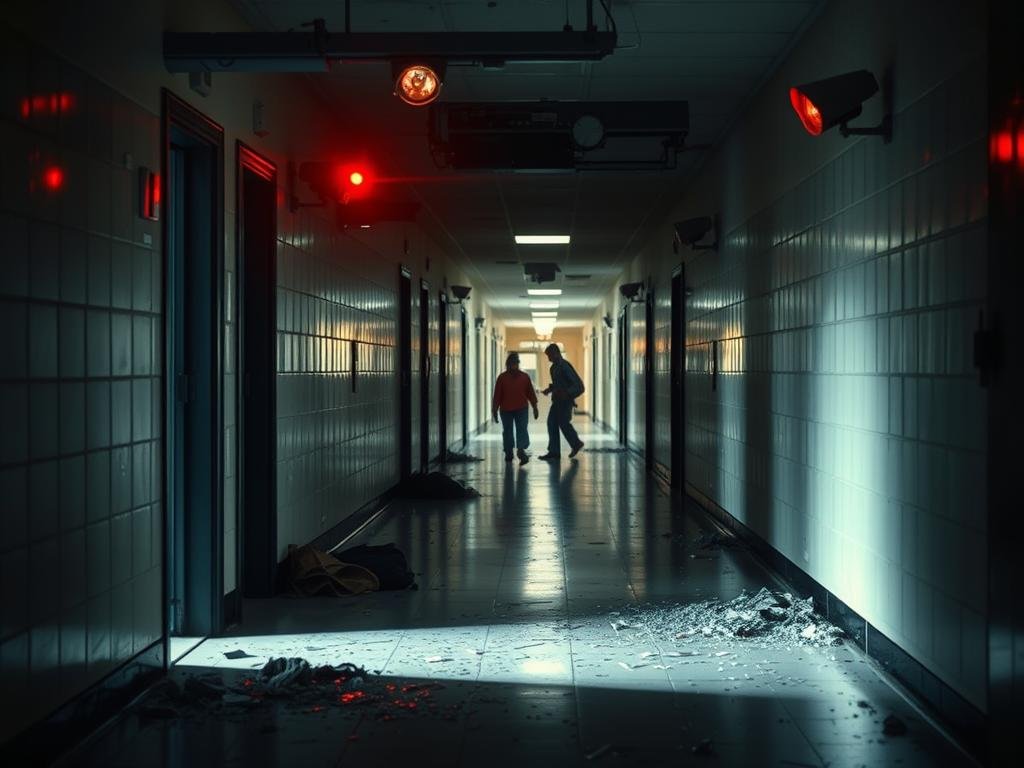
Witnesses and verified clips show a shocking school hallway assault. It quickly spread from a crowded corridor to millions of screens. The viral fight video and the buzz of social media bullying changed the day fast. This led to a quick school response and a wave of reactions.
What the video showed and how it spread online
The video, under a minute, shows Adriana walking with her boyfriend. Pink liquid is thrown from a cup. Then, at least two attackers slam her into red lockers, drag her, and pull her by the hair before adults intervene. She looks bruised and bloodied at the end.
Students recorded the assault and shared it online. It quickly got many views, comments, and duets. This turned a simple corridor incident into a big online event.
Immediate school response described by officials and family
Staff took Adriana to the nurse and told administrators about the incident. They said police were called, and four students were suspended. The district is reviewing policies and discipline options.
Family members were upset with the initial response. They said police should have been called sooner. They believed a stronger response could have stopped the video from spreading and lessened the harm.
Impact of public humiliation and online harassment
As the video spread, Adriana faced public humiliation. Hateful comments and tags followed, adding to the online harassment. This made the harm go beyond the hallway.
Relatives said the video and online bullying caused stress. They noted how social media can keep the attack alive long after school ends. They also mentioned similar posts at the school aimed at intimidation and control.
| Key Element | Observed Details | Digital Effect | Related Concern |
|---|---|---|---|
| Incident Footage | Pink liquid thrown; dragging and hair pulling; adult intervention | Rapid reposting amplified reach | Public humiliation |
| Platform Spread | Student-recorded clips shared across apps | Escalating views and comments | Online harassment |
| Initial Actions | Nurse visit; suspensions; later police contact | Ongoing debate over adequacy | School response |
| Family View | Calls for immediate police involvement | Pressure for clearer protocols | Limits of current policy |
| Wider Pattern | Prior clips posted to target students | Normalization of hostile content | Social media bullying |
Family allegations: Claims of inadequate protection and culture of violence
Adriana Kuch’s family says Central Regional High School had a culture of violence. They point to repeated warnings and videos of attacks online. They believe these signs showed the school didn’t act fast enough to protect students.
Lawsuit assertions about harassment, intimidation, and bullying
In the Central Regional lawsuit, Michael Kuch accuses school leaders of ignoring bullying. He says staff saw threats on social media but didn’t act. The lawsuit seeks damages for the school’s failure to protect students.
Alleged failures to follow New Jersey Anti-Bullying Statute
The complaint says the school didn’t follow the New Jersey Anti-Bullying Statute. It points out late reporting and poor handling of incidents. The family believes the school should have done more to stop the violence.
Community accounts from former staff and students
Former staffer Daniel Keiser says fights were common and ignored by admins. Alumna CeCe Lane remembers teachers doing nothing as bullying got worse. Other families share similar stories, saying the school’s negligence was clear.
Legal actions and charges connected to the assault
Authorities took action on two fronts: against students and adults. This included police referrals, a prosecutor’s briefing, and filings in a civil suit in Ocean County. These steps show how schools handle violence and online harm.
Note: A detailed report on filings and allegations is available in this verified report.
Juvenile charges: Aggravated assault and conspiracy
Four students faced charges after the attack in Ocean County. One was charged with aggravated assault, and others with conspiracy. They were all minors and released pending court review.
Prosecutors used school video and witness statements. The charges are in Family Court, focusing on safety, services, and rehabilitation.
Civil lawsuit defendants and requested damages
Adriana Kuch’s family sued the Central Regional Board of Education and others. They claimed negligence, invasion of privacy, defamation, and emotional distress. They seek money, including punitive damages, for alleged failures in protection.
The lawsuit was filed in state court. It aims to uncover policies, training, and reporting. It connects school actions to the harm caused.
Status updates and prosecutorial engagement with the district
Ocean County Prosecutor Bradley Billhimer met with district leaders. They discussed handling threats and fights, including when to call police. He also spoke with students, discussing prevention and reporting.
The district is reviewing bullying allegations and working with the New Jersey Department of Education. Updates from Bradley Billhimer’s office show how schools and law enforcement work together.
Administrative response and superintendent resignation

After the hallway assault got national attention, district leaders faced quick scrutiny. Parents wanted answers, and officials tried to be open while respecting legal limits.
Comments to media and subsequent resignation
Superintendent comments to national media sparked backlash. The Board of Education then accepted Triantafillos Parlapanides’ resignation. This move was swift.
The district said it would find interim leaders. It also promised to review its protocols and communications.
District statements and limits on public comment
A formal district statement said it had not been served with the lawsuit. It mentioned public comment limits due to ongoing litigation. The district said it was taking safety steps and working with police.
Families were told to report concerns through specific channels. This way, the district could log reports and respond within policy timelines.
State and local officials’ involvement and reviews
Ocean County Prosecutor Bradley Billhimer met with administrators. They discussed how to respond to incidents and what reporting is expected. In Trenton, Gov. Phil Murphy emphasized the need for students to feel safe and supported in schools.
The district asked for a New Jersey Department of Education review of its anti-bullying policies. This move aimed to align future steps with state guidance and local enforcement.
| Action | Entity | Focus | Noted Impact |
|---|---|---|---|
| Leadership change | Board of Education | Triantafillos Parlapanides resignation | Reset in messaging and oversight |
| Media remarks | District leader | Superintendent comments | Triggered accountability demands |
| Litigation posture | Central Regional School District | District statement and public comment limits | Constrained open discussion during case |
| Law enforcement meeting | Prosecutor Bradley Billhimer | Incident response coordination | Clearer expectations for reporting |
| State guidance | New Jersey Department of Education | New Jersey Department of Education review | Policy alignment and oversight |
| Public assurance | Gov. Phil Murphy | Student safety message | Reinforced statewide priorities |
Community reaction: Protests, student voices, and parent concerns
In Ocean County, the community quickly came together. Students, parents, and neighbors gathered outside schools and at the district office. They called for transparency and safer schools.
They wanted stronger anti-bullying measures that could be tracked and measured.
Student walkouts and warnings about demonstrations
After the tragedy, students held peaceful protests and walked out of class. Some received warnings about disruptions. The district said they respected the right to protest while keeping schools open.
Students continued to rally with signs and chants.
Parent critiques of transparency and safety
Parents demanded clear answers on incident reports and safety. They wanted to know how soon they’re informed about threats or fights. They also asked for safety audits with public summaries.
Calls for stronger anti-bullying enforcement
Families pushed for stronger anti-bullying enforcement on social media and at meetings. They wanted swift investigations and consistent discipline. They also asked for joint work with local police and more counseling access.
They wanted regular reports to show progress.
Policy and prevention: Evaluating anti-bullying practices in schools
Schools have to make tough choices when violence or threats happen. A good anti-bullying policy outlines steps, roles, and how to measure success. Families want clear rules on when to call the police, how investigations are done, and what documents are needed.
When schools should involve law enforcement
Administrators must balance safety, student rights, and the law. They use guides to decide when to call the police. This includes repeat assaults, credible threats, and injuries.
Clear rules help everyone know when to call the police. Training staff with real-life examples builds trust and consistency.
Timely investigations and documentation standards
Quick investigations protect students and stop rumors. Schools have strict timelines for interviews, notices, and follow-ups. Detailed records keep track of reports, findings, and actions.
Reviews during policy updates can find delays and missing steps. Reliable records also support fair discipline and compliance.
Social media, humiliation, and modern bullying dynamics
Phones turn bullying into public events fast. Social media makes bullying worse and invites more harm. Schools need rules on filming, quick removal of content, and support for victims.
Teams should track online patterns and include digital evidence. Teaching bystanders and reporting tools helps slow bullying. Quick investigations address both online and offline behavior.
Remembering Adriana: Background, interests, and community tributes
Adriana Olivia Kuch was known for her kindness and eagerness to help. In Bayville NJ, her warmth and bravery are remembered. Her story, shared by those who knew her, shows how memorials brought the community together.
Biography: Nature lover, helper, and family life
Adriana was born in Toledo, Ohio. Her family moved a lot with her father’s Army service. They settled in Bayville about seven years before her passing.
She loved being outdoors and animals. Adriana enjoyed jogging with her brothers and helping kids with disabilities. These acts of kindness are cherished by her friends.
Her biography highlights her connection with the Bayville NJ community. Neighbors and classmates remember her for her positive spirit and encouragement.
Honoring her memory through reform and awareness
Vigils and memorials were held, along with gatherings where stories were shared. Leaders like Gov. Phil Murphy expressed condolences and emphasized the importance of safe schools.
The family is pushing for change to ensure students feel safe and seen. Advocates are working towards better reporting, support, and responses that meet family expectations.
| Aspect | Details | Community Impact |
|---|---|---|
| Roots and Moves | Born in Toledo, Ohio; moved with a U.S. Army family; settled in Bayville | Shared identity within the Bayville NJ community deepened connections |
| Passions | Nature, animals, jogging with brothers, helping children with disabilities | Inspired student memorials and service projects |
| Public Tributes | Vigils, messages from state leaders, expressions of solidarity | Elevated awareness and reform conversations in schools |
| Family Initiative | Calls for accountability and better safety practices | Focus on prevention, documentation, and timely support |
Conclusion
The Adriana Kuch case summary sends a clear message. Schools must act quickly and carefully when harm happens. After a hallway assault was shared online, Adriana Kuch’s death led to legal and community actions in New Jersey.
Families, students, and teachers now see school bullying accountability as essential. They believe it’s a must, not just a goal, for keeping schools safe in New Jersey.
The civil lawsuit points out a culture of violence and privacy issues. It also highlights failures to follow the anti-bullying law. Juvenile charges show there’s also a law enforcement side to this.
The superintendent resigned, and state reviews and prosecutorial actions followed. This pushed districts to be open about their investigations, keep accurate records, and involve police correctly.
Protests, walkouts, and parent feedback show the cost of waiting. Social media can make humiliation worse and cause more harm. To avoid future tragedies, schools need to reform their policies.
They should focus on quick investigations, trained staff, and clear records. This way, school bullying accountability becomes a reality, not just a promise. It can also help set national standards for school safety.
If you or someone you know is struggling or in crisis, call or text 988 or visit 988lifeline.org. Text HOME to 741741 for the Crisis Text Line. Together, we can remember Adriana and keep students safe.
Be the first to comment