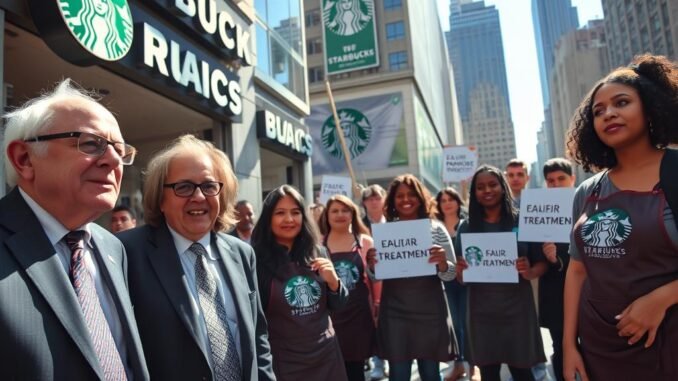

More than 15,000 baristas in over 300 Starbucks stores in New York will get a share of $35.5 million. This is part of a nearly $39 million deal the city just approved. The deal comes after Starbucks faced issues under New York City’s Fair Workweek Law in 2021. It’s one of the biggest worker-protection settlements in recent city history.
On the same day, Bernie Sanders and Zohran Mamdani stood with striking baristas in Brooklyn. Their support went beyond just news headlines. They made it clear: predictable schedules and steady hours are not just perks, but rights.
The settlement includes $3.4 million for civil penalties and costs, with workers getting direct relief. The timing is significant. With over 100 unionized stores on strike nationwide, the moment puts pressure on corporate leaders and highlights local voices. For those following Starbucks news, the stakes are now clear, measurable, and urgent.
Sanders highlighted the fight against inequality, pointing out how many hourly workers live paycheck to paycheck. Reports that CEO Brian Niccol got $96 million in four months made this contrast stark. As momentum grows in Starbucks New York, the question is not if change will come, but how fast and how far.
Overview of the $39M New York City Agreement with Starbucks
The $39 million deal in Starbucks New York settles charges under the city’s Fair Workweek Law. It outlines the terms for pay and scheduling for Starbucks. Bernie Sanders and his supporters highlighted the importance of this agreement. It focuses on hours, predictability, and relief for workers.
What the settlement covers: predictable schedules and hours
The deal ensures reliable schedules and full hours at over 300 stores in Starbucks New York. It tackles short-notice changes, denied shift pickups, and uneven paychecks. Simply put, it aims to fix scheduling issues for baristas and shift leads.
How much workers receive: $50 per week worked from July 4, 2021 to July 7, 2024
Workers get $50 for each week worked from July 4, 2021 to July 7, 2024. This totals $35.5 million in payments. The deal also includes $3.4 million in penalties and costs. This formula is clear and easy to understand for workers.
Who benefits: more than 15,000 Starbucks employees in New York City
Over 15,000 current and former employees in Starbucks New York will benefit. This includes baristas, trainers, and supervisors. The case drew national attention, with Bernie Sanders and his allies highlighting the impact on workers.
| Aspect | Details | Why It Matters |
|---|---|---|
| Total Agreement | $39 million | Captures both worker payments and assessed penalties |
| Worker Payments | $35.5 million | Direct relief linked to weeks worked |
| Per-Week Amount | $50 | Simple method to calculate individual shares |
| Coverage Window | July 4, 2021–July 7, 2024 | Defines eligibility period for compensation |
| Beneficiaries | 15,000+ NYC employees | Shows the reach across Starbucks New York locations |
| Core Issue | Predictable schedules and hours | Addresses what happened with Starbucks under the law |
| Public Spotlight | bernine sanders and worker advocates | Elevates the stakes for scheduling rights |
Why Zohran Mamdani and Bernie Sanders Joined the Picket Line
Zohran Mamdani and Bernie Sanders stood with baristas for fair pay and respect. Their visit highlighted the need for better standards in New York. It showed how national figures support local efforts, aiming for the same goals.
Solidarity with striking Starbucks workers in Gowanus, Brooklyn
In Gowanus, chants and signs set the mood. Workers wanted stable schedules and enough staff. Bernie’s presence drew attention, while Zohran tied the event to New York’s labor history.
Bernie supporters showed their support on the sidewalk. Their calm energy showed workers they’re not alone in fighting for fair conditions.
Mamdani’s message on affordability and dignity for workers
Zohran Mamdani said New York should be affordable for its workers. He emphasized the importance of schedules and wages that cover living costs. His words echoed Bernie’s, but were rooted in baristas’ daily struggles.
Mamdani linked coffee shops to essential services. He said stable hours are key to building a life in the city.
Support from prominent progressive leaders and Bernie supporters
Progressive leaders backed the strike, which grew to over 100 stores. Their support raised demands for better staffing and hours. For Bernie fans, the strike reflected their values on organizing and fairness.
This support amplified the workers’ message. Bernie and Zohran focused on the respect and predictability workers deserve.
| Location | Reason for Visit | Core Worker Demands | Who Showed Support |
|---|---|---|---|
| Gowanus, Brooklyn | Amplify a growing strike and highlight local labor conditions | Predictable schedules, better staffing, fair pay | Zohran Mamdani, Bernie, union organizers, bernie supporters |
| New York City | Connect store-level issues to citywide affordability | Stable hours that match the cost of living | Progressive leaders and community allies |
| Nationwide Context | Show momentum across 100+ stores | Stronger protections and fair scheduling standards | Workers inspired by bernie sanders news and labor networks |
What Happened with Starbucks: Alleged Fair Workweek Law Violations
Workers and city officials say Starbucks was a key moment for scheduling rights in New York. The issue caught the attention of national leaders like Bernie Sanders. Supporters of Bernie Sanders also followed the story closely.
DCWP’s Investigation into More Than a Half Million Violations
In 2022, the Department of Consumer and Worker Protection started an investigation. They looked into over 300 stores and found more than 500,000 alleged violations. This made Starbucks in New York a major issue for labor advocates, including Bernie Sanders.
Key Requirements of NYC’s Fair Workweek Law
- Post schedules at least 14 days in advance for fast-food workers.
- Pay premiums for last-minute changes or clopening shifts.
- Offer current staff the chance to take more regular hours before hiring new workers.
- Do not cut hours by more than 15% or terminate without just cause.
These rules are at the heart of the Starbucks issue in New York. Public figures like Bernie Sanders often mentioned the law. Searches for Bernie Sanders also increased during this time.
Impact on Baristas: Reduced Hours, Unpredictable Schedules, Denied Shift Pickups
Baristas faced fewer hours, sudden schedule changes, and denied shift pickups. This made planning for rent, transit, or child care hard. In New York, these problems highlighted the Starbucks issue, catching the eye of Bernie Sanders and his supporters.
Starbucks’ Response and Position on the Law

Starbucks wants to follow New York City’s Fair Workweek Law. They aim to keep stores running smoothly. The company finds it hard to staff in a busy café.
Executives say they support the law’s goal. But they need clearer rules that fit the fast-paced food service world. This debate is seen in bernie sanders news.
In public statements, Starbucks called the settlement a step forward. They say other restaurants face the same challenges. They believe the issue is about process, not pay.
They invite everyone to help make compliance easier. This is seen in bernie sanders news.
Company’s stance: support for intent, concerns over complexity
Starbucks supports stable schedules and notice. But they find the law confusing. Managers often need to adjust due to sick calls or rushes.
The company wants clarity that fits the realities of shift work. This is important for them.
Examples of “minor” changes that trigger violations
- A barista starts two hours later than planned to handle a slow morning, even when pay and weekly hours do not drop.
- A partner is asked to cover three of a coworker’s 20 scheduled hours after an unexpected absence.
- Closing tasks run long after a late delivery, pushing a shift past the posted schedule.
Starbucks says these small changes can be seen as violations. They argue this is a mismatch between the law’s intent and its practice. This adds to the conversation about what happened with starbucks in New York City.
Payments framed as compliance, not unpaid wages
Starbucks sees the payout as a way to follow the Fair Workweek Law. They note that similar settlements have reached tens of millions across the industry. This mirrors themes seen in bernie sanders news.
| Issue | Starbucks Position | Operational Example | Compliance Outcome |
|---|---|---|---|
| Intent of the law | Supportive of predictable schedules | Posting rosters in advance and honoring set hours | Aligned when changes are minimal and noticed early |
| Complexity in practice | Rules are hard to apply in fast-changing shifts | Shift moved two hours due to demand swings | Triggers premium pay or penalties despite same weekly hours |
| Unplanned absences | Coverage needs create technical violations | Calling a partner to cover three hours of a 20-hour week | Requires notices and premiums even if pay is unchanged |
| Nature of payments | Compliance-focused, not back wages | Industry settlements cited across food and beverage | Structured to resolve claims and standardize practices |
| Path forward | Clarify rules and improve tools | Scheduling systems with better alerts and lead times | Encourages operators and workers to join m on fair scheduling |
Union Momentum: Strikes, Demands, and National Reach
Workers are taking action across the country. In places like starbucks new york, they see this as more than just one fight. Bernie Sanders and his supporters are helping to bring attention to their cause.
Unionized Starbucks workers striking at more than 100 stores
More than 100 stores have seen workers walk out. This action spans nearly as many cities. It shows a strong network of solidarity.
Places like starbucks new york are joining forces with others in the Midwest and West Coast. This unity is a sign of their determination.
Core demands: higher wages, better staffing, improved hours
Workers want a contract that guarantees better wages, more staff, and fair hours. They believe in stable schedules and clear staffing plans. This would reduce stress and turnover.
Support from Bernie Sanders and his followers keeps these demands in the spotlight.
Voices from the line: understaffing and low hours in stores
Baristas on the picket lines talk about working without enough help and long hours. They say the solution is simple: hire more staff, post schedules early, and respect their shifts.
In starbucks new york, many are calling for a fair contract. They want to see these improvements made real.
City Leadership and Enforcement: Eric Adams and DCWP
New York City made a big statement on labor laws. Mayor Eric Adams talked about a major action against Starbucks New York. This move sparked interest in bernie sanders news and what happened with Starbucks.
Record-breaking worker protection settlement announcement
City Hall called it the biggest worker protection deal ever. DCWP worked hard after starting an investigation in 2022. They helped thousands of Starbucks New York employees.
This action showed how city rules can help. It also matched themes in bernie sanders news.
Civil penalties and costs: $3.4 million assessed to Starbucks
Starbucks will pay $3.4 million in fines and costs. The rest of the $39 million will go to workers. This shows that breaking rules has serious consequences.
It also makes Starbucks New York more accountable. People are watching closely in local and national news.
Reinforcing the right to reliable schedules and full hours
Adams said that workers deserve stable schedules and full hours. DCWP sees this as protecting workers’ rights. This message goes beyond Starbucks New York.
It connects with bernie sanders news. It gives a clear picture of Starbucks’ role in New York’s labor scene.
Executive Pay vs. Frontline Reality
In New York, the fight for fair pay is clear. The big difference between what top bosses make and what workers earn is obvious. This debate affects trust in brands, worker happiness, and what people think is fair.
Brian Niccol’s Reported $96 Million Pay and Worker Paychecks
brian niccol’s $96 million in four months is shocking. Workers in New York struggle to make ends meet. They face changing schedules and tips that barely cover living costs.
For many, losing a shift means less money for food. The huge pay gap at the top makes every corporate message harder to believe.
Economic Inequality Framing from Sanders and Mamdani
bernie sanders sees this as a fairness issue. He says top earners get rich while workers barely get by. Assemblymember Zohran Mamdani agrees, linking fair schedules to living costs in New York.
Together, they show how executive pay and scheduling rules are linked. They push leaders to explain the big pay gap.
Public Perception and Brand Implications for Starbucks New York
In a crowded market, what people think matters a lot. News about settlements and high pay affects how customers see the brand. This can impact sales, hiring, and loyalty in New York.
People watch how companies respond to criticism. A clear plan on hours and staffing can help. Silence, on the other hand, can hurt the brand’s image.
| Factor | What the Public Sees | Potential Brand Effect in New York |
|---|---|---|
| Executive Compensation Headlines (e.g., brian niccol) | Large awards contrasted with hourly pay | Higher scrutiny from bernie sanders supporters and value-driven consumers |
| Worker Experience | Variable hours, shift changes, and missed pickups | Sentiment shaped by everyday schedules and predictable income |
| Public Advocacy | bernie and Mamdani highlight inequality narratives | Media attention intensifies, raising expectations for reforms |
| Store-Level Operations | Staffing levels, posted schedules, training | Customer loyalty tied to service quality and employee morale |
| Corporate Messaging | Statements on compliance and worker support | Trust rises when promises match outcomes on the floor |
Context for Readers: Who Is Bernie Sanders and Why His Support Matters
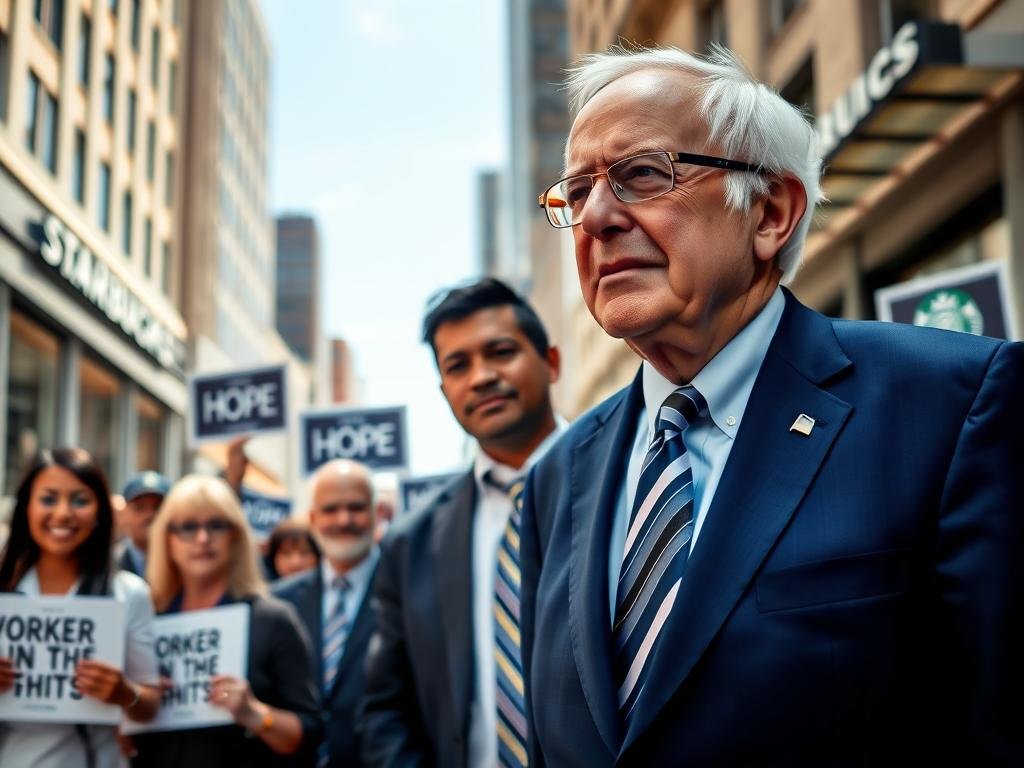
Many readers wonder who Bernie Sanders is when they see him on a picket line. He is a U.S. senator from Vermont and a leading progressive. His work focuses on wages, schedules, and dignity at work.
Coverage in Bernie Sanders news often highlights how his presence boosts local labor fights. It brings them into the national spotlight.
Bernie Sanders is known for his support of worker rights. This includes universal healthcare and fair scheduling. His record explains why baristas welcome him at rallies.
For some, searches like berni sanders or beenie sanders lead to the same question: what results for workers?
Profile Snapshot: Labor Advocacy in the Headlines
In Bernie Sanders news, he pushes for predictable hours, stronger unions, and paid leave. He co-founded the Congressional Progressive Caucus. He also chaired key Senate committees on health, labor, and budgets.
This history shapes how people view Bernie Sanders in today’s labor debates.
“Working people deserve fair schedules and a living wage. That is not radical—it is common sense,” he has said at rallies and hearings.
Search interest—whether Bernie Sanders, berni sanders, or beenie sanders—spikes when he backs high-profile organizing drives. This turns local disputes into national stories.
Why His Backing Resonates With Workers and His Base
Workers see Bernie Sanders through action: picket lines, hearings, and policy drafts. His support signals pressure for collective bargaining and labor laws. For his base, Bernie Sanders news proves national leaders can stand with workers.
This mix of visibility and policy detail helps campaigns grow. Even when people search berni sanders or beenie sanders, they find a record that links paychecks to public standards.
Related Searches and Misspellings: What People Want to Know
People often type bernie, berni sanders, or beenie sanders while looking for worker-focused updates. These queries usually lead to who is Bernie Sanders and current Bernie Sanders news. The common thread is work, wages, and time.
| Search Term | User Intent | Typical Result | Why It Matters |
|---|---|---|---|
| who is bernie sanders | Understand his role on labor issues | Bio, policy record, recent actions | Connects leadership to worker campaigns |
| bernie sanders news | Get the latest on rallies and policy | Reports on strikes, hearings, proposals | Turns local efforts into national coverage |
| berni sanders | Find updates despite spelling errors | Redirects to Bernie Sanders resources | Keeps attention on labor stories |
| beenie sanders | Locate the same public figure | Corrected links and profiles | Maintains visibility for worker news |
| bernie | Quick lookup for current stance | Headlines, quotes, committee work | Supports fast understanding of stakes |
What This Means for Fast-Food and Restaurant Scheduling Laws
The New York City deal shows agencies will closely watch fast-food scheduling. For those asking about Starbucks, the message is clear. You must document schedules, honor 14-day notice, and track premium pay for any changes.
Brands that serve late-night crowds or run lean crews may need new tools and training. This is to stay aligned with Fair Workweek rules.
These shifts echo broader labor debates. Campaigns focus on worker time and pay. The four-day workweek discussion adds context to retail and restaurant planning. Public interest rises during a Bernie Sanders election cycle, keeping scheduling practices in the news.
Compliance teams weigh risk against cost. Operators find the law complex, while advocates highlight lost hours and missed premiums. In-house counsel and firms like Troutman Sanders are likely to map audits, notifications, and staffing buffers.
Key areas to watch include daily limits on cuts, consent for clopenings, and reliable access to full hours for part-timers. For multi-state brands, harmonizing rules across cities matters as more jurisdictions adopt similar standards. Pilots in shorter workweeks, alongside fast-food trials, may shape expectations for rest time and predictability.
| Requirement | Operational Implication | Common Pitfall | Mitigation Strategy |
|---|---|---|---|
| 14-Day Advance Posting | Publish schedules two weeks ahead across all stores. | Late postings and verbal updates only. | Automated release dates, worker app confirmations, audit logs. |
| Premium Pay for Changes | Trigger premiums for employer-led edits after posting. | Missing premiums on small shift tweaks. | Rule-based payroll flags and manager prompts at edit time. |
| Limits on Hour Reductions | Protect baseline hours unless worker agrees in writing. | Cutting hours to balance labor targets. | Use forecast buffers; offer voluntary swaps before cuts. |
| Clopening Controls | Prevent close-to-open without consent and premium pay. | Last-minute coverage creating short rest windows. | Hard schedule locks; consent capture; premium auto-calculation. |
| Offer Hours to Existing Staff | Post open shifts internally before hiring new staff. | External hires while part-timers seek more hours. | Centralized open-shift board with timestamped bids. |
Conclusion
New York City has agreed to pay Starbucks nearly $39 million. This money will go to over 15,000 baristas. It shows how strong the Fair Workweek Law is.
Starbucks sees this as following the law, not paying back wages. But it shows that cities will fight for workers’ rights. Predictable schedules and stable hours are now seen as essential, not just nice to have.
But the story doesn’t end there. Workers at Starbucks are on strike at over 100 stores. They want better pay, more staff, and regular hours. Their fight got a boost when Bernie Sanders and Assembly Member Zohran Mamdani joined them.
This moment showed how important public pressure and city laws are. It also made other businesses in the fast-food and restaurant industry take notice. They know now that ignoring scheduling laws can cost them a lot.
The settlement fixes past problems but doesn’t solve the future. Workers want a contract, while Starbucks wants clear rules. The fight for fair wages, hours, and respect is far from over. Bernie Sanders will likely keep the spotlight on this issue.
Be the first to comment