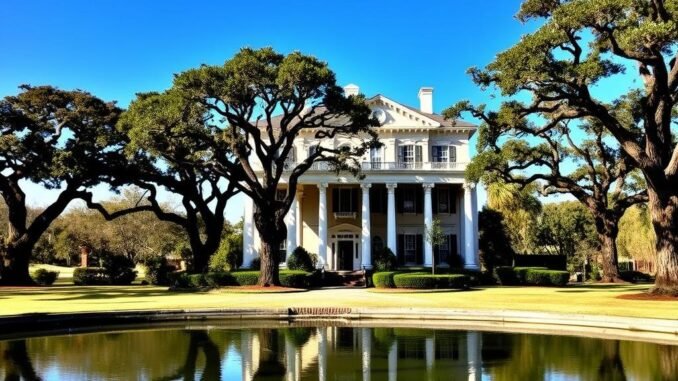

Only one address in Washington, D.C., has housed every vice president for over 40 years. Yet, many wonder: does the vice president live in the White House? The answer is no. The vice president’s home is at Number One Observatory Circle, a historic Queen Anne landmark inside the U.S. Naval Observatory’s secure 73-acre campus.
Built in 1893 for the Naval Observatory superintendent, the home later became the Chief of Naval Operations’ residence. In 1974, Congress made it the “official temporary residence of the vice president of the United States.” Walter Mondale was the first full-time resident in 1977. Today, Vice President JD Vance and his family carry on this tradition, surrounded by scientists who study time and stars.
For those curious about the vice president’s living arrangements, here’s the answer: a 9,000-square-foot house with 33 rooms. It’s designed for both public events and private life. Located in Northwest D.C., about 2.5 miles from the White House, it offers a mix of history and modern living. If you’ve ever searched online for the vice president’s address, you’ll find it here: Number One Observatory Circle.
In short, when asked where the vice president lives, the answer is clear: not at the White House, but at a historic address. This place combines duty, family, and science in one of Washington’s most discreet neighborhoods.
Number One Observatory Circle: The Vice President’s Residence at the U.S. Naval Observatory
This is the vice president’s house, often called the Naval Observatory vice president home. It’s located on a leafy hill in Northwest Washington. When you ask where the vice president lives at night, the answer is here. This place is also where the nation keeps precise time.
People often wonder where the vp lives in DC. The answer is a historic Queen Anne landmark. It hosts official events too.
They often ask where does the vice president reside and how the site blends work and family life. The home is private but also serves as a stage for diplomacy. It’s quiet but close to the city’s power centers.
Where does the vice president reside in Washington, D.C.?
The vice president lives at Number One Observatory Circle on the U.S. Naval Observatory grounds. So, the answer to where the vp lives is simple. They live in a 9,000-square-foot home built in 1893. It’s the official vice president’s house.
This address is where the vp lives in DC, blending tradition with modern life.
Address and coordinates: 1 Observatory Circle NW, Washington, D.C. 20008 (38.9229553, -77.0654258)
The address is 1 Observatory Circle NW, Washington, D.C. 20008. It’s at 38.9229553, -77.0654258. You can also find it at 38°55′23″N 77°03′56″W. Learn more about the home’s history and features at Number One Observatory Circle.
Current tenants and the Second Family
As of 2025, Vice President JD Vance and the Second Family call this place home. The residence welcomes dignitaries, military leaders, and community groups. It shows the public role of the naval observatory vice president tradition.
For neighbors and visitors, it’s a living, working landmark. It answers where the vice president resides.
Naval Observatory context and ongoing scientific mission
The home is part of the U.S. Naval Observatory. It continues its scientific mission. This includes tracking the sun, moon, and planets, and maintaining precise time.
The observatory supports navigation too. This dual identity explains why this address is often linked to the vice president. The campus lets a family live securely while science works nearby.
History of the VP Residence: From Superintendent’s House to Vice Presidential Home
At number one observatory circle, the story of the vice presidential residence answers a common question: where do vice presidents live and the vice president lives where during a term in office. The site traces national science, naval command, and evolving security needs, all converging at the same front door.
Built in 1893 for the Naval Observatory superintendent
The house was built in 1893 for $20,000. It was on land once part of Margaret Barber’s Northview farm. The Navy bought the 73-acre tract in 1880 for the U.S. Naval Observatory.
The home served the superintendent, blending domestic life with the Observatory’s nightly work. It was set on a hill, becoming the anchor of what later became known as number one observatory circle. Before it was a vice president residence, it was a working home tied to federal science.
Admiral’s House era: residence of the Chief of Naval Operations (1923–1974)
In 1923, the Chief of Naval Operations moved in, and the property became the Admiral’s House. The superintendent moved out as the Navy’s top officer took over the address.
This change shifted the building from technical oversight to command prestige. It kept the home prominent while the city grew around it.
1974 congressional authorization making it the official temporary residence
Congress acted in 1974, through Public Law 93–346, to designate the property as the official temporary residence of the vice president. The decision came after years of costly security at private homes, including upgrades before Spiro Agnew resigned in 1973.
The shift answered the question, where do vice presidents live, with a safer, centralized solution. From then on, number one observatory circle clarified vice president lives where for each new administration.
First occupants and milestones: Rockefeller’s entertaining and Mondale’s move-in
Nelson Rockefeller used the house for events and donated furnishings, but he kept his private home. Crews refurbished the residence for full-time vice presidential use.
In 1977, Walter Mondale became the first to live there full time, setting the standard for every vice president residence. With that move, the vice presidential residence matched the office’s stature and daily needs.
Where does the VP live in D.C.? Distance from the White House and nearby landmarks
Many wonder if the Vice President lives in the White House or nearby. The answer is simple: the VP resides at the U.S. Naval Observatory grounds. This location is not the Executive Mansion, where the President lives. The campus provides a peaceful, secure environment and is close to the West Wing.
Proximity: roughly 2.5 miles from 1600 Pennsylvania Avenue
The VP’s home is about 2.5 miles from the White House. This short distance makes motorcades quick and easy. It also answers where the VP stays on a typical night and how close work is.
Neighborhood setting: Northwestern D.C. near Massachusetts Avenue and the British Embassy
The home is in Northwest D.C., surrounded by embassies and green spaces. It’s near the British Embassy, adding a diplomatic touch. This setting helps understand where the VP lives and contrasts with the President’s downtown location.
Where does the vice president stay for official events and hosting
The house hosts foreign leaders, military families, and community groups. During renovations or transitions, some second families stay at Blair House. These practices clarify where the VP stays during busy times and large events.
Where does the vice president work: West Wing and EEOB offices
The VP’s daily work is in the West Wing and the Eisenhower Executive Office Building. This setup answers where the VP works while keeping the residence for living and hosting. It clears up confusion about where the VP lives and works compared to the President.
Architecture and Style: A Queen Anne Landmark
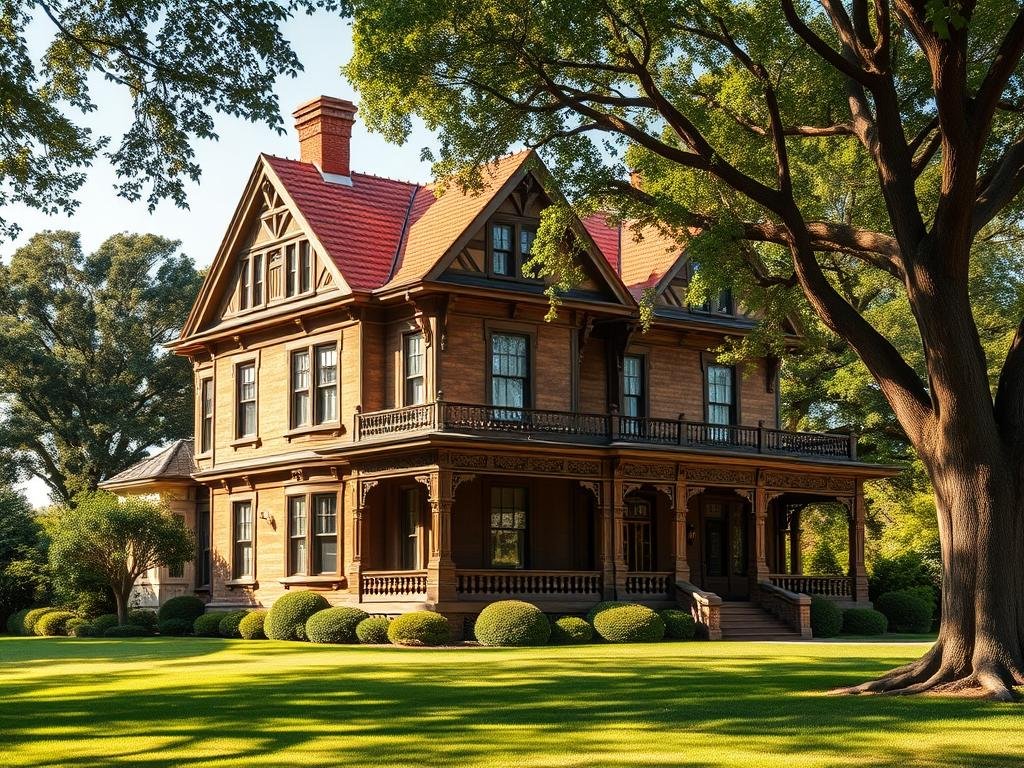
The vice president’s mansion at Number One Observatory Circle is a masterpiece of queen anne architecture. It combines elegance with practicality. This home is perfect for both state guests and family gatherings, thanks to its unique design.
Queen Anne hallmarks: wraparound veranda, turret rooms, and inglenooks
Architect Leon E. Dessez designed the house with an asymmetrical layout and open rooms. The round turret rooms offer stunning views and natural light. Inglenooks near fireplaces create cozy spots for conversations.
The wraparound veranda serves as an outdoor living area, connecting the house to the outdoors.
Exterior evolution: from terracotta brick to painted facades
The house started with terracotta brick, putty-gray millwork, and olive-green shutters. Over time, the exterior changed to “feather” gray, then crisp white with black shutters, and later cream. This change reflects a national shift towards simpler colors, yet keeps the mansion recognizable.
Architect Leon E. Dessez and late 19th-century design context
Dessez was influenced by late 19th-century design trends. He used various textures and shapes in the queen anne style. Inside, the woodwork was often painted white to brighten the rooms as tastes evolved.
For a detailed history of the vice president home, see this overview of Number One Observatory Circle.
| Feature | Original Expression | Later Adaptation | Impact on the Vice President House |
|---|---|---|---|
| Wall Material | Terracotta (dark red) brick | Painted cream/white over time | Softened Victorian contrast while preserving massing |
| Millwork & Shutters | Putty-gray trim, olive-green shutters | Black shutters, light-toned trim | Sharper accents that read well in official photography |
| Plan & Flow | Asymmetrical, room-to-room circulation | Maintained with sensitive updates | Supports hosting patterns in a working residence |
| Signature Elements | Turret rooms, inglenooks, wraparound veranda | Conserved and repaired as needed | Distinct profile suited to the vice president’s mansion |
| Interior Woods | Mahogany, quarter-sawn oak, chestnut, walnut | Often painted white mid-century | Brighter interiors for ceremonies and family life |
Inside the Vice President’s House: Layout, Rooms, and Interiors
The vice president house is at the heart of the Naval Observatory grounds. It has rooms for both work and home life. The first floor is for hosting, the upper levels for family, and the basement for service areas.
Size and layout: 9,000 square feet and 33 rooms
The house is about 9,000 square feet with 33 rooms. It has wide halls and intimate nooks. This layout supports both entertaining and privacy.
Main levels: public rooms, private quarters, attic bedrooms, and basement kitchen
The first floor has a reception hall, living room, and dining room. There’s also a pantry kitchen. The veranda is perfect for small gatherings.
Upstairs, the principal suite is on the second floor. There’s also a bedroom, den, and study. The attic has four bedrooms. The main kitchen is in the basement.
Interior furnishings over time: from colonial/Federal copies to contemporary touches
After 1974, many furnishings were 20th-century copies of colonial and Federal styles. Nelson Rockefeller brought notable pieces and art. Later families adjusted these pieces instead of replacing them.
Barbara and George H. W. Bush worked with Mark Hampton on celadon and light-blue palettes. Dan and Marilyn Quayle preferred off-white schemes. Al and Tipper Gore refreshed the library and dining spaces. Dick and Lynne Cheney added more contemporary art.
In 2021, Kamala Harris oversaw a kitchen remodel and refinished hardwood floors. She added practical updates to the number one observatory circle interiors.
Vice president house inside: library, solarium, and entertaining spaces
The library is a quiet core for study and small meetings. The sunlit solarium is a favorite for Joe and Jill Biden. It has casual seating and garden views.
Entertaining spaces include the garden room, lounges, and the veranda. These areas are perfect for diplomacy at noon and family at dusk.
| Area | Primary Function | Notable Features | Era Highlights |
|---|---|---|---|
| First Floor: Reception & Lounges | Public hosting and protocol | Reception hall, living and sitting rooms, garden room, veranda | Colonial/Federal revival pieces; evolving art collections |
| Second Floor: Private Quarters | Family residence and work | Principal bedroom suite, additional bedroom, den, study | Mark Hampton palettes under the Bushes; later contemporary art |
| Attic: Bedrooms | Guest and family rooms | Four bedrooms adapted from former servants’ quarters | Flexible layouts for visiting relatives and staff needs |
| Basement: Main Kitchen | Service and event staging | Main kitchen supporting receptions and daily meals | 2021 remodel under Kamala Harris; refinished hardwoods above |
| Signature Spaces | Quiet work and casual gatherings | Library and solarium | Biden-era fondness for the solarium; enduring reading room tradition |
| Overall Character | Residence within an official setting | Balanced formality and comfort | Continuity across second families defines the vice president house |
Grounds, Gardens, and Amenities at the Vice President’s Residence
The vice president’s house is set in a 73-acre space within the United States Naval Observatory campus. It’s perfect for work, family time, and quiet moments. The grounds host outdoor events and keep the noise of the city away.
Landscaping: cherry trees, magnolias, tulips, and daffodils across 73 acres
The lawns are lined with cherry and Japanese magnolias that bloom in spring. Tulips and daffodils add color to the paths. These plants help guide visitors between different areas of the house.
Amenities added by VPs: pool, hot tub, putting green, beehive, basketball court
Each Second Family has added their own touches. Dan Quayle put in a putting green in 1989. Then, a pool, hot tub, and pool house in 1991. Joe Biden added a tree swing in 2010.
Mike and Karen Pence introduced a beehive and a basketball court in 2017. These additions offer fun, exercise, and a place for casual gatherings.
Family Heritage Garden and commemorative elements
The Family Heritage Garden was started by Joe and Jill Biden in 2012. It features stones from each family’s time in the house, including pets. An arbor and a small fountain add beauty and sound.
In 2024, Kamala Harris planted a pomegranate tree. This tree marks the 2023 Hamas-led attack on Israel, adding to the garden’s history.
Quiet setting: dense forest buffer along Massachusetts Avenue
A thick stand of trees lines Massachusetts Avenue, creating a natural barrier. This helps keep the area private and secure. It also frames beautiful views that are often seen in photos of the Naval Observatory.
Notable Residents, Traditions, and Moments
Most Americans know that vice presidents live at Number One Observatory Circle. This address has been home to every second family in the U.S. President George H. W. Bush hosted over 900 events there, adding a horseshoe pit and jogging track. These changes made the place lively and welcoming.
Dan Quayle made the home more family-friendly by adding accessibility upgrades and new bedrooms for his kids. The Vice President’s Residence Foundation was started in 1991 to keep the home’s character while allowing each family to leave their mark. The home hosts many events, from state teas to garden gatherings, throughout the year.
In 2021 and 2022, Kamala Harris and Doug Emhoff made history by adding a mezuzah and hosting a Passover Seder. These moments show the home’s role in celebrating diverse traditions. The veranda has seen many moments of transition, like when Dick Cheney welcomed Joe Biden in 2008.
In 2016, Joe and Jill Biden greeted Mike and Karen Pence, showing the home’s tradition of courtesy. This tradition continued in 2024–2025 as the residence prepared for a new chapter. The home is both a domestic space and a diplomatic venue.
It has hosted foreign leaders, like Mexico’s President Andrés Manuel López Obrador. Yet, it’s also a place where families can plan and settle in. The Vances moved in January 2025, sparking interest in where JD Vance lives and his home setup.
Usha Vance sought childproofing advice through Naval officials, showing the home’s practical side. Each family brings new stories to this historic place.
Security, Privacy, and the Reported Bunker
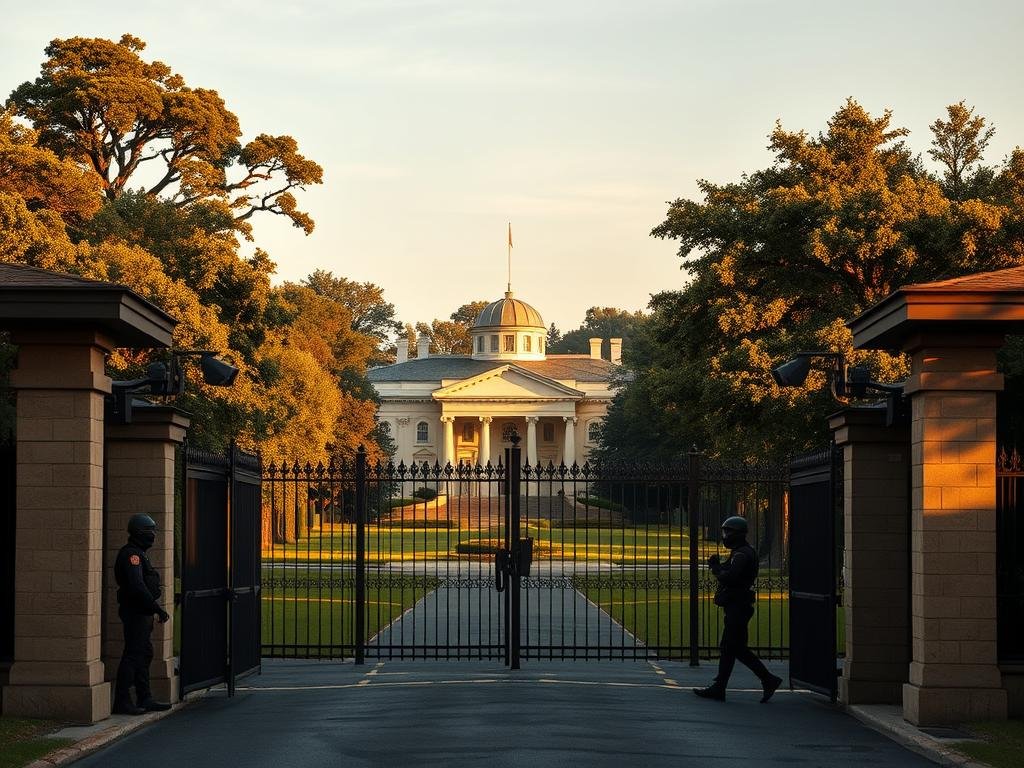
At Number One Observatory Circle, safety is a top priority. For those wondering if the VP lives in the White House, the answer is key. The U.S. Naval Observatory campus ensures consistent security for the Vice President, no matter the administration.
Why the residence offers better security than private homes
Congress made a permanent home for the VP in 1974, after many costly fixes to private houses. A federal site means better access control, communication, and trained officers. It also makes it easier to move the VP during emergencies, avoiding busy city streets.
No public tours: privacy policies at the Naval Observatory
The grounds are closed to tours, unlike the White House. This policy limits visitors, controls photos, and keeps the VP’s life private. It shows why a separate campus is better for privacy and safety, without the need for public displays.
Post-9/11 upgrades and speculation about underground facilities
After 9/11, neighbors noticed a lot of construction. This sparked rumors of a hidden bunker. Officials said it was for national security, but it’s clear the VP’s security got a big boost.
What officials have said about secure workspaces and tunnels
Over the years, aides have talked about secure rooms for classified work. There are also reports of a tunnel and safe paths. This fuels curiosity about the VP’s safety during threats. The location’s focus on security shows it’s designed for today’s needs.
The VP’s Offices Beyond the Residence: West Wing and Ceremonial Office
The vice president’s work goes beyond the Naval Observatory. They have a small West Wing office for quick meetings. They also have a grand suite in the Eisenhower Executive Office Building for tradition and outreach.
West Wing and the Eisenhower Executive Office Building
In the West Wing, the vice president meets with senior staff and the president. They also have quick briefings. Next door, in the Eisenhower Executive Office Building, they have more space and support rooms.
Aides say the vice president works in both places. The West Wing is for speed, while the EEOB is for depth and events.
History, Design, and Notable Artifacts
The vice president’s ceremonial office started as the Navy Secretary’s suite. It was used by 16 Navy Secretaries from 1879 to 1921. General John J. Pershing worked there from 1921 to 1947.
After a fire, President Herbert Hoover moved in for a year. The room was restored to its Gilded Age look. It has Navy stenciling, Belgian black marble fireplaces, and a parquet floor.
The Vice-President’s Desk and Signatures Tradition
The vice president’s desk is part of the White House collection. Theodore Roosevelt first used it in 1902. It was used by many presidents and vice presidents.
Every vice president has signed the desk’s top drawer. This tradition started in the 1940s. It shows the continuity in the office.
Earlier Uses by the Navy Secretary and General Pershing
Before it was the vice president’s office, it was at the heart of U.S. defense policy. The Navy Secretary’s tenure added maritime motifs.
General John J. Pershing then used the desk for Army operations. This history makes the Eisenhower Executive Office Building a key place for announcements.
Conclusion
So, does the vice president live at the White House? The answer is no. The vice president’s home is Number One Observatory Circle at the U.S. Naval Observatory. It’s about 2.5 miles from the White House.
This 9,000-square-foot Queen Anne house is perfect for both duty and daily life. It has enough space to host dignitaries while keeping family routines going.
Back in 1974, Congress made this house the vice president’s residence. It’s a secure and affordable place to live on a campus that tracks time and supports astronomy. The house has a rich history, from art collected by Nelson Rockefeller to modern features like a pool and basketball court.
Security and privacy are key here. There are no public tours, and the house has been upgraded for safety after 9/11. The vice president works at the West Wing and the Eisenhower Executive Office Building. This shows how the home is connected to the heart of government.
Today, Vice President JD Vance and his family live in this house. It’s a calm place for governance, close to the White House but separate. This shows why the vice president doesn’t live in the White House.
Be the first to comment